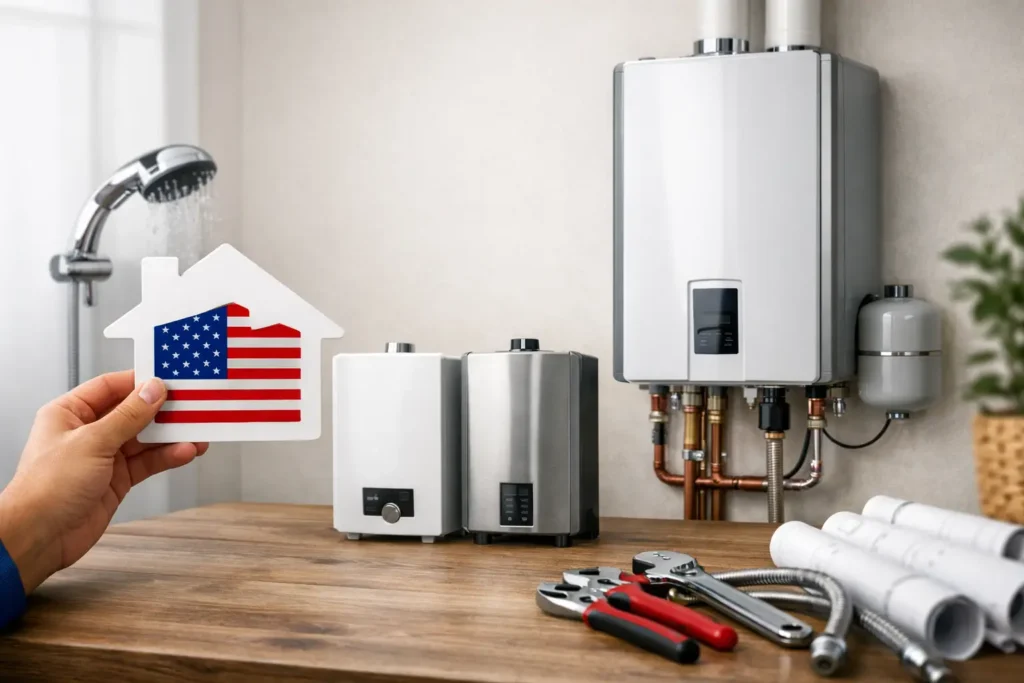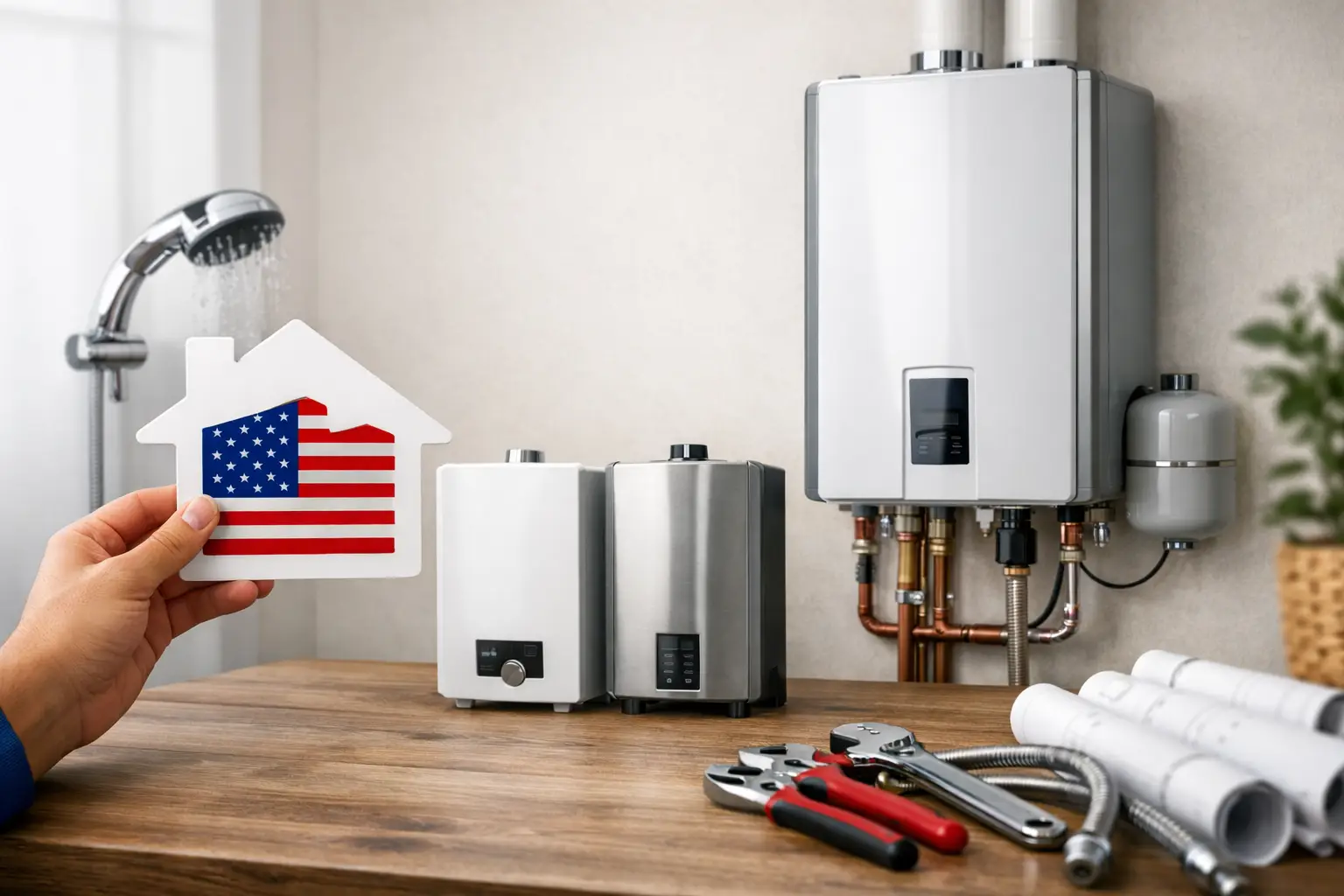
A tankless water heater can be a smart upgrade when your current tank runs out of hot water, takes up valuable garage space, or is nearing the end of its life. But choosing the cheapest unit on the shelf can lead to cold showers, weak performance, and costly installation changes. Knowing how to choose a tankless water heater starts with understanding how much hot water your household actually uses at one time.
Unlike a conventional storage-tank heater, a tankless unit heats water only when you need it. That can reduce standby energy loss and provide a long supply of hot water, but only if the system is properly sized, fueled, and installed for your home.
Start With Your Household’s Peak Hot Water Demand
The most important number is not the size of your home. It is the number of fixtures that may need hot water at the same time. A shower, dishwasher, washing machine, and kitchen faucet can all compete for hot water during a busy morning or evening.
Tankless heaters are rated by flow rate, measured in gallons per minute, or GPM. A typical shower may use around 1.5 to 2.5 GPM, while a kitchen faucet might use 1 to 2 GPM. If two people often shower while the dishwasher is running, your tankless water heater needs enough capacity to serve that combined demand without a noticeable temperature drop.
For many smaller households, a unit rated for moderate flow may be enough. Larger families, homes with multiple bathrooms, or households that regularly run several fixtures at once often need a higher-capacity whole-home model. In some cases, two units or a separate point-of-use heater makes more sense than trying to make one undersized unit do all the work.
A plumber can calculate your realistic peak demand based on the fixtures in your home and how your family uses them. This is more reliable than choosing based on bedroom count alone.
Factor In Menifee-Area Groundwater Temperature
A tankless heater does not raise water temperature by the same amount in every situation. Its actual output depends on the temperature of the incoming water and the temperature you want at the faucet. This difference is called temperature rise.
For example, a unit may advertise a high GPM rating under mild conditions, but its flow capacity decreases when it has to heat colder incoming water by a larger amount. Southern California homes generally do not face the extreme winter groundwater temperatures seen in colder regions, but water temperature still varies by season, plumbing location, and local conditions.
The practical takeaway is simple: compare a heater’s GPM rating at the temperature rise your home needs, not just the largest number on the product label. A qualified installer can help match the unit to your incoming water temperature and preferred hot water setting.
Choose Between Gas, Propane, and Electric
Fuel type has a major effect on performance, operating cost, and installation requirements.
Natural gas tankless water heaters are common for whole-home applications because they can deliver high flow rates. They are often a strong fit for families that need multiple showers or appliances running at once. However, a new gas tankless installation may require a larger gas line than the old water heater used. It may also require new venting, a condensate drain for a high-efficiency condensing model, and changes to the exterior termination location.
Propane units work similarly and can be a good choice where natural gas is unavailable. The heater must be designed or properly configured for propane, and the propane supply must be sized for the appliance.
Electric tankless units can be compact and avoid gas venting, but whole-home electric models require significant electrical capacity. Depending on the model, installation may involve multiple dedicated circuits, panel upgrades, or both. They may work well for a small home with limited demand or for a remote bathroom, but they are not automatically the easiest or least expensive option for every household.
Before choosing a fuel type, have the gas piping, electrical panel, venting path, and installation space evaluated. The right heater is one your home can support safely without cutting corners.
Decide Whether a Condensing Model Is Worth It
Most gas tankless water heaters fall into two general categories: non-condensing and condensing.
Non-condensing models are typically less expensive upfront, but they exhaust hotter gases and often need metal venting designed for high temperatures. Condensing models capture more heat from exhaust gases, which improves efficiency. Because the exhaust is cooler, they may use different venting materials, although they also produce condensate that must drain correctly.
For a long-term installation, a condensing model is often worth considering, particularly when energy efficiency and lower operating costs matter. Still, the best choice depends on the home’s venting layout, installation budget, and the cost of necessary upgrades. A lower equipment price does not always mean a lower finished project cost.
Check Water Quality and Maintenance Needs
Hard water is common in many inland Southern California communities. Mineral buildup can collect inside a tankless heat exchanger over time, reducing efficiency and shortening the equipment’s service life if it is not maintained.
Before selecting a model, ask how it should be flushed and how often. A properly installed tankless system should have accessible service valves so routine descaling can be completed without unnecessary disruption. If your water is especially hard, a water treatment solution may help protect the heater and other plumbing fixtures throughout the house.
Tankless water heaters are not maintenance-free. They are durable appliances, but they need periodic service to keep performing as expected. This is especially true when a unit is supplying hot water to a busy family household.
Look Beyond the Heater’s Purchase Price
The equipment price is only one part of the decision. A complete tankless water heater installation may include gas-line modifications, electrical work, venting, drain connections, permits, water piping adjustments, removal of the old tank, and installation of an expansion solution where required.
Ask for a clear estimate that separates the heater choice from the work needed to install it correctly. This makes it easier to compare options and avoid surprises after work has started. It also helps you see whether spending more on a larger or more efficient unit will solve a real household problem, such as running out of hot water during back-to-back showers.
Financing can also make sense when a failed water heater creates an urgent replacement decision. The goal is not to overspend. It is to install a system that meets your needs now and avoids another major change a few years later.
Consider Location, Venting, and Recirculation
Tankless units are much smaller than tank heaters, but they still need a proper installation location. The unit must have required clearances, safe access for maintenance, protected water and gas connections, and an approved venting route if it is gas-fired.
Think about how long it takes hot water to reach distant bathrooms or the kitchen. A tankless heater provides continuous heating, but it does not automatically eliminate the wait for hot water to travel through long pipes. A built-in or dedicated recirculation system may be worth considering for larger homes or layouts with bathrooms far from the heater.
Recirculation can improve convenience and reduce water wasted while waiting for heat, but it can add equipment cost and may use energy to keep water moving or warm. Demand-controlled systems can be a practical middle ground for homeowners who want faster hot water without constant recirculation.
Work With an Installer Who Sizes the Whole System
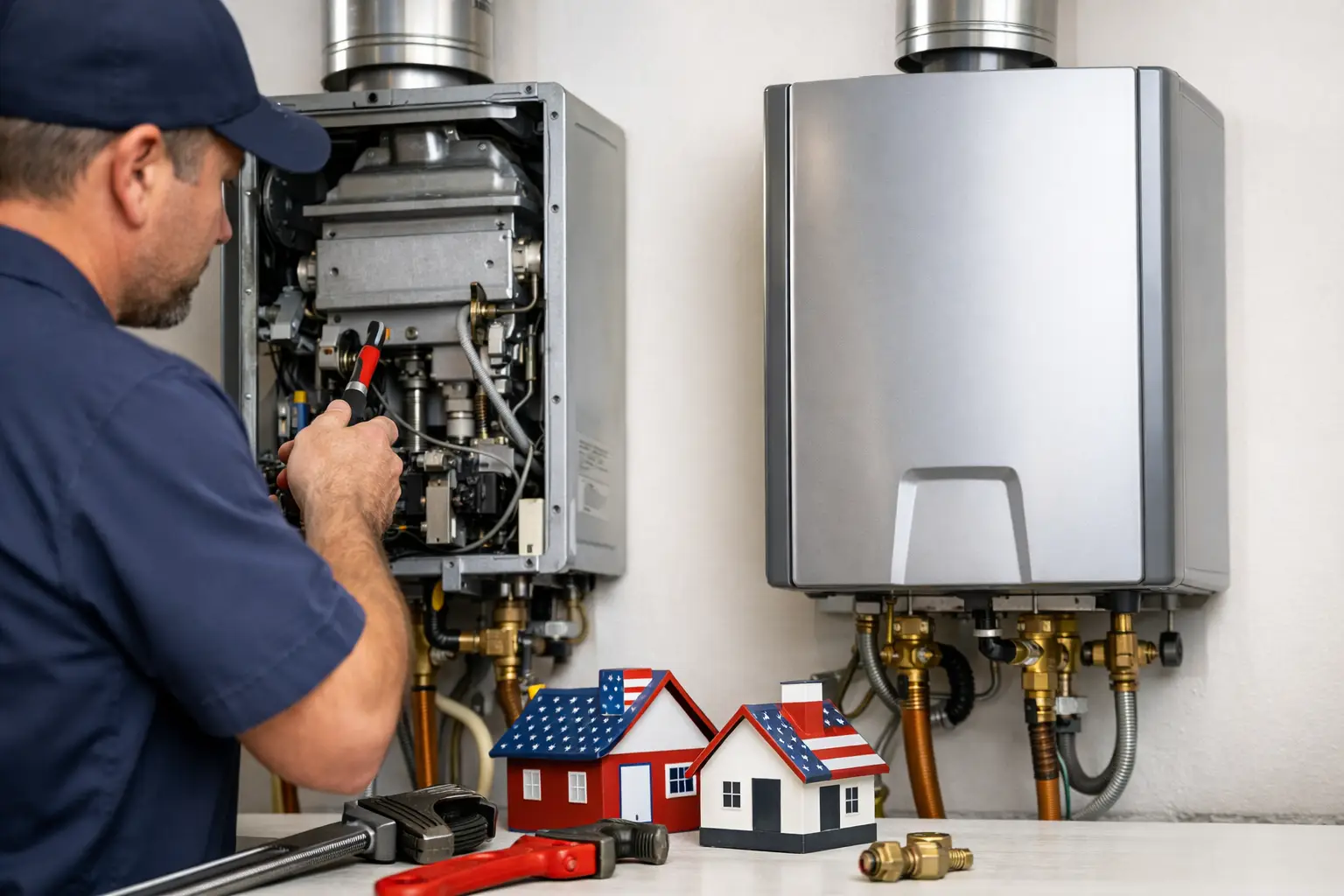
A tankless water heater is not a simple appliance swap. Correct sizing involves water demand, fuel supply, venting, electrical requirements, water quality, code requirements, and the home’s plumbing layout. An installation that overlooks any of these details can limit performance even when the heater itself is high quality.
For homeowners in Menifee, Murrieta, Temecula, and nearby communities, American Plumbing Service can inspect the existing setup, explain the available options clearly, and provide a straightforward onsite estimate. Whether you are replacing a failed tank heater or planning an efficiency upgrade, a professional assessment helps you choose based on real household needs instead of marketing claims.
The best tankless water heater is the one that keeps up with your busiest hour, fits your home’s infrastructure, and can be maintained easily for years to come. A careful sizing visit now can mean reliable hot water when your household needs it most.