A toilet that refills every few minutes is not just an irritating sound behind a closed bathroom door. It can waste a surprising amount of water, raise your utility bill, and point to a worn part inside the tank. If you are asking, “why does my toilet keep running,” the good news is that the problem is usually contained in the tank and often has a clear cause.
A toilet should refill after you flush, then stop once the tank reaches the correct level. If water continues to trickle into the bowl, the tank keeps filling, or the toilet starts running again without anyone flushing it, something is not sealing or shutting off as it should. Acting early can prevent a small, inexpensive repair from becoming a larger water-waste problem.
Why Does My Toilet Keep Running After a Flush?
Most running toilets come down to one of two issues: water is leaking from the tank into the bowl, or the fill valve is allowing too much water into the tank. Several parts work together each time you flush, and one worn or misaligned piece can keep that cycle from ending.
A worn or warped flapper
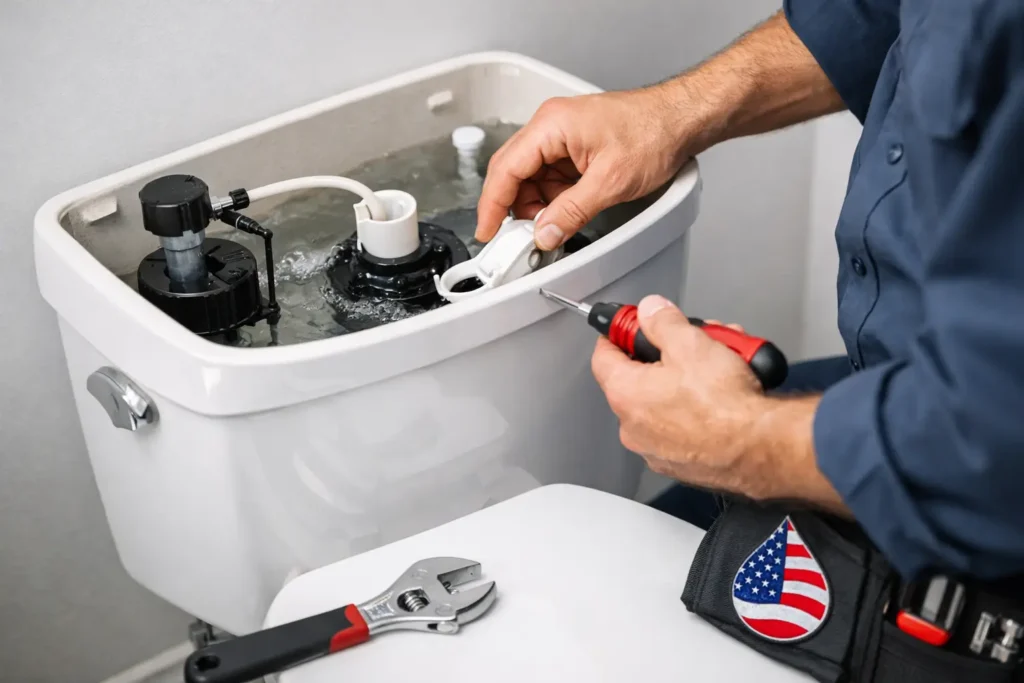
The flapper is the rubber seal at the bottom of the tank. When you press the handle, it lifts and releases water into the bowl. Once the flush is complete, it should drop back into place and create a watertight seal.
Over time, rubber flappers can become stiff, warped, dirty, or cracked. When that happens, water slowly escapes from the tank into the bowl. The fill valve detects the lower water level and turns on to refill the tank. This can repeat all day and night.
A quick way to check is to remove the tank lid and look at the flapper while the toilet is quiet. If the water level drops slowly and the toilet refills without being flushed, the flapper is a likely culprit. Mineral buildup is common in Inland Empire homes and can also keep a flapper from sealing cleanly.
A chain that is too short, too long, or tangled
The chain connects the flush handle lever to the flapper. It needs a little slack when the flapper is closed. A chain that is too tight can hold the flapper slightly open, allowing water to leak into the bowl. A chain that is too long can get caught under the flapper or tangle around another part inside the tank.
This is one of the simplest issues to inspect. With the tank lid removed, make sure the flapper rests flat and the chain hangs freely with a small amount of slack. Do not cut or adjust parts aggressively if you are unsure of the setup. A small adjustment can help, but forcing worn components can create another problem.
A fill valve that will not shut off
The fill valve controls the water entering the tank after a flush. It should stop when the water reaches the proper level. If the valve is old, clogged with sediment, or failing internally, it may keep running even after the tank is full.
You may hear a steady hissing sound near the top of the tank. In some cases, the water level rises close to the top and spills into the overflow tube. That means the fill valve is not shutting off at the right point, and it should be repaired or replaced.
Fill valves are common replacement parts, but the correct adjustment matters. A tank that fills too high wastes water. A tank that fills too low may lead to weak flushing and repeat flushes, which creates a different kind of water-use problem.
Water flowing into the overflow tube
The overflow tube is the open vertical tube in the middle of the tank. It is a safety feature designed to send excess water into the bowl instead of letting the tank overflow onto your bathroom floor.
If water is continuously flowing into that tube, the tank level is too high. The float on the fill valve may need adjustment, or the fill valve may be failing. You can usually see this clearly by lifting the tank lid and looking for water spilling into the top of the tube.
Do not ignore overflow tube activity just because the toilet is not flooding the floor. It is still a continuous water loss, and the sound may get worse as the valve deteriorates.
A damaged flush valve seat or tank component
Sometimes the flapper itself looks fine, but it still cannot seal because the surface beneath it is damaged or coated with mineral deposits. The flush valve seat can become rough, cracked, or warped. Older toilets may also have corroded bolts, worn gaskets, or components that no longer fit together properly.
This is where a simple flapper replacement may not fully solve the issue. Replacing individual parts can make sense when the toilet is otherwise in good condition. If multiple parts are failing, however, rebuilding the tank assembly can be the more reliable and cost-effective choice.
What to Do When Your Toilet Will Not Stop Running
Start by taking the tank lid off carefully and setting it on a towel or stable surface. Porcelain lids can crack easily. Flush the toilet once and watch what happens as the tank refills. Look for a flapper that does not settle into place, a chain that catches, water entering the overflow tube, or a fill valve that continues hissing after the tank is full.
If water is running continuously and you need to stop it right away, turn the shutoff valve behind or near the base of the toilet clockwise. This stops water from feeding the tank. Use a gentle touch, especially if the valve has not been moved in years. Do not force a stuck valve, as an older shutoff valve can leak or break.
If the toilet is overflowing onto the floor, shut off the water supply immediately and avoid using that bathroom. A running toilet and an overflowing toilet are different problems. Overflowing can involve a clogged drain, a malfunctioning fill system, or both, and it calls for faster attention to protect flooring and nearby rooms.
When a Simple Repair Is Enough and When to Call a Plumber
Replacing a flapper or making a minor chain adjustment can be a reasonable homeowner task when the tank parts are easy to identify and there are no leaks outside the tank. Still, the lowest-cost repair is not always the best repair. A universal replacement part may not fit every toilet correctly, and a toilet that continues running after a new flapper likely has another issue.
Call a plumber when the fill valve will not shut off, the water level remains high, the tank has visible cracks, or you have replaced a part and the toilet still runs. Professional service is also a smart choice if the shutoff valve leaks, the toilet rocks at the floor, or you notice water around the base. Those signs can indicate a separate repair that should not be delayed.
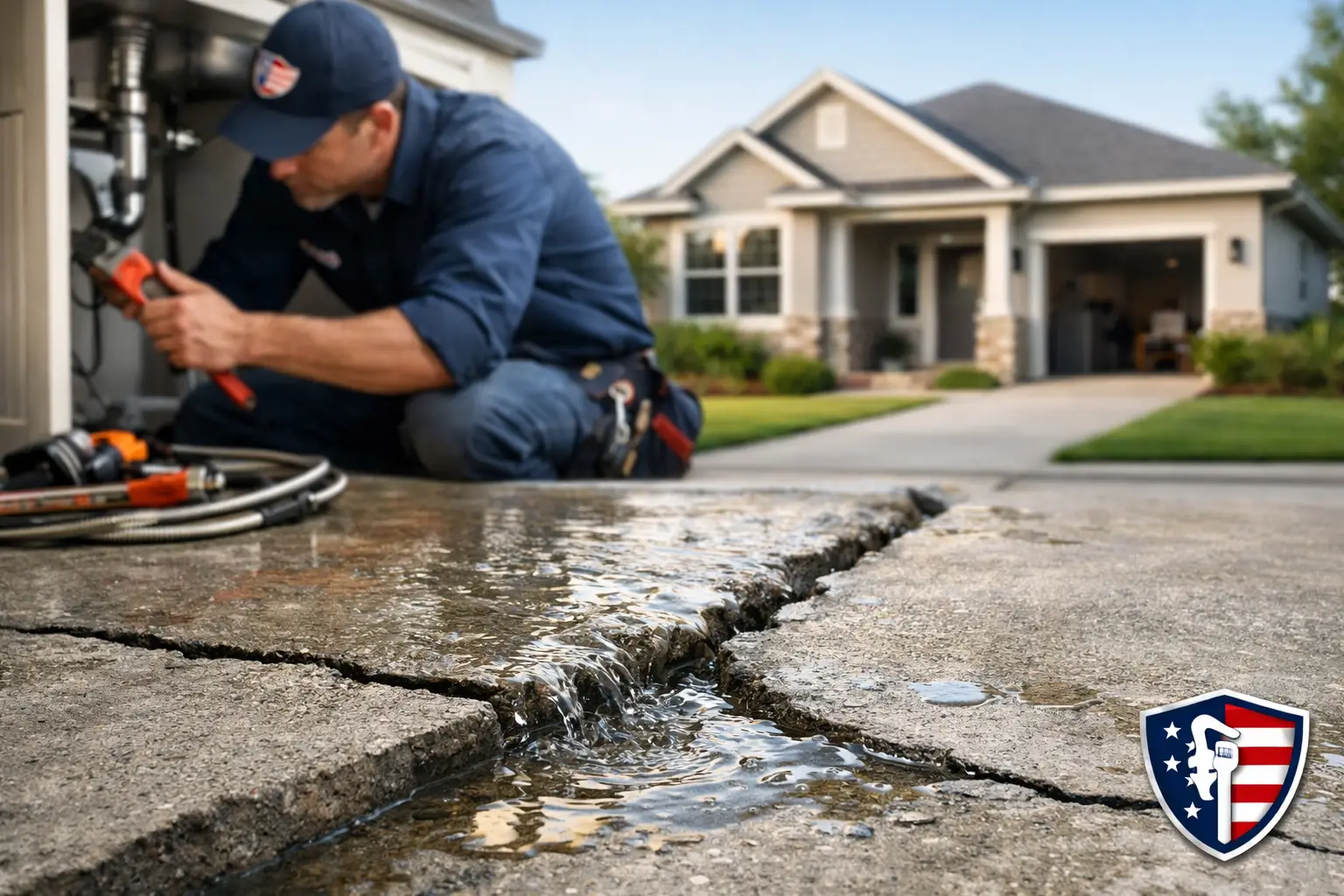
For homeowners in Menifee, Murrieta, Temecula, and nearby communities, American Plumbing Service can identify the source of a running toilet, replace worn components, and check for related leaks before they cause more disruption. A clear diagnosis matters because the same sound can come from different failures inside the tank.
How Much Water Can a Running Toilet Waste?
It depends on how fast the toilet is leaking. A light, occasional refill may seem minor, but it can still add up over weeks. A toilet with a constant flow into the overflow tube can waste far more water in a single day. The exact amount varies by toilet and the severity of the failure, but waiting for the sound to become unbearable is rarely a good strategy.
If your water bill rises unexpectedly, check toilets first. A quiet leak through the flapper may not make much noise, especially during a busy day, but it can still cause repeated refilling. Food coloring placed in the tank can sometimes reveal a flapper leak if color appears in the bowl without flushing. Avoid using this test if you are not comfortable handling the tank components or if the toilet is already overflowing.
Keep a Small Toilet Problem From Becoming a Bigger One
A running toilet is usually repairable, but it is still a sign that water is moving where it should not. Listen for refilling after the bathroom has been unused, check the tank for overflow, and shut off the supply if the water will not stop. Getting the right repair now can protect your water bill, reduce waste, and give your household one less urgent problem to manage.