A water bill that suddenly climbs, a warm spot on the floor, or the faint sound of running water after every faucet is off can point to one problem: water is escaping somewhere it should not. A whole house leak inspection gives homeowners a clear way to find the source before a small leak becomes damaged drywall, ruined flooring, mold growth, or a costly slab repair.
For homes in Menifee, Murrieta, Temecula, and nearby communities, waiting for a visible puddle is rarely the best plan. Many plumbing leaks start behind walls, under concrete, beneath cabinets, or at a fixture connection where they can cause damage for weeks without obvious warning. A professional inspection is designed to locate the issue accurately and explain the repair options in plain language.
When a Whole House Leak Inspection Makes Sense
A whole-home inspection is useful when there is a clear sign of a leak but no single, obvious source. It is also a smart first step when a home has recurring plumbing problems, older supply lines, recent unexplained water damage, or a high water bill that does not match your normal use.
The water meter is often the first clue. If every water-using appliance and fixture is shut off and the meter continues to move, water may be leaving the plumbing system somewhere. That does not automatically mean a slab leak. A running toilet, dripping irrigation valve, leaking water heater connection, or faulty pressure relief valve can produce the same symptom. The inspection separates the simple fixes from the hidden issues that need more specialized work.
Call for service promptly if you notice a musty odor, discoloration on a ceiling or wall, warped flooring, peeling paint, damp carpet, reduced water pressure, or the sound of water moving when nothing is running. Warm areas on tile or concrete can be especially concerning in homes with hot-water lines beneath the slab.
What a Whole House Leak Inspection Includes
The exact scope depends on the home and the symptoms, but a thorough inspection should follow the plumbing system methodically instead of guessing. The goal is to confirm whether there is an active leak, narrow down its location, and identify the most practical repair.
Checking the meter and water pressure
A plumber may begin by documenting the water meter reading and isolating sections of the plumbing system. This helps determine whether the loss is on the home’s water supply side, at a fixture, or potentially outside the house. Water pressure may also be tested because excessive pressure puts added strain on pipes, valves, appliance hoses, and fixture connections.
High pressure is not always the reason a leak starts, but it can turn a weak connection into a recurring problem. If pressure is too high or fluctuates, the plumber can explain whether a pressure regulator or related repair should be part of the solution.
Inspecting accessible plumbing fixtures and connections
Not every leak requires electronic equipment. Toilets, faucets, shutoff valves, under-sink pipes, washing machine hoses, refrigerator water lines, water heaters, and exposed pipes are all checked for moisture, corrosion, dripping, loose fittings, and signs of past leakage.
Toilets deserve close attention because they can waste a surprising amount of water without leaving a puddle. A failing flapper may allow water to pass from the tank to the bowl continuously. The homeowner hears an occasional refill, but the water bill keeps rising. This is a straightforward repair when it is identified early.
Looking for hidden moisture and slab leak indicators
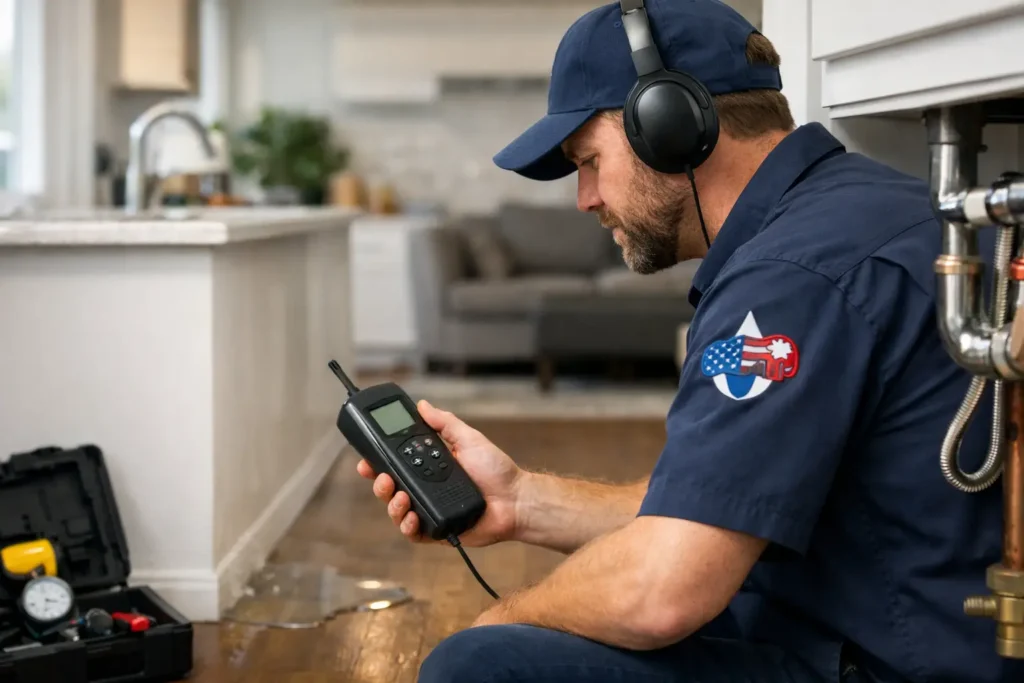
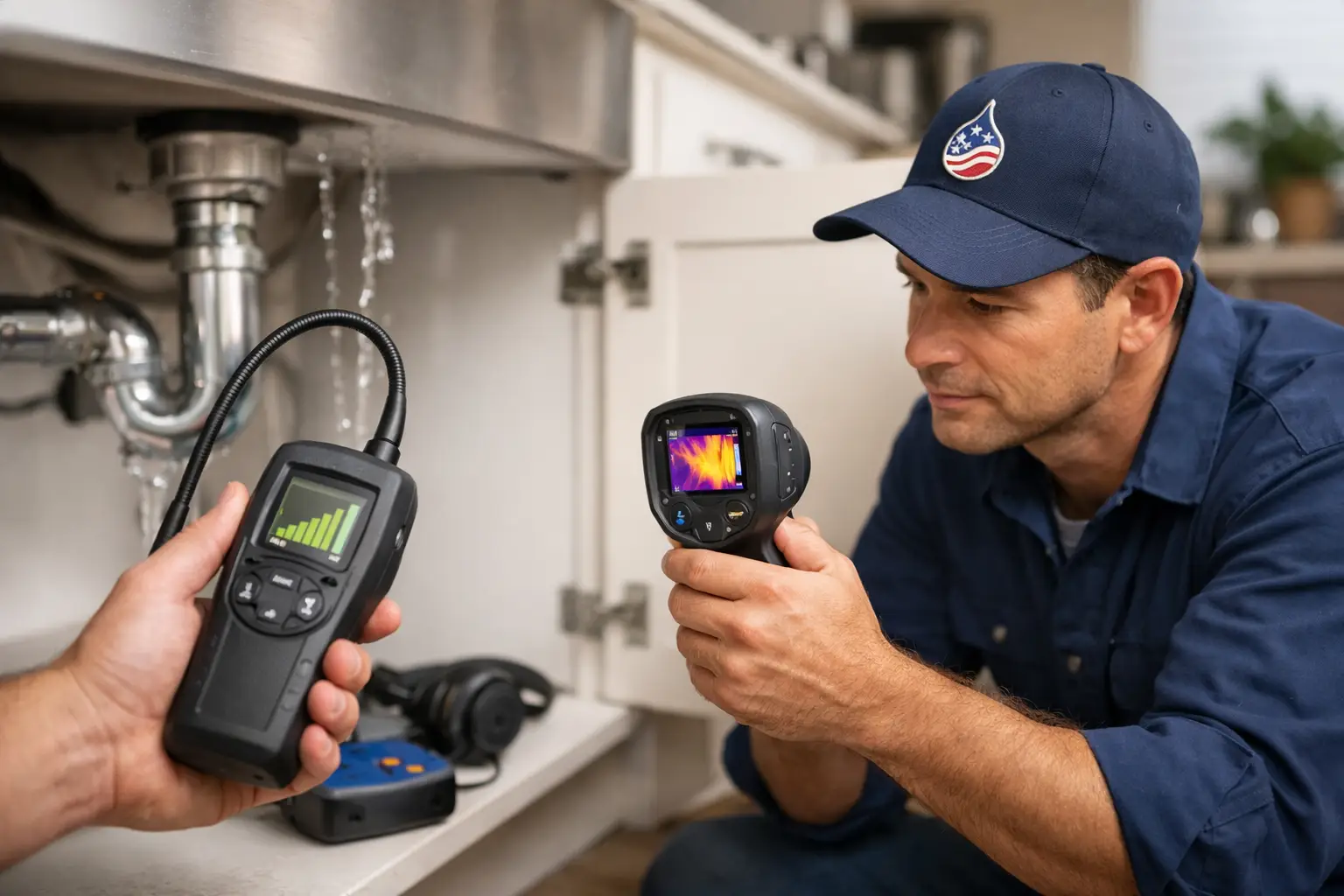
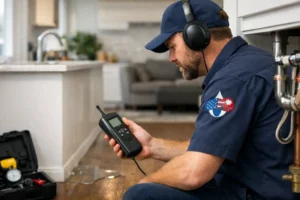
When the leak is not visible, leak detection tools help narrow the search without opening walls or breaking concrete unnecessarily. Depending on the situation, this can include acoustic listening equipment, moisture testing, thermal imaging, or other noninvasive methods.
These tools do not replace experience. Their value is in helping an experienced plumber interpret what the readings mean. A moisture reading near a wall, for example, could come from a supply-line leak, a drain leak, a shower enclosure issue, or moisture entering from outside. The inspection process considers the location, the plumbing layout, meter activity, water pressure, and the condition of nearby fixtures before recommending a repair.
Separating water leaks from drain and sewer issues
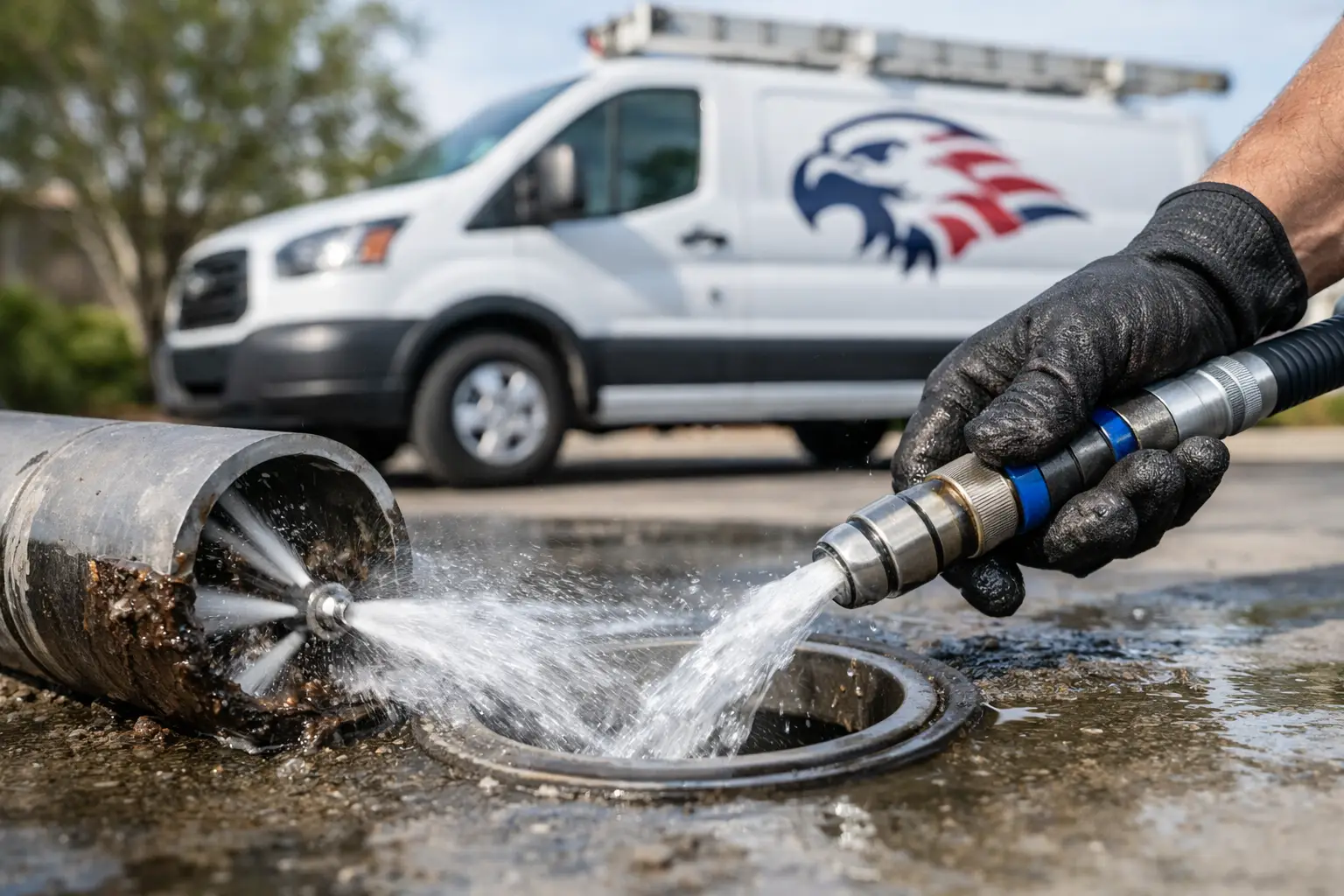
A whole-house leak concern is not always a pressurized water-line leak. A drain line can leak only when a sink, shower, or laundry machine is used. Sewer line problems may show up as slow drains, recurring backups, sewage odors, or damp areas in the yard.
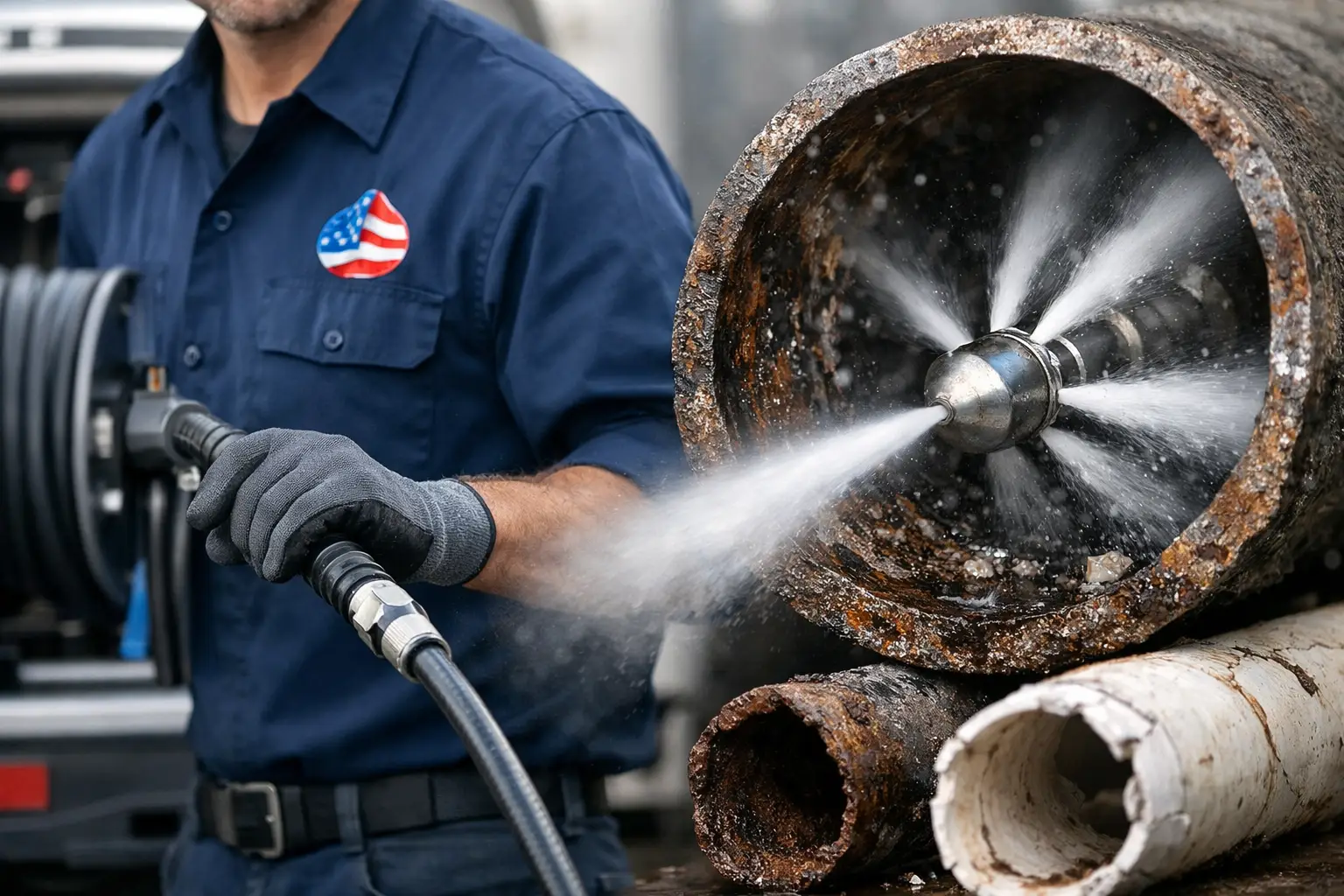
If the symptoms point to a drain or sewer issue, a sewer camera inspection may be the right next step. That is a separate diagnostic service from supply-line leak detection, although a full-service plumbing company can coordinate both. This distinction matters because the repair method, urgency, and cost can be very different.
What Happens After the Leak Is Found
Once the source is identified, the next decision is how to repair it with the least disruption and the best long-term result. A leaking fixture connection may need a simple replacement. A damaged pipe inside a wall may require a small, targeted access opening. A slab leak may call for direct repair, rerouting the affected line, or repiping a larger section if the plumbing has multiple weak points.
There is no single right answer for every slab leak. Direct access can make sense when the leak is in an accessible location and the surrounding pipe is in good condition. Rerouting may avoid cutting through finished flooring or concrete, but it can require opening walls or ceilings. For an older home with repeated failures, a broader repipe can cost more upfront while reducing the chance of another emergency repair soon after.
A dependable plumber should explain those trade-offs before work starts. Ask what caused the leak, what repair is being proposed, whether there are alternatives, and what portions of the home may need restoration afterward. Plumbing repair and cosmetic restoration are not always handled by the same contractor, so clear expectations protect your schedule and budget.
What Homeowners Can Do Before the Appointment
If water is actively leaking, shut off the nearest fixture valve if you can identify it safely. For a larger or unknown leak, turn off the home’s main water supply to limit damage. Do not ignore water near electrical outlets, appliances, or a water heater. Keep people away from the area and call for help.
Before the plumber arrives, make note of when you first saw the problem, whether your water bill changed, which fixtures were in use, and where you have noticed warmth, moisture, odors, or sounds. Clear access to the water heater, sinks, toilets, and any affected rooms can also save time during the visit.
Avoid tearing into drywall, flooring, or concrete based on suspicion alone. A visible stain does not always sit directly below the leak, since water can travel along framing, pipes, and flooring before it appears. Proper leak detection can prevent unnecessary damage to your home.
A Faster Response Limits the Damage
A leak inspection is not just for dramatic emergencies. It is a practical way to get answers when your home is signaling that something is wrong. Early detection can mean replacing a valve instead of repairing a ceiling, fixing a toilet instead of paying months of wasted water charges, or finding a slab leak before flooring and cabinets are affected.
American Plumbing Service provides residential leak detection and repair for homeowners who need a clear diagnosis and a straightforward plan. When you see the signs, schedule an inspection sooner rather than later. The right repair starts with knowing exactly where the water is going.