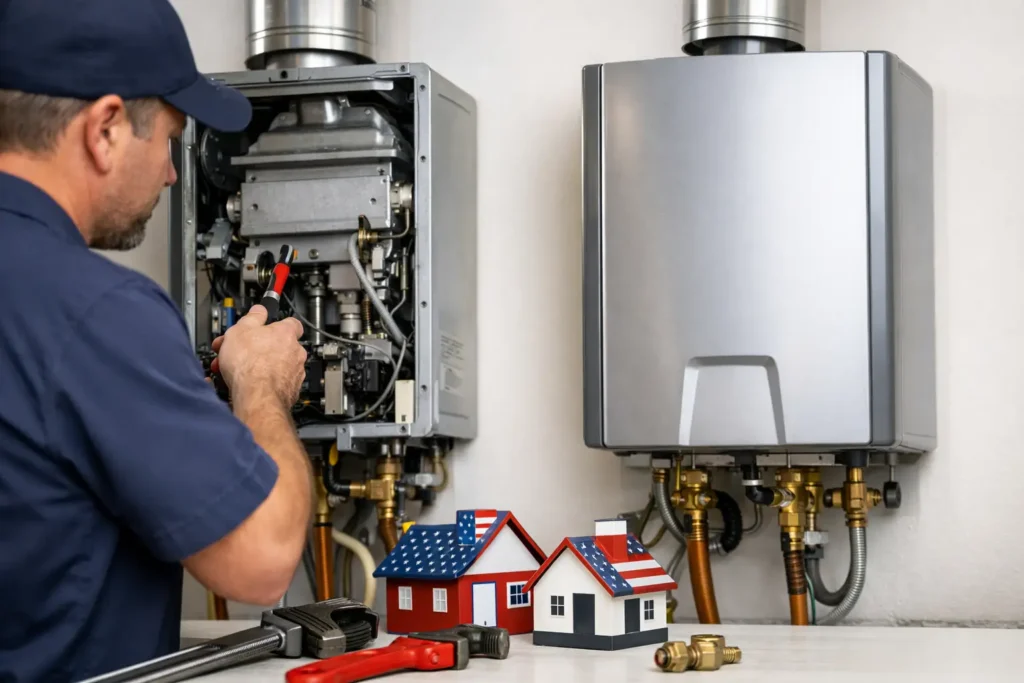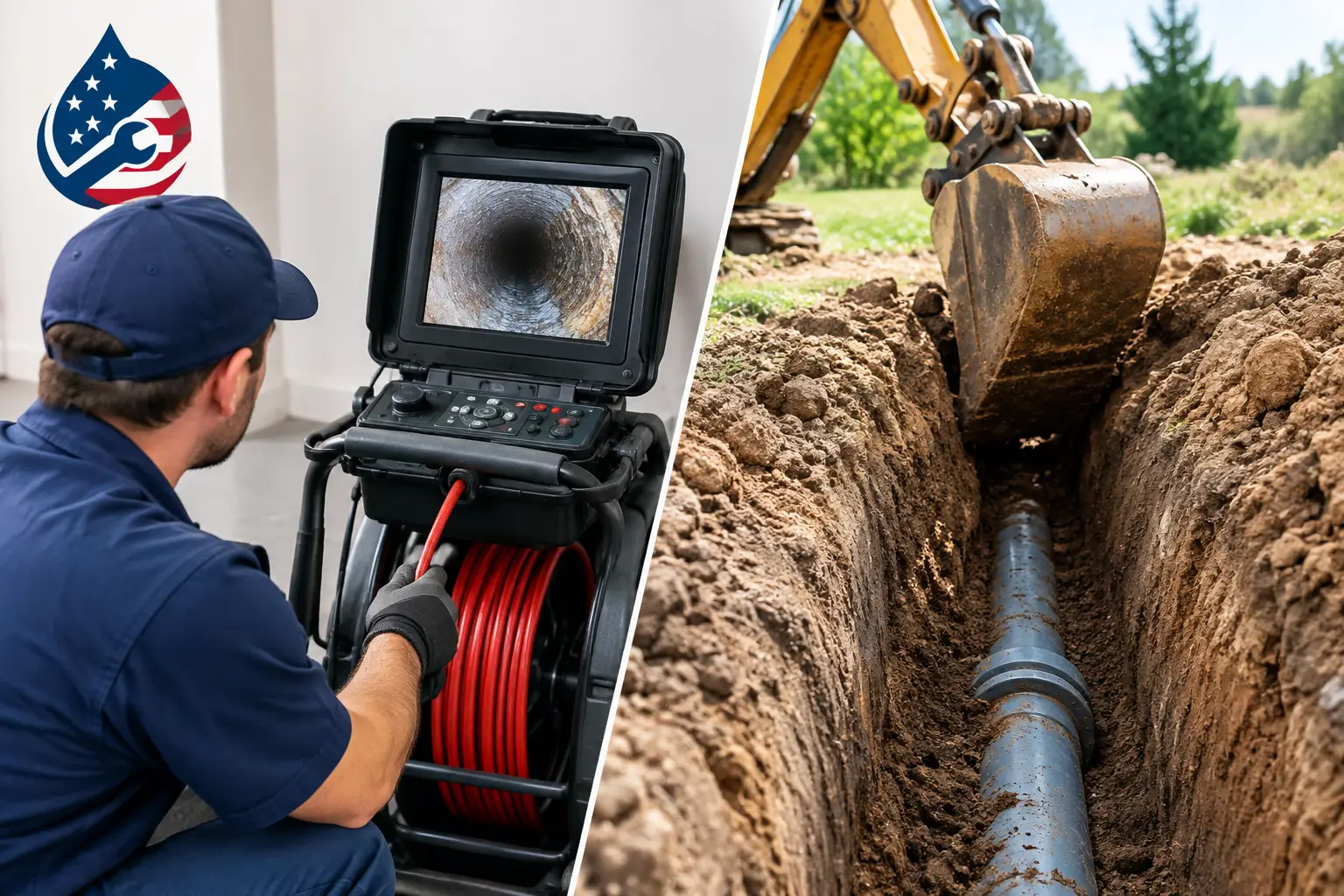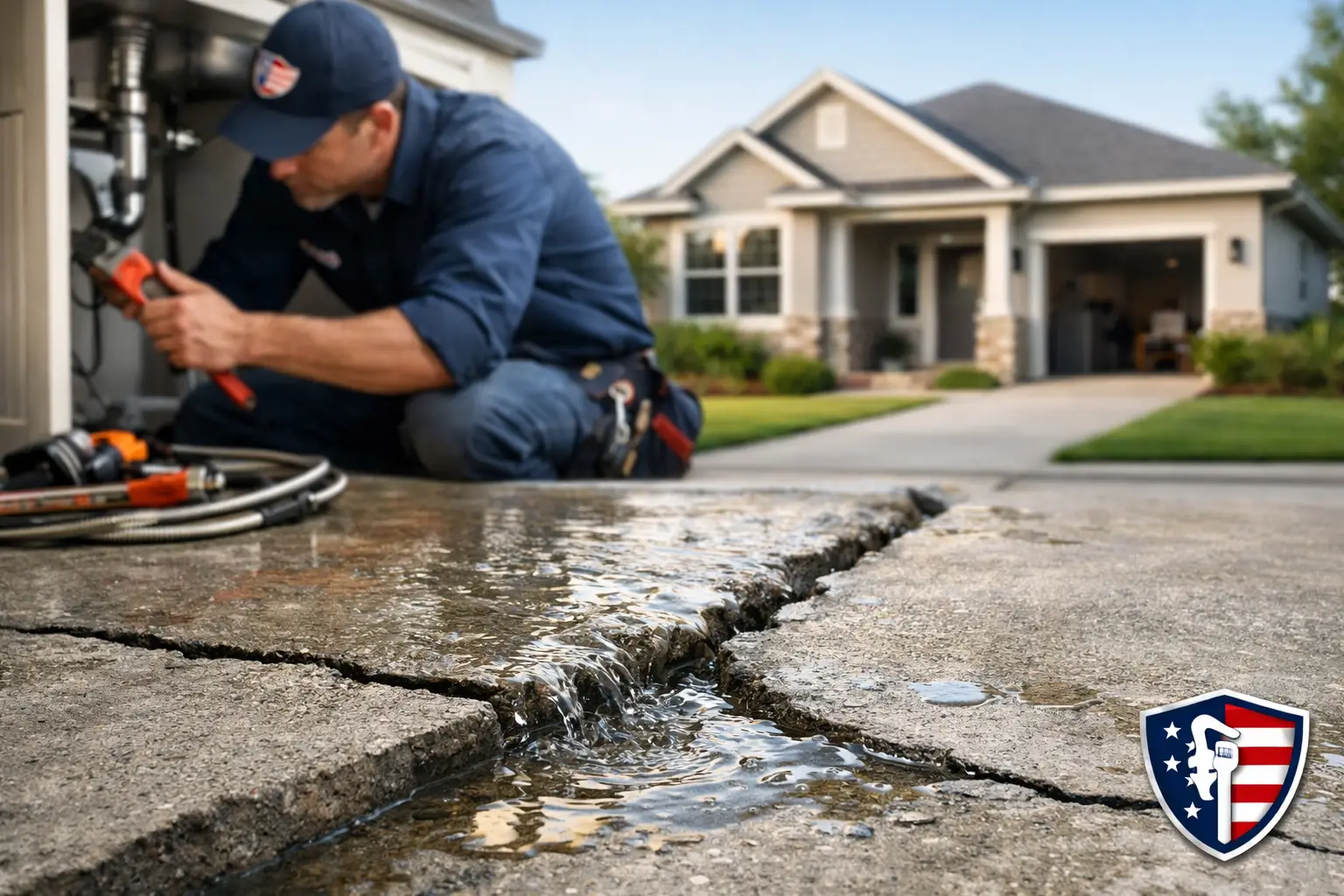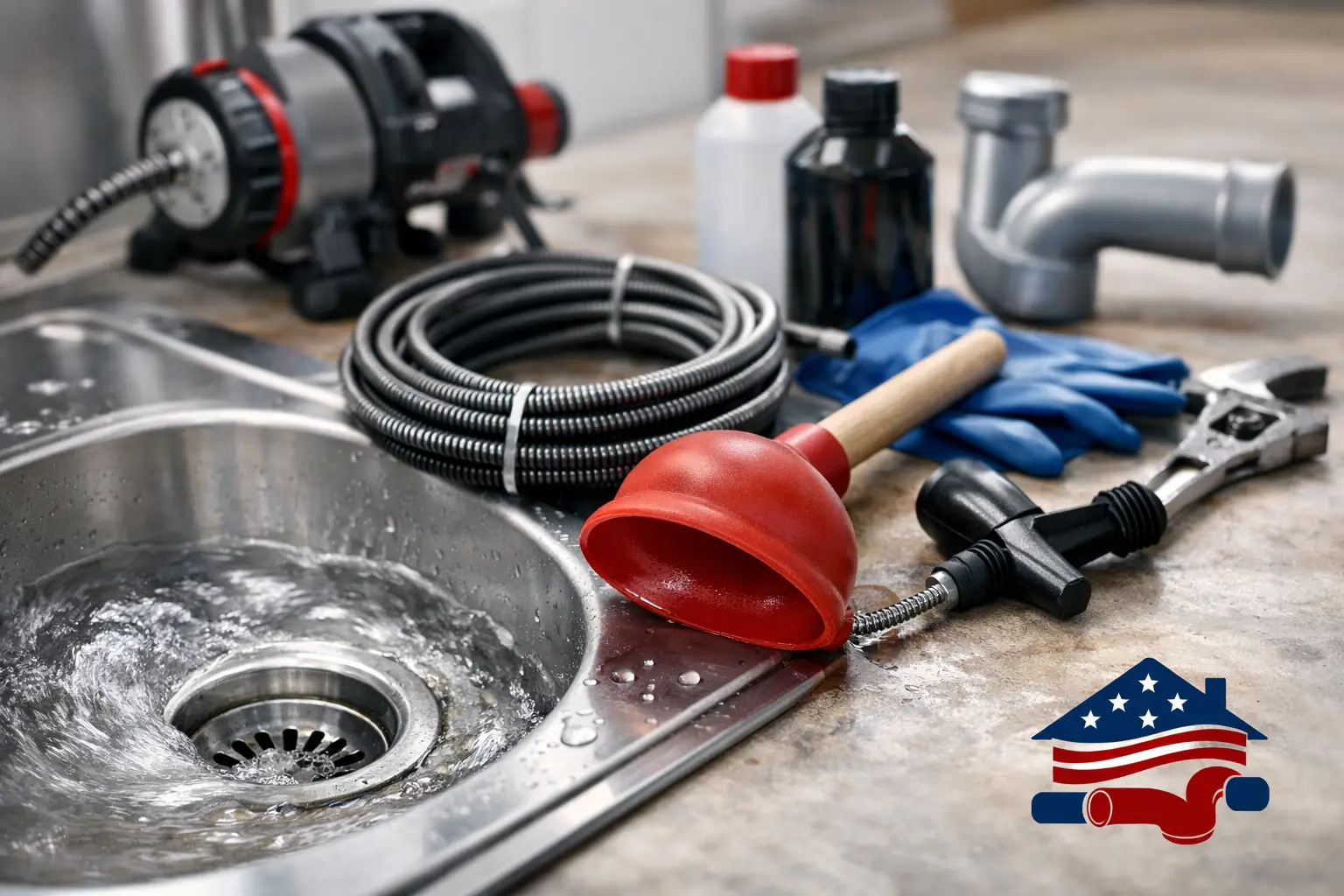
A tankless water heater that suddenly runs cold, flashes an error code, or leaks can put a household on pause fast. When homeowners compare tankless repair versus replacement cost, the lowest immediate price is only part of the decision. The better question is whether a repair will give your family dependable hot water or simply delay a larger expense.
For homeowners in Menifee, Murrieta, Temecula, and nearby communities, the right choice depends on the unit’s age, the failed part, maintenance history, installation quality, and the cost of restoring safe operation. A professional diagnosis gives you the facts needed to decide without guessing.
What Does Tankless Water Heater Repair Usually Cost?
Tankless water heater repairs can range from a relatively simple service call to a major component replacement. A minor issue, such as cleaning a clogged inlet filter, flushing mineral buildup, replacing a sensor, or correcting a venting connection, generally costs far less than installing a new unit. More involved repairs, including a failed control board, heat exchanger problem, gas valve issue, or extensive venting correction, can become expensive quickly.
The repair price is affected by the heater’s fuel type, brand, accessibility, part availability, and whether the work is needed after hours. Gas tankless units also need careful testing of combustion, gas supply, venting, and safety controls. That is not a place for a trial-and-error repair.
A useful rule of thumb is to compare the full repair estimate with the cost of a properly installed replacement, not just the price of the appliance. If the repair addresses one isolated problem and the rest of the system is in good shape, repair is often the practical choice. If the estimate involves multiple aging components, replacement may protect you from another interruption soon after the first repair.
Tankless Repair Versus Replacement Cost: The Main Factors
A tankless water heater is designed to last longer than many conventional tank-style models, often around 15 to 20 years with regular maintenance. But age alone does not make replacement necessary. A well-maintained unit with a failed igniter at year 10 may still have many reliable years left. On the other hand, a neglected unit may develop recurring scale-related or heat exchanger issues much earlier.
The age and condition of the unit
For a newer tankless heater, repairing a single failed part is usually the sensible route. If the unit is approaching the end of its expected service life, a major repair deserves closer review. Parts can become harder to source on older models, and one repair does not reverse wear in other components.
Ask whether the repair solves the root cause. For example, replacing a damaged part without addressing hard-water scale, improper gas sizing, restricted venting, or an electrical issue can leave the same problem waiting to return.
The size of the repair estimate
There is no universal percentage that automatically means replacement is best, but a large repair bill on an older unit should prompt a replacement estimate. This is especially true when the repair involves the heat exchanger, control board, or several parts at once.
A replacement has a higher upfront cost, but it may include a new manufacturer warranty, updated safety features, and a unit sized correctly for your household’s current hot-water demand. If your family has grown, added bathrooms, or installed a large soaking tub, the original tankless heater may no longer be the right capacity.
Repeat breakdowns and lost convenience
One repair is normal. Repeated no-hot-water calls are a warning sign. The true cost of keeping an unreliable heater is more than invoices. It can mean missed work, cold showers, disrupted laundry, and the stress of another emergency call.
If you have needed several repairs in the past year or two, replacement can be the more predictable investment. A technician can document what is failing, explain what may be next, and help you weigh the options clearly.
Efficiency and operating costs
Tankless systems are efficient because they heat water on demand rather than storing a full tank of hot water. However, a poorly maintained or improperly installed unit may not perform at its best. Mineral scale can reduce flow and heat transfer. Incorrect settings, undersized gas lines, or venting problems can also affect performance.
A newer replacement may improve efficiency, but savings alone do not always justify replacing a unit that can be repaired reliably. Consider energy costs as one part of the decision, along with the repair history and remaining useful life.
Signs Repair Is Likely Worth It
Repair is often the right move when the unit is relatively new, has been serviced regularly, and has one clearly identified issue. An error code does not automatically mean the heater is finished. Many codes point to repairable problems involving ignition, water flow, sensors, venting, or maintenance needs.
Repair may make sense when the heater has no history of repeated failures, replacement parts are available, and the heat exchanger is in good condition. A professional flush and inspection can also restore performance when mineral buildup is the primary problem.
Do not ignore a small leak, inconsistent water temperature, unusual noise, or a drop in hot-water flow. Addressing a problem early may keep it from becoming a more costly failure.
When Replacement Is the Better Long-Term Value
Replacement is often the stronger choice when the heat exchanger is leaking or damaged, repairs are recurring, parts are discontinued, or the unit is old enough that a major repair offers limited value. It can also make sense if the system was installed incorrectly and requires substantial changes to gas piping, venting, electrical connections, or water lines.
A new installation is an opportunity to correct problems that may have affected the old heater from day one. Proper sizing matters. A unit that is too small may struggle when two showers, a dishwasher, and laundry are running at the same time. A qualified plumber can calculate your household’s peak demand and recommend a system that fits it.
Replacement can also be preferable after significant water damage or corrosion. Water where it should not be can affect internal electronics and create safety concerns, especially on gas-fired equipment. Shut off the water supply if possible and schedule service promptly rather than continuing to run the unit.
Do Not Compare Appliance Price Alone
The price on a tankless water heater box is not the total replacement cost. Proper installation can involve labor, permits where required, removal of the old unit, gas line adjustments, new venting, water isolation valves, pressure relief components, electrical work, and code-compliant connections. Each home is different.
A straightforward replacement in the same location may cost less than converting from a tank-style heater or moving equipment to a new area. Homes with older gas piping or difficult vent routes may need additional work. A clear onsite estimate should explain what is included so there are no surprises.
This is also why a repair estimate should be specific. “Needs service” is not enough information to make a decision. You should know the failed component, why it failed, the expected repair cost, and whether the technician sees other concerns that could affect reliability.
Questions to Ask Before You Approve the Work
Before choosing repair or replacement, ask the plumber how old the unit is, what failed, and whether the issue is likely isolated or part of a larger pattern. Ask whether the repair is covered by a parts or labor warranty and whether replacement parts are readily available.
If replacement is recommended, ask whether your current heater is properly sized for your household. Confirm whether the estimate includes all installation work, permits if needed, removal of the old unit, and any required gas, venting, or electrical upgrades. If the upfront investment is a concern, ask about financing options before putting off a necessary decision.
Protect Your Next Tankless Water Heater Investment
Regular maintenance can make the repair-versus-replacement decision much easier down the road. In areas with hard water, periodic flushing is especially valuable because mineral deposits can restrict flow and strain the heat exchanger. Cleaning filters, checking venting, testing safety components, and inspecting for leaks help catch small concerns before they interrupt hot water.
American Plumbing Service can inspect your tankless system, identify the cause of the problem, and provide a straightforward recommendation based on the unit in your home. Whether the right answer is a targeted repair or a new installation, you deserve an option that restores dependable hot water without unnecessary work.
If your tankless heater is acting up, do not wait for a complete failure during a busy morning or weekend. Schedule an evaluation while you still have time to compare the repair, replacement, warranty, and financing options that make the most sense for your household.