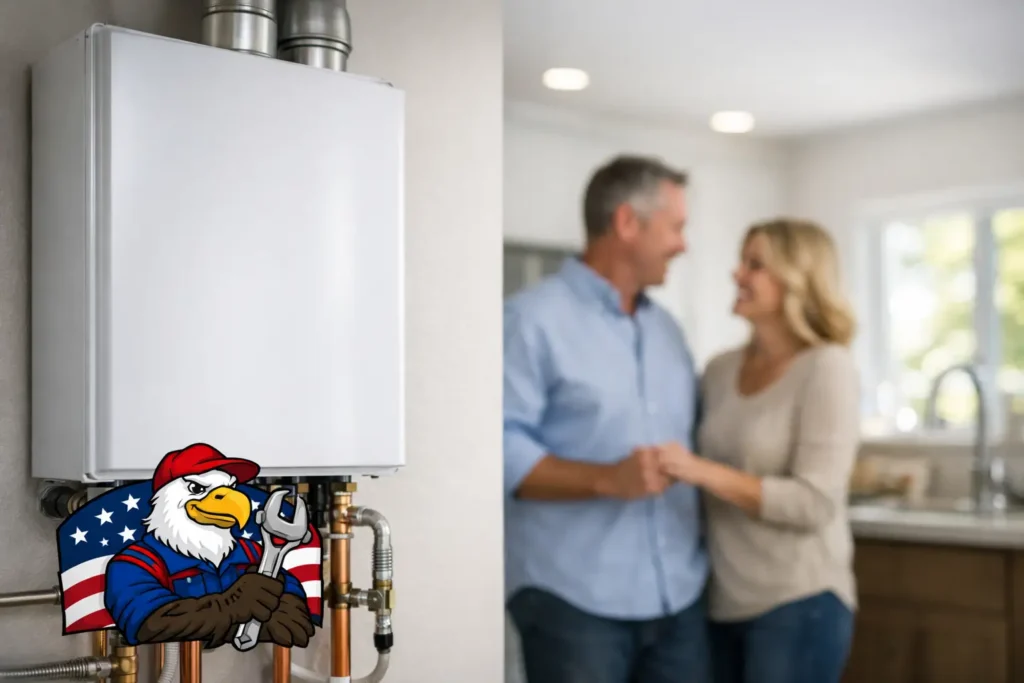
A cold shower during a busy Perris morning is more than an inconvenience, especially when several people need hot water before work or school. A properly selected tankless water heater Perris homeowners can depend on provides hot water as it is needed instead of storing it in a large tank. The result can be a more efficient system, a smaller equipment footprint, and a reliable supply of hot water for the right household.
But tankless is not automatically the best answer for every home. The unit must be sized correctly, the gas or electrical system must support it, and installation needs to meet local code requirements. Getting those details right is what separates a tankless upgrade that performs well from one that struggles when the dishwasher, laundry, and showers are running at the same time.
Is a Tankless Water Heater Right for Your Perris Home?
A traditional tank water heater heats and stores a limited amount of water. Once that stored hot water is used, the tank needs time to recover. A tankless unit heats water only when a fixture calls for it, so it can continue producing hot water as long as it is operating within its rated capacity.
For many households, that is the biggest advantage. Families with staggered shower schedules, frequent laundry, or a large soaking tub often appreciate not having to plan around a depleted water heater tank. Tankless units also take up far less room than conventional tanks, which can be helpful in garages, closets, and compact utility areas.
The trade-off is that tankless systems are more sensitive to proper sizing. A unit that is undersized may provide plenty of hot water for one shower but fall behind when a second shower starts or another major appliance turns on. The right choice depends on your household’s peak demand, not simply the number of bathrooms in the home.
The Questions That Determine Proper Sizing
A plumbing professional will look beyond the square footage of your house. They will consider how many fixtures may run simultaneously, how many people live in the home, the flow rates of showers and faucets, and the temperature of incoming water.
The goal is to calculate the gallons per minute your household needs during its busiest period. For example, a home that regularly runs two showers while someone uses the kitchen sink needs more capacity than a home where hot water use is usually limited to one fixture at a time. Choosing a larger unit than necessary can increase upfront cost, while choosing too small can create frustrating performance problems.
Fuel type matters as well. Gas tankless water heaters are a common choice because they can produce strong flow rates for larger households. However, they may require a larger gas line, new venting, or changes to the existing setup. Electric tankless units can work well in specific applications, but whole-home electric models may require substantial electrical capacity. An inspection before purchase is the best way to avoid unexpected installation costs.
What Tankless Water Heater Installation in Perris Can Involve
Replacing a standard tank with a tankless model is not always a simple swap. The old tank must be removed, and the new unit needs the correct connections, ventilation, combustion air requirements, safety components, and condensate drainage when applicable.
For gas models, one of the most common surprises is gas line sizing. Tankless water heaters can demand a higher volume of gas while operating than a typical tank heater. If the current gas line is too small or serving several appliances, it may need to be upgraded for safe, reliable performance.
Venting is another major factor. Modern condensing tankless systems often use specialized vent materials and may allow more flexible routing than older water heaters. Still, the vent path, termination location, and clearances need to be planned correctly. This is not an area for guesswork or a shortcut.
A professional installation also includes checking water pressure, installing isolation valves for future service, confirming the unit’s settings, and testing hot water delivery throughout the home. Permits and inspections may be required depending on the work involved. Handling those details correctly helps protect your home, supports manufacturer warranty requirements, and reduces the risk of a callback after installation.
Costs: What Homeowners Should Expect
A tankless water heater usually costs more upfront than a standard tank replacement. The final price depends on the unit’s capacity and efficiency rating, whether it is gas or electric, existing plumbing conditions, needed gas or electrical upgrades, venting requirements, and permit costs.
In a straightforward replacement where the home already has compatible gas, venting, and water connections, installation may be relatively direct. In an older home or a home converting from a tank to tankless, the project can require more work. That higher initial investment may make sense if your household will use the system’s benefits for years, but it is worth comparing the full scope of work instead of focusing only on the price of the heater itself.
A clear onsite estimate should explain what is included: removal and disposal of the old unit, installation materials, necessary upgrades, testing, and any permit-related work. If the investment is a concern, ask about available financing options before delaying a replacement that has become unreliable or unsafe.
Tankless Maintenance Is Not Optional
Tankless water heaters are durable, but they need regular maintenance to continue operating efficiently. Minerals in the water can build up inside the heat exchanger over time. This is especially relevant in areas with hard water, where scale can reduce performance and eventually contribute to error codes or system damage.
Most manufacturers recommend periodic flushing or descaling, often once a year, though the right schedule depends on water quality and household use. During service, a plumber can flush the heat exchanger, inspect the filter and valves, check venting and drainage, verify combustion performance on gas units, and identify small issues before they turn into a no-hot-water emergency.
Skipping maintenance can shorten the life of the equipment and may affect warranty coverage. It can also lead to symptoms homeowners notice quickly: reduced hot water flow, fluctuating temperatures, unusual noises, or error messages on the display.
Signs Your Tankless Unit Needs Repair
Not every tankless problem means the system needs replacement. Sometimes the issue is a clogged inlet filter, mineral buildup, an ignition component, a venting concern, or a sensor that needs service. Prompt diagnosis is important because tankless units use advanced controls that should be evaluated by a trained professional.
Call for service if the unit shuts down repeatedly, produces inconsistent water temperature, displays an error code, leaks, makes unusual sounds, or fails to provide hot water. If you smell gas, leave the area, avoid operating electrical switches or appliances, and contact the gas utility or emergency services as appropriate before scheduling plumbing service.
When Replacement Makes More Sense Than Repair
If your current tankless water heater has been maintained and the repair is minor, repair is often the practical choice. But replacement may be the better value when the unit is near the end of its expected service life, has recurring failures, has a damaged heat exchanger, or no longer meets your household’s hot water demand.
A replacement is also an opportunity to correct an original sizing mistake. If your family has grown, you added a bathroom, or mornings now involve multiple showers at once, a new unit can be selected around the way your household actually uses water today.
American Plumbing Service can assess the condition of your existing water heater, explain whether repair or replacement makes financial sense, and provide a straightforward estimate for Perris homeowners. The focus should be on a system that delivers dependable hot water without creating avoidable surprises later.
Common Questions About Tankless Water Heaters
Will a tankless water heater provide unlimited hot water?
It can provide continuous hot water, but not unlimited flow. Every unit has a maximum output. If demand exceeds that output, water temperature can drop. Correct sizing is the key to avoiding this problem.
Does a tankless water heater save money?
It can reduce energy waste because it does not keep a large tank of water hot around the clock. Actual savings depend on your fuel source, water use habits, the efficiency of the new unit, and the condition of the system being replaced.
How long does a tankless water heater last?
With proper installation and routine maintenance, a quality tankless water heater can often last longer than a conventional tank system. Water quality, usage, and annual descaling all affect its lifespan.
A tankless water heater should make daily life easier, not add another household concern. If your current unit is failing, your hot water runs out too quickly, or you want to see whether a tankless upgrade fits your home, schedule an onsite evaluation before the next cold shower forces a rushed decision.