A garbage disposal that hums without grinding is usually telling you one thing: the motor has power, but the grinding plate cannot turn. If you are asking, “why is my garbage disposal humming,” treat it as an early warning. Turn it off promptly. Letting a jammed unit continue to hum can overheat the motor and turn a simple removal job into a disposal replacement.
Why Is My Garbage Disposal Humming?
Most humming disposals are jammed by something caught between the grinding plate and the stationary ring inside the unit. A small piece of bone, a fruit pit, a utensil, a bottle cap, or even a hard fragment of food can stop the mechanism while the motor continues trying to run.
The hum can also point to a worn-out or seized motor, especially in an older disposal. In that case, the unit may hum even after the obstruction is removed, or it may trip its reset button repeatedly. The key difference is whether the grinding plate can move freely once power is disconnected.
A humming disposal is not usually a sewer-line emergency, but it can create a backed-up kitchen sink if food waste and water cannot drain. Address it before running the dishwasher or filling the sink with more water.
Start With Safety, Not the Reset Button
Never reach into a garbage disposal, even if the wall switch is off. A switch can be bumped, wired incorrectly, or accidentally turned back on while you are working. Do not put your hand into the disposal to feel for an object.
Turn the disposal switch off first. Then unplug the unit from the outlet under the sink. If it is hardwired, turn off the correct circuit breaker at your electrical panel. Confirm the disposal cannot turn on before doing anything else.
Avoid chemical drain cleaners. They will not free a jammed grinding plate, and they can leave caustic liquid in the disposal and sink drain. That creates a burn risk for anyone who later needs to inspect or repair the unit.
What You Can Safely Try at Home
Once the power is fully off, shine a flashlight into the disposal opening. Look for obvious foreign objects such as silverware, plastic pieces, bones, pits, or broken glass. Use long kitchen tongs or pliers to remove anything visible. Keep your hands out of the opening.
Use the Disposal Wrench
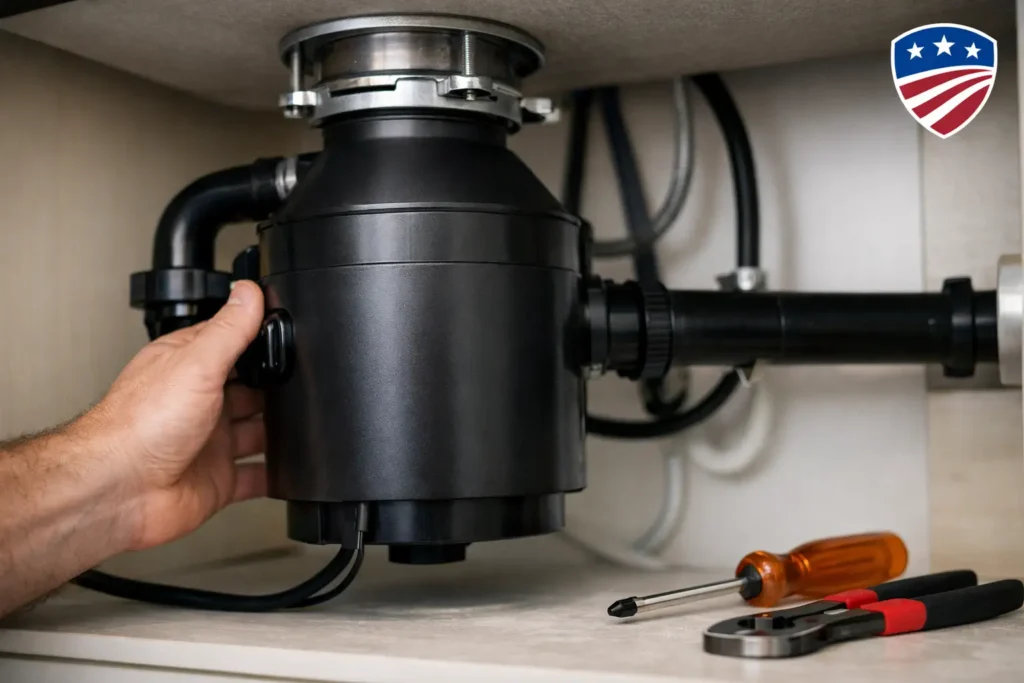
Many disposals have a hex-shaped socket centered on the bottom of the unit. The original disposal wrench is an L-shaped tool designed to fit this socket. Insert it into the bottom and work it back and forth until the grinding plate begins to move.
If you do not have the disposal wrench, check the cabinet or the original installation paperwork. Some manufacturers sell replacement wrenches, but do not force a random tool into the socket. Excess force can damage the unit or slip unexpectedly.
Some older models can also be turned from above using a wooden broom handle placed against a grinding lug. This should only be done with the power disconnected. It is less precise than using the bottom wrench and may not work on every model.
Press the Reset Button
After clearing the obstruction and freeing the plate, locate the small reset button on the bottom of the disposal. It is commonly red and may have popped out when the unit overheated. Press it firmly once.
Wait a few minutes if the disposal is still warm. Then restore power, run cold water into the sink, and briefly turn the disposal on. If it runs normally, keep cold water flowing for 15 to 30 seconds to flush remaining food particles through the drain.
If it hums again, turn it off immediately. Do not keep cycling the switch or repeatedly pressing the reset button. That can overheat the motor and make a repair less likely.
Common Items That Jam a Garbage Disposal
Garbage disposals are built for small amounts of soft food residue, not every item left on a dinner plate. Hard or fibrous materials are the most common sources of jams. They include:
- Bones, fruit pits, popcorn kernels, shells, and hard candy
- Silverware, twist ties, bottle caps, plastic tabs, and small toys
- Corn husks, celery strings, onion skins, artichoke leaves, and fibrous vegetable scraps
- Large amounts of potato peels, rice, pasta, coffee grounds, or grease
Some of these materials do not jam the disposal immediately. Instead, they pass partially through, collect in the trap or branch drain, and contribute to a kitchen sink clog. If the disposal runs but water drains slowly or backs up into the other sink bowl, the problem may be in the drain piping rather than the disposal itself.
When the Humming Means the Disposal Is Failing
A jam is often fixable, but a disposal has mechanical and electrical parts that wear out over time. If the unit is older, leaks from the bottom, smells burned, or will not turn after a jam is removed, replacement may be more practical than repair.
Call a plumber when the disposal hums but will not free up with the proper wrench, the reset button will not stay in, or the unit trips the breaker. A burning odor, smoke, sparking, or hot electrical wiring requires immediate attention. Leave the power off and do not use the sink until the issue is checked.
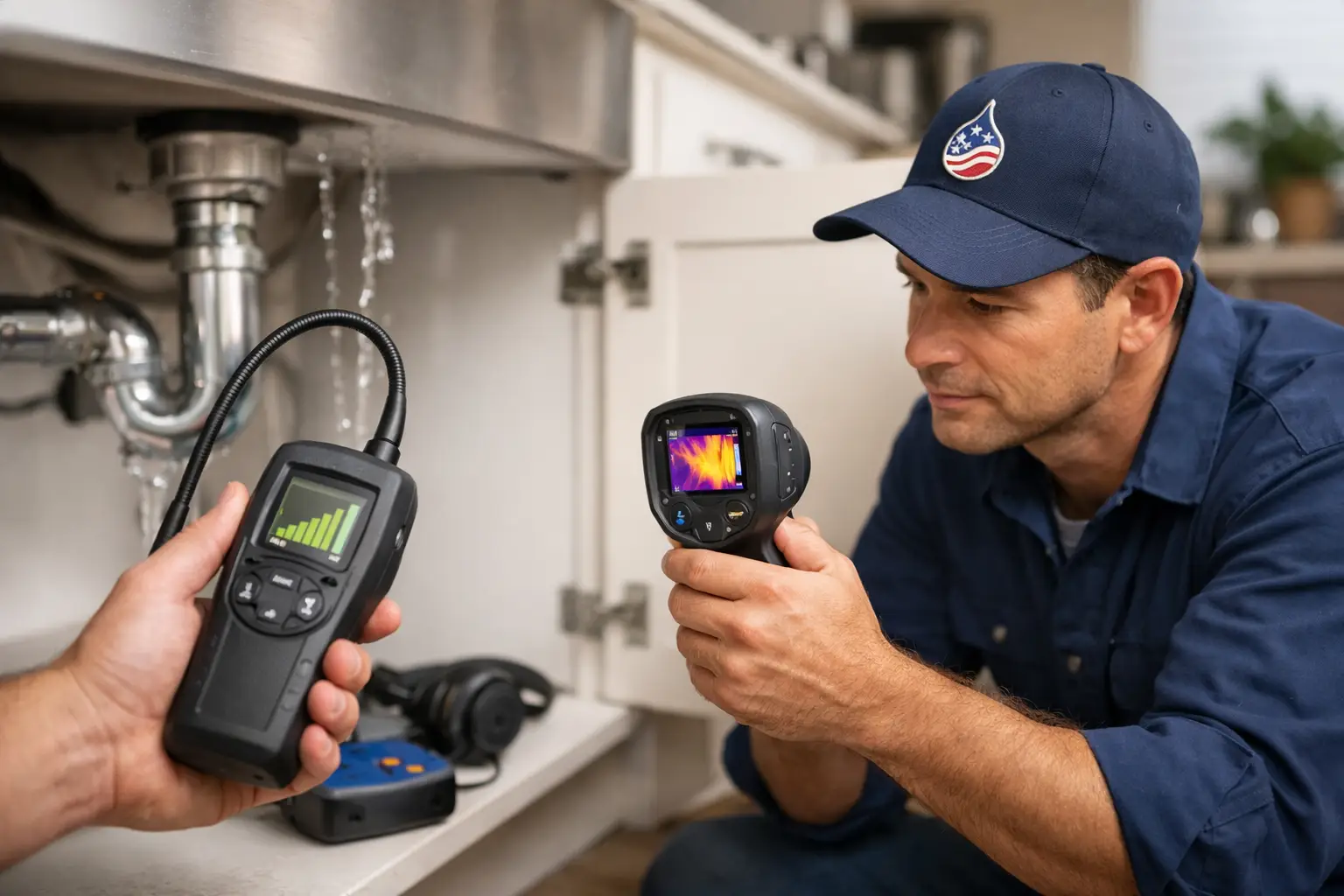
You should also schedule service if the disposal is leaking. Water from the bottom of the housing often means an internal seal has failed. That is generally not a lasting repair situation. A plumber can confirm whether the leak is from the disposal body, the sink flange, the dishwasher connection, or a nearby drain fitting.
For homeowners in Menifee, Murrieta, Temecula, and nearby communities, American Plumbing Service can inspect a jammed or failing disposal, clear related kitchen drain clogs, and provide a straightforward onsite estimate for repair or replacement.
A Humming Disposal May Be Hiding a Drain Problem
Sometimes the disposal itself is not the only issue. Food waste can pack into the disposal outlet, the curved P-trap beneath the sink, or the drain line in the wall. You may notice gurgling, slow drainage, dirty water rising in the adjacent sink, or a dishwasher that drains back into the sink.
A disposal replacement alone will not clear a clogged branch drain. When those symptoms are present, the plumber may need to inspect and clean the kitchen drain line as part of the service. This is especially common when grease, coffee grounds, pasta, or rice have been sent down the disposal over time.
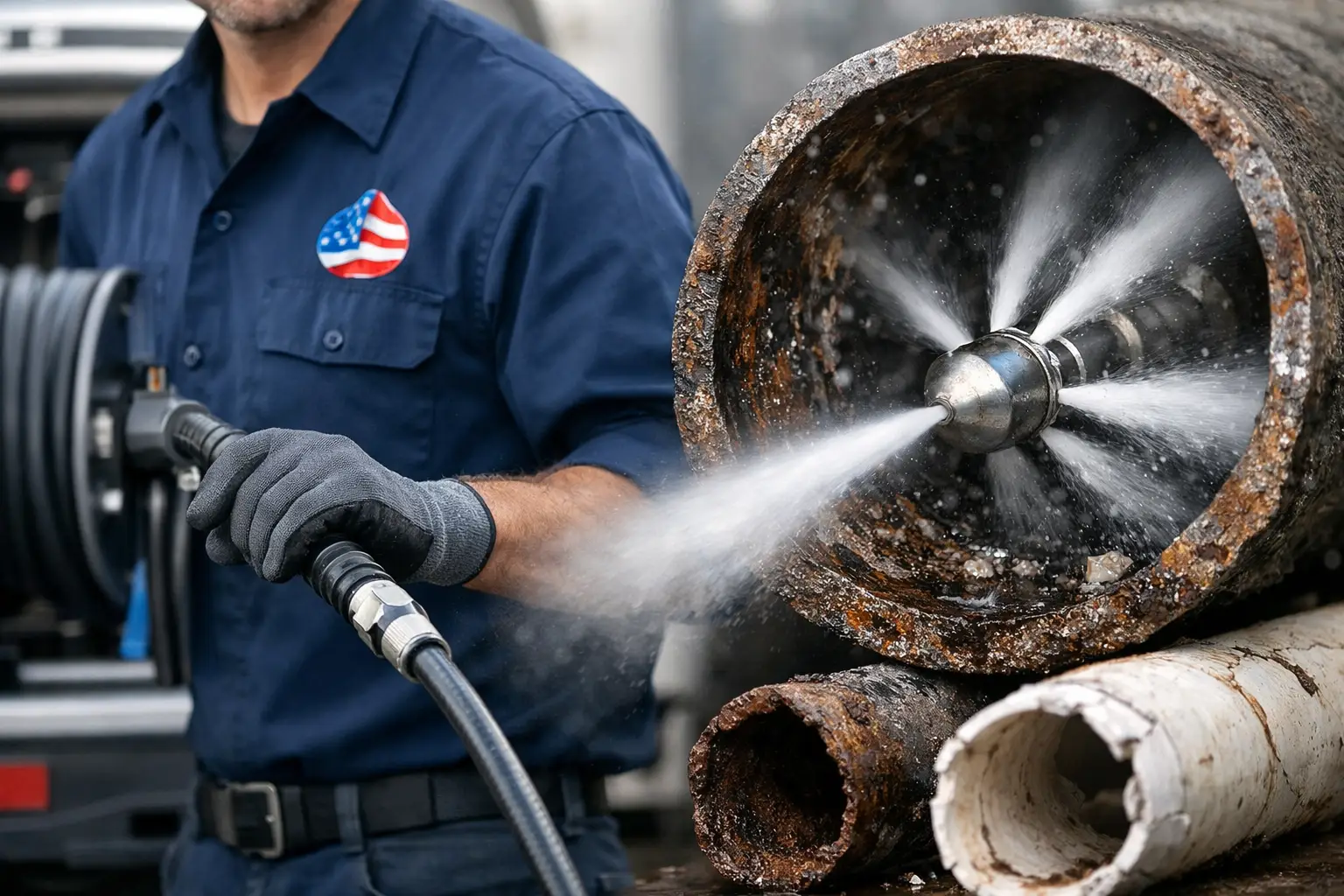
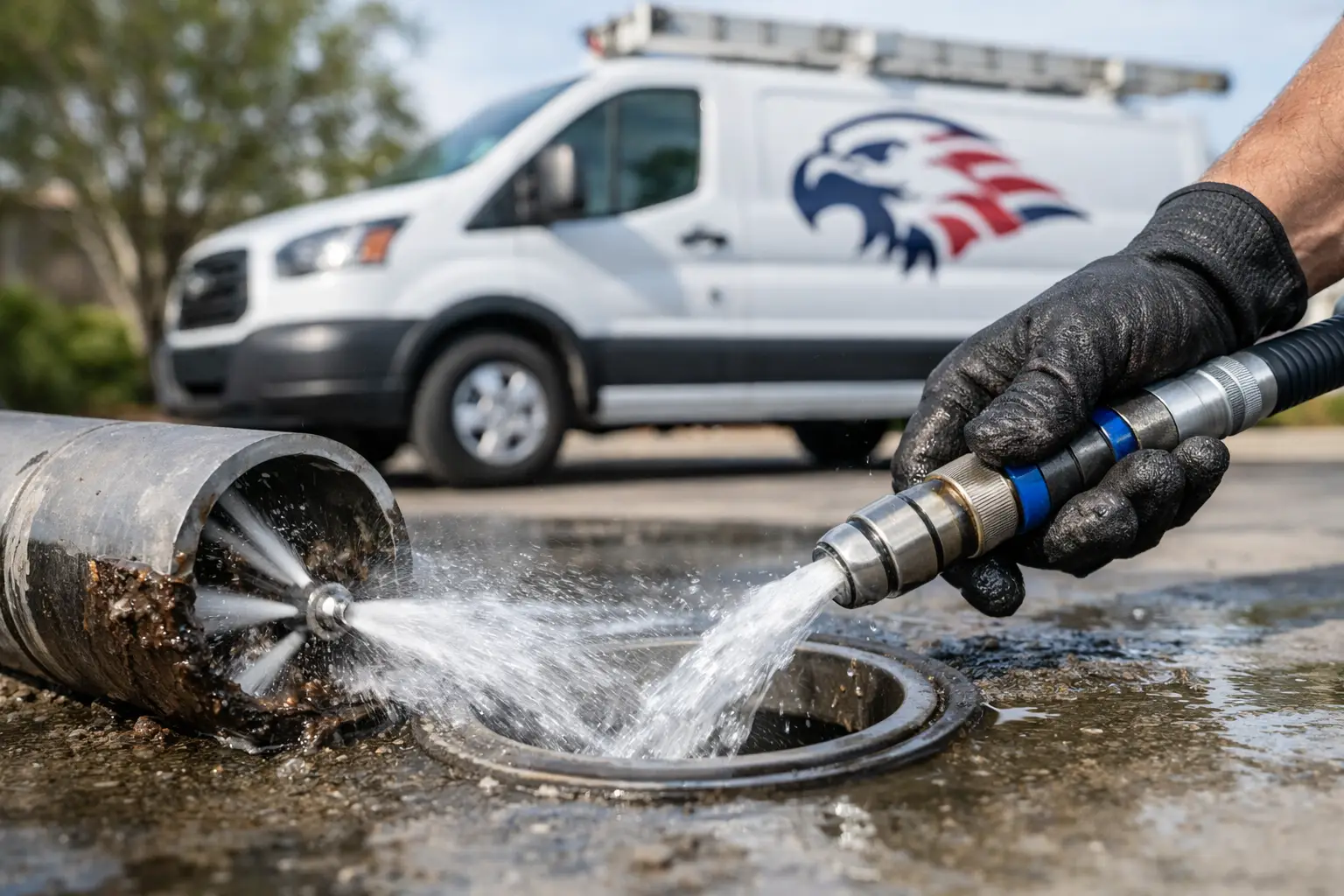
The right fix depends on where the blockage is located. A simple sink-drain clog may respond to professional drain cleaning, while recurring backups can call for camera inspection to identify buildup, pipe damage, or a deeper obstruction.
How to Prevent Another Disposal Jam
Use cold water before, during, and after running the disposal. Cold water helps keep fats more solid so they can move through the unit instead of coating the drain pipe. Feed scraps in gradually rather than filling the disposal chamber and running it all at once.
Put grease, cooking oil, and fat in a container for disposal in the trash. Compost or trash fibrous scraps and bulky leftovers instead of relying on the disposal to process them. A sink strainer is also a simple way to catch utensils and hard objects before they fall into the drain.
A humming garbage disposal is often a manageable jam, but it should never be ignored or forced. Cut the power, remove visible debris safely, free the plate with the correct wrench, and test it only once it turns easily. If the hum continues, the reset will not hold, or the sink is backing up, professional service can protect your kitchen from a larger plumbing problem.