A hidden plumbing leak can waste hundreds of gallons before it leaves a visible stain. That is why the best leak detection methods start with simple homeowner checks, then move to professional testing when the source is not obvious. Finding the leak early can help prevent damaged flooring, mold growth, high water bills, and costly slab or wall repairs.
Not every leak requires the same approach. A dripping supply line under a sink is usually easy to spot. A leak beneath a concrete slab, behind a shower wall, or under landscaping needs more precise equipment and an experienced technician who can locate the problem without tearing apart the home unnecessarily.
Start With Your Water Meter
Your water meter is one of the most reliable ways to confirm whether water is leaking somewhere on your property. First, turn off faucets, appliances that use water, irrigation systems, and any water-using fixtures inside the home. Do not run the dishwasher, washing machine, or ice maker during the test.
Check the meter and write down the reading. Many meters have a small leak indicator dial that moves when water is flowing. If that dial continues to move while everything is shut off, water is likely escaping somewhere in the plumbing system. Check again after 30 minutes to an hour. A changed reading is a strong sign that you have a leak.
This test tells you that water is being lost, but it does not identify the location. It is still a useful first step because it helps separate a possible plumbing leak from normal water use.
Use the Toilet Dye Test for Silent Leaks
Toilets are a common source of wasted water because they can leak silently from the tank into the bowl. The repair may be as simple as replacing a worn flapper, but the water loss can add up quickly if the problem goes unnoticed.
Remove the tank lid and place a few drops of food coloring in the tank. Avoid flushing the toilet for about 15 to 20 minutes. If color appears in the bowl, water is passing through the flush valve or flapper when it should not be. Repeat this check on every toilet in the house, especially if your water bill has increased without a clear reason.
Look for Surface Clues Inside and Outside
Some of the best leak detection methods do not require specialized tools. A careful inspection can reveal warning signs before a leak becomes an emergency. Check under sinks, around water heaters, behind washing machines, and near refrigerator water lines. Look for moisture, corrosion, mineral buildup, warped cabinet materials, or a musty smell.
Pay attention to walls and ceilings as well. Discolored drywall, bubbling paint, soft spots, peeling baseboards, or a damp carpet edge can point to a leak behind the surface. A small stain may not look urgent, but water often travels away from the actual pipe break before it becomes visible.
Outside, look for unusually green grass, muddy patches during dry weather, standing water, or a section of landscaping that grows faster than the rest. These clues can indicate a leak in an underground water line. If you notice water pooling near your foundation, act quickly to limit further damage.
Monitor Your Water Bill and Water Pressure
A sudden increase in your water bill is often the first clue homeowners notice. Compare your recent bills with the same period last year, keeping seasonal irrigation use in mind. If household routines have stayed about the same but usage has climbed, it is worth checking the meter and inspecting for leaks.
Changes in water pressure can also matter. A persistent drop in pressure at several fixtures may indicate a supply-side issue, a failing pressure regulator, or a leak in the plumbing system. Low pressure at only one faucet is more likely a fixture-specific problem, such as a clogged aerator.
High water pressure is a separate concern. It can stress pipes, fittings, appliance connections, and water heaters over time. If pressure seems unusually strong, a plumber can test it and determine whether a pressure-reducing valve needs adjustment or replacement.
Use Moisture Meters and Thermal Imaging Carefully
Moisture meters can detect elevated moisture levels in drywall, flooring, and trim. They are useful when a stain, odor, or soft area suggests water is present but the damage is not yet obvious. However, a meter reading does not tell you whether the moisture came from an active plumbing leak, an old spill, humidity, or a roof issue. It is a clue, not a final diagnosis.
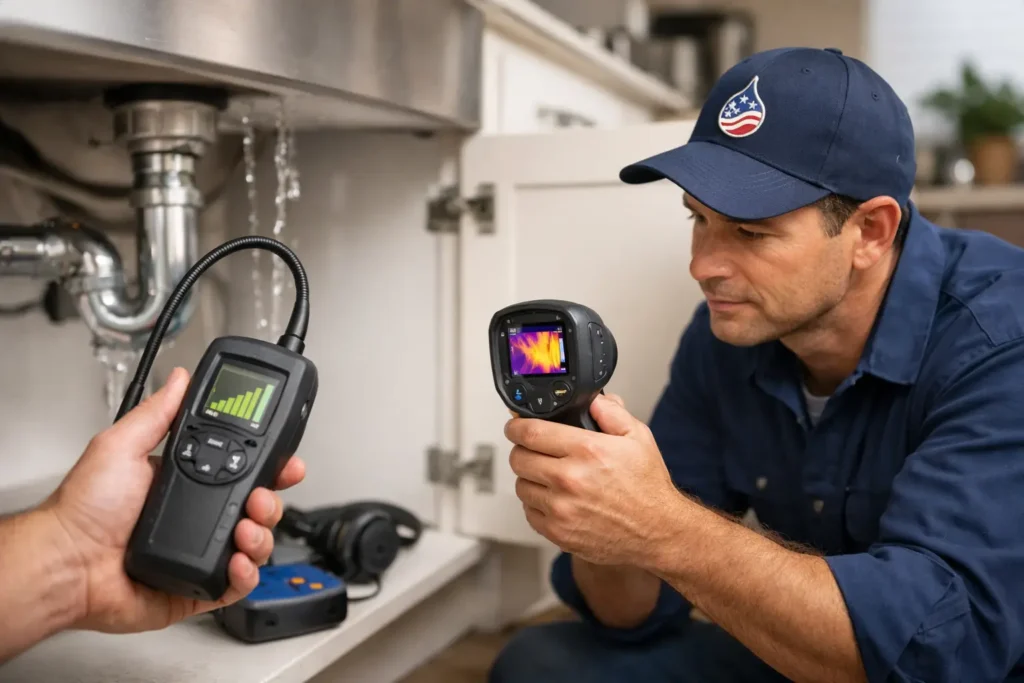
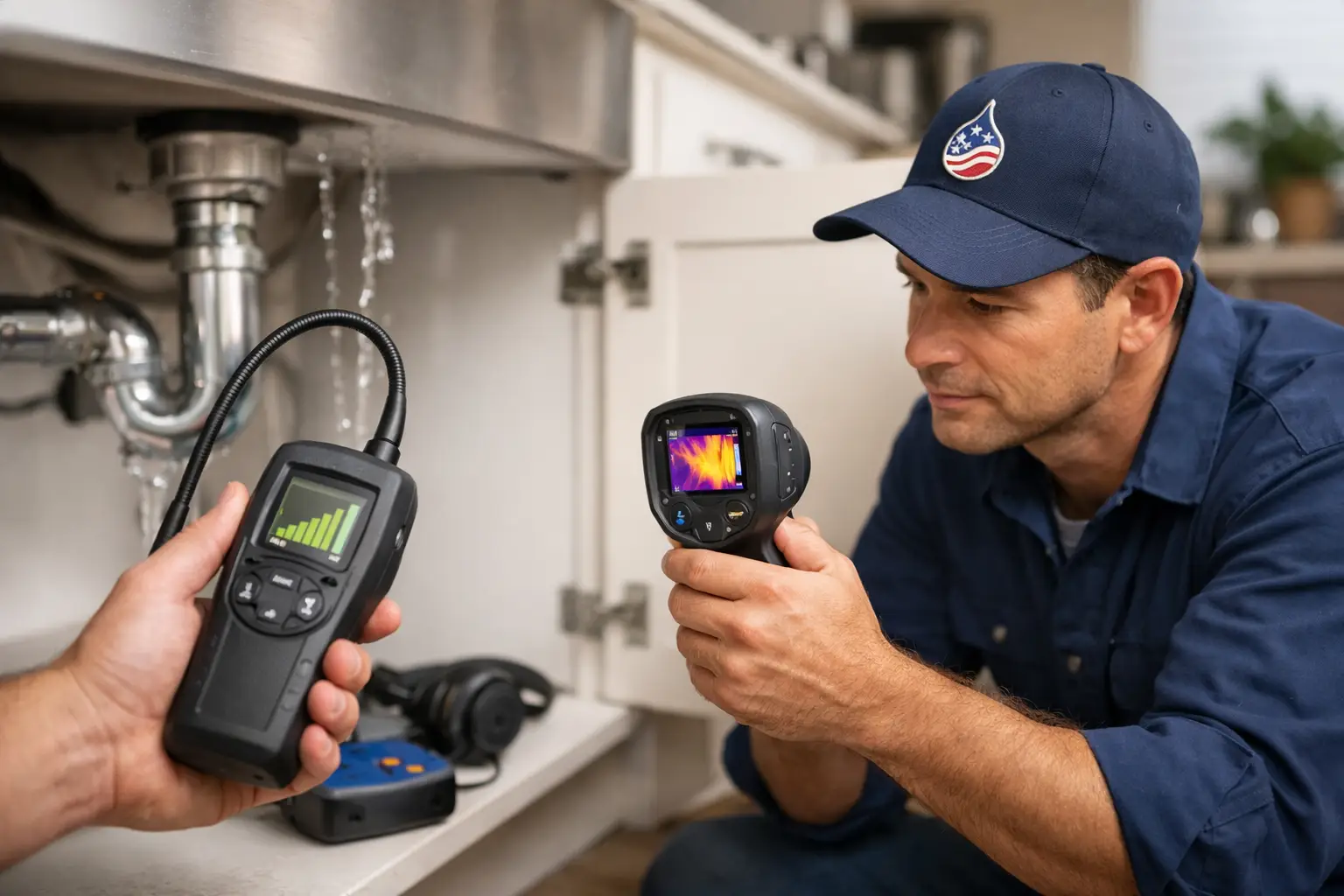
Thermal imaging cameras can also help locate temperature differences behind walls or beneath floors. For example, a hot-water leak may create a warmer area below a slab or inside a wall. Cold-water leaks may create cooler patterns. Thermal imaging is valuable because it is noninvasive, but results need to be interpreted correctly. Insulation gaps, sunlight, air conditioning, and different building materials can create misleading temperature changes.
For homeowners, these tools are best used to support what you already suspect. For hidden leaks, professional leak detection combines these readings with pressure testing and acoustic equipment to narrow down the source accurately.
Professional Leak Detection Is Best for Hidden Leaks
When the meter confirms a leak but there is no visible source, professional testing is usually the fastest path to an answer. This is especially true for slab leaks, underground pipe leaks, leaks inside walls, and recurring moisture issues.
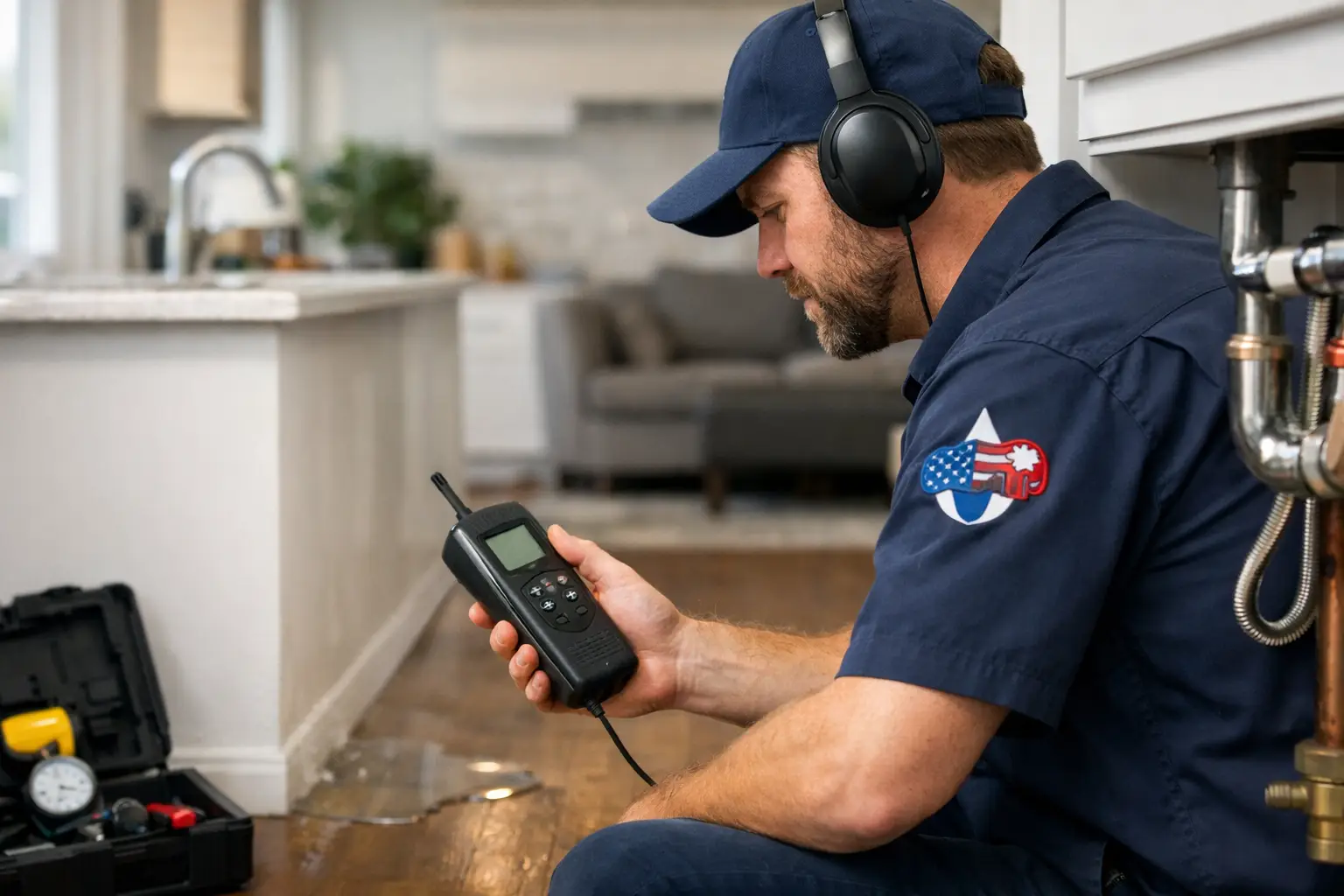
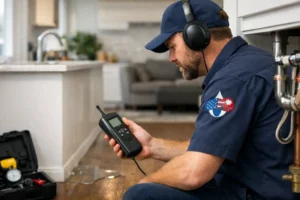
A plumbing technician may isolate sections of the plumbing system and perform pressure tests to determine whether a line is losing water. Acoustic leak detection uses sensitive listening equipment to identify the sound of water escaping from a pressurized pipe. The sound can travel through concrete, soil, and flooring, allowing the technician to narrow the search area without guessing.
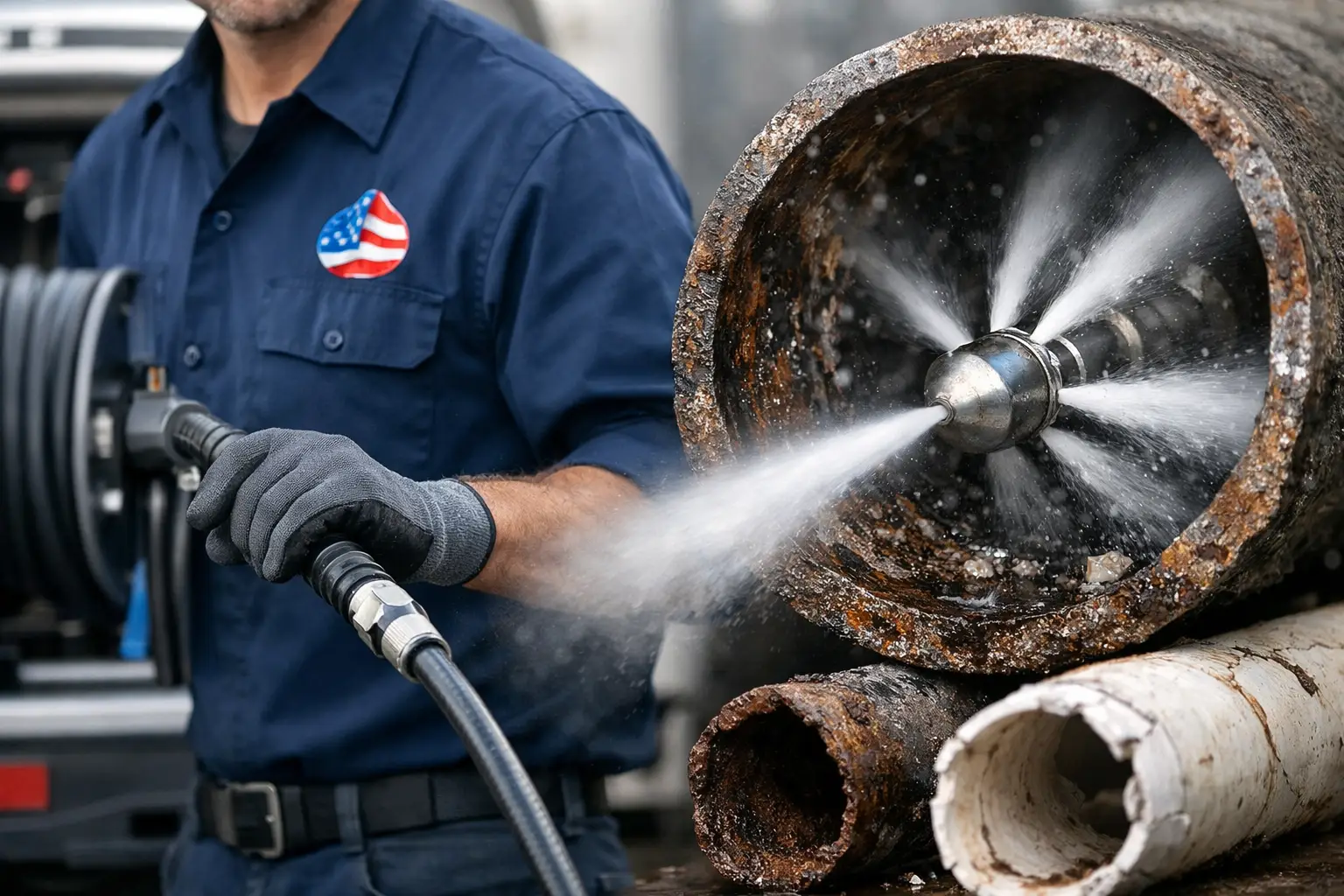
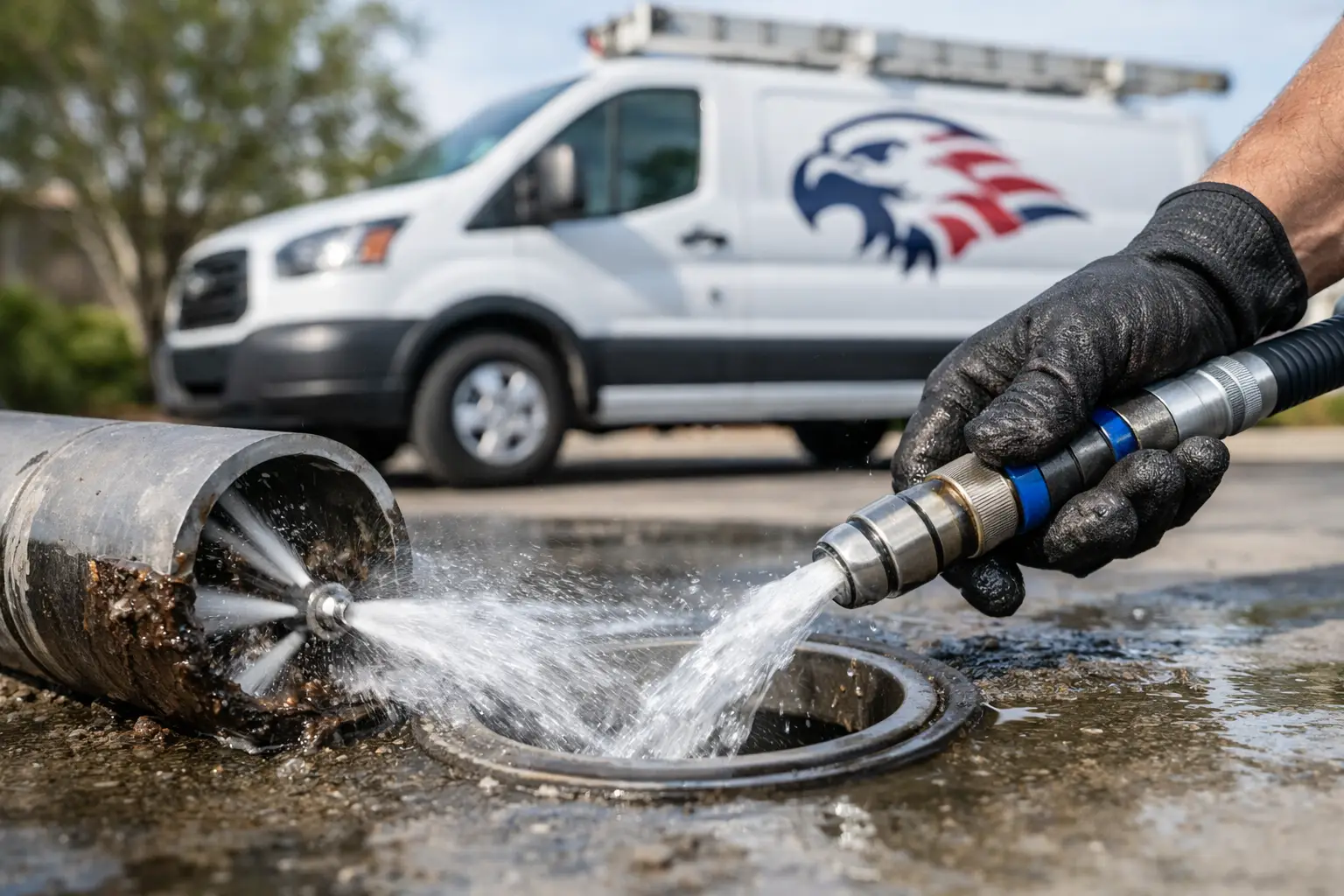
Other methods may include electronic line locating, camera inspections for drain and sewer concerns, or tracer gas testing in difficult cases. The right method depends on the type of pipe, the location of the suspected leak, the age of the home, and whether the leak is on a water line, drain line, or sewer line.
The goal is not simply to find moisture. It is to identify the failed pipe or connection as precisely as possible so repairs can be planned with less disruption. That can mean a targeted wall opening, a spot repair, pipe rerouting, or another solution based on the condition of the plumbing system.
Warning Signs of a Possible Slab Leak
Homes built on concrete slabs can develop leaks in water lines that run beneath the foundation. These leaks should be addressed promptly because they can damage flooring and contribute to foundation movement if left unresolved.
Common signs include the sound of running water when fixtures are off, warm areas on a floor, damp flooring without an obvious spill, cracks in tile or flooring, mildew odors, and an unexplained water bill increase. You may also notice that your water heater runs more often because hot water is escaping below the slab.
Do not assume every warm floor or damp area is a slab leak. A leaking appliance, shower pan, or irrigation line can create similar symptoms. Accurate testing prevents unnecessary demolition and helps ensure the repair addresses the real problem.
What to Do While You Wait for Service
If you suspect an active leak, protect the home while you arrange an inspection. Turn off the water supply to the affected fixture if you can identify it. For a major leak, shut off the home’s main water valve. If water is near electrical outlets, appliances, or the electrical panel, avoid the area and call for help immediately.
Move rugs, furniture, and stored items away from wet areas. Dry visible water with towels or a wet-dry vacuum if it is safe to do so, and take photos of damage for your records. Do not cut into walls, break flooring, or remove concrete based on a guess. That can increase repair costs and make the original source harder to evaluate.
For homeowners in Menifee, Murrieta, Temecula, and nearby communities, fast leak detection can make the difference between a focused repair and a major restoration project. A qualified residential plumber can confirm the problem, explain the findings clearly, and recommend the repair that makes sense for your home.
Water rarely waits for a convenient time to leak. If the meter moves when everything is off, a stain keeps growing, or you hear water where it should not be, treat it as a reason to schedule professional leak detection before the damage spreads.