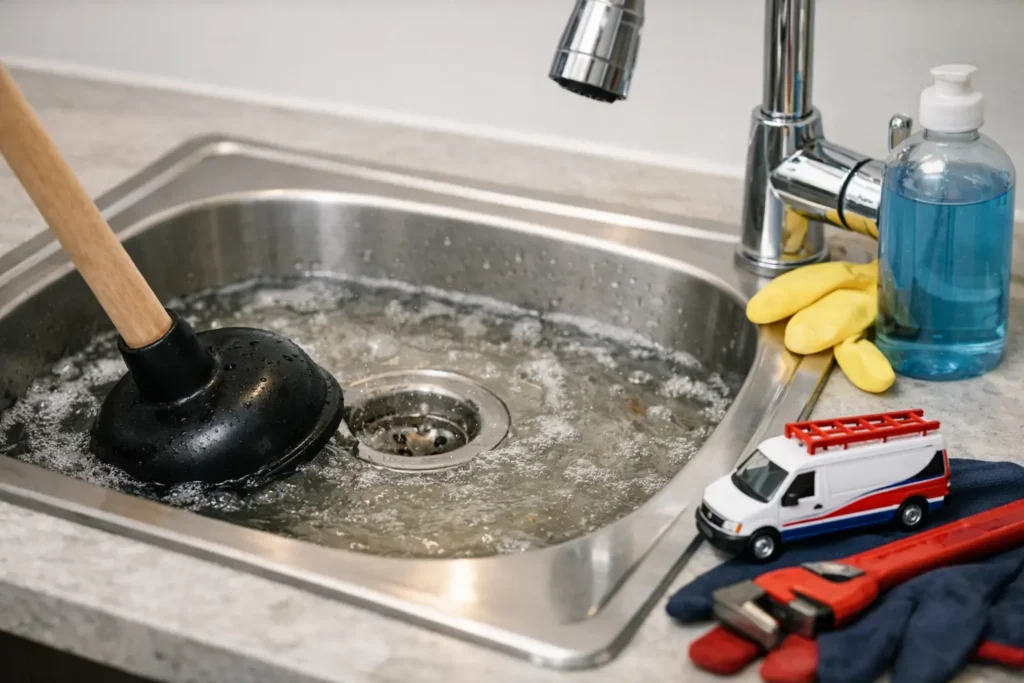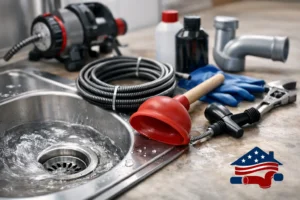
A kitchen sink usually gives you a little warning before it fully backs up. The water starts draining slower, you hear gurgling after running the disposal, or standing water shows up right when you are trying to clean up dinner. If you are searching for how to stop a clogged kitchen sink, the goal is simple – get the water moving again without damaging the pipes or making the blockage worse.
Some clogs are close to the drain opening and can be cleared with a few careful steps. Others are deeper in the line and need professional drain cleaning. The key is knowing the difference early, especially if the sink keeps backing up, smells bad, or starts affecting other fixtures in the house.
How to stop a clogged kitchen sink safely
Start by stopping everything that adds more water to the sink. Do not run the faucet to test it repeatedly, and do not turn on the dishwasher if it drains into the same line. If the basin is full, remove as much standing water as you can with a cup or small container so you can work more effectively.
Next, check the simplest cause first. If your sink has a garbage disposal, make sure it is not the source of the problem. Turn the disposal off completely before putting your hands anywhere near the drain. If the disposal hums but does not spin, or if it was recently overloaded with food waste, that may be the immediate issue rather than a pipe clog.
After that, try hot water and dish soap, but only if the sink is draining slowly and not fully blocked. Squirt a good amount of dish soap into the drain, then follow with very hot water. This can help loosen grease buildup near the top of the line. It works best on soap scum and kitchen grease, not on solid food debris or compacted blockages.
If that does not solve it, a plunger is usually the next best step. Use a sink plunger, not a toilet plunger. If you have a double-basin sink, seal the second side with a stopper or a wet rag so you can build pressure. Add just enough water to cover the plunger cup, then plunge with steady, controlled force for 20 to 30 seconds. Check the drain, and repeat if needed.
A lot of homeowners skip straight to chemical drain cleaners at this point. That is risky. Harsh chemicals can damage certain pipes, create fumes, and make the job more dangerous if a plumber later has to open the line. In many cases, they do not fully clear a kitchen clog anyway because grease and food waste tend to stick to the pipe walls.
When a kitchen sink clog is more than a simple blockage
If plunging does not work, the clog may be sitting farther down the drain line or inside the P-trap under the sink. The P-trap is the curved pipe below the drain. It catches debris, but it can also become the place where grease, coffee grounds, pasta, eggshells, and other food waste collect.
If you are comfortable doing basic home maintenance, you can place a bucket under the trap and carefully loosen it to inspect for buildup. This step can be messy, so it helps to have gloves and towels ready. If you find packed debris, clean the trap and reinstall it securely before testing the drain.
That said, it depends on your setup. If the piping is older, tightly fitted, or already shows signs of leaks or corrosion, taking it apart can create a second problem. A slow drain is easier to deal with than a leaking cabinet full of wastewater.
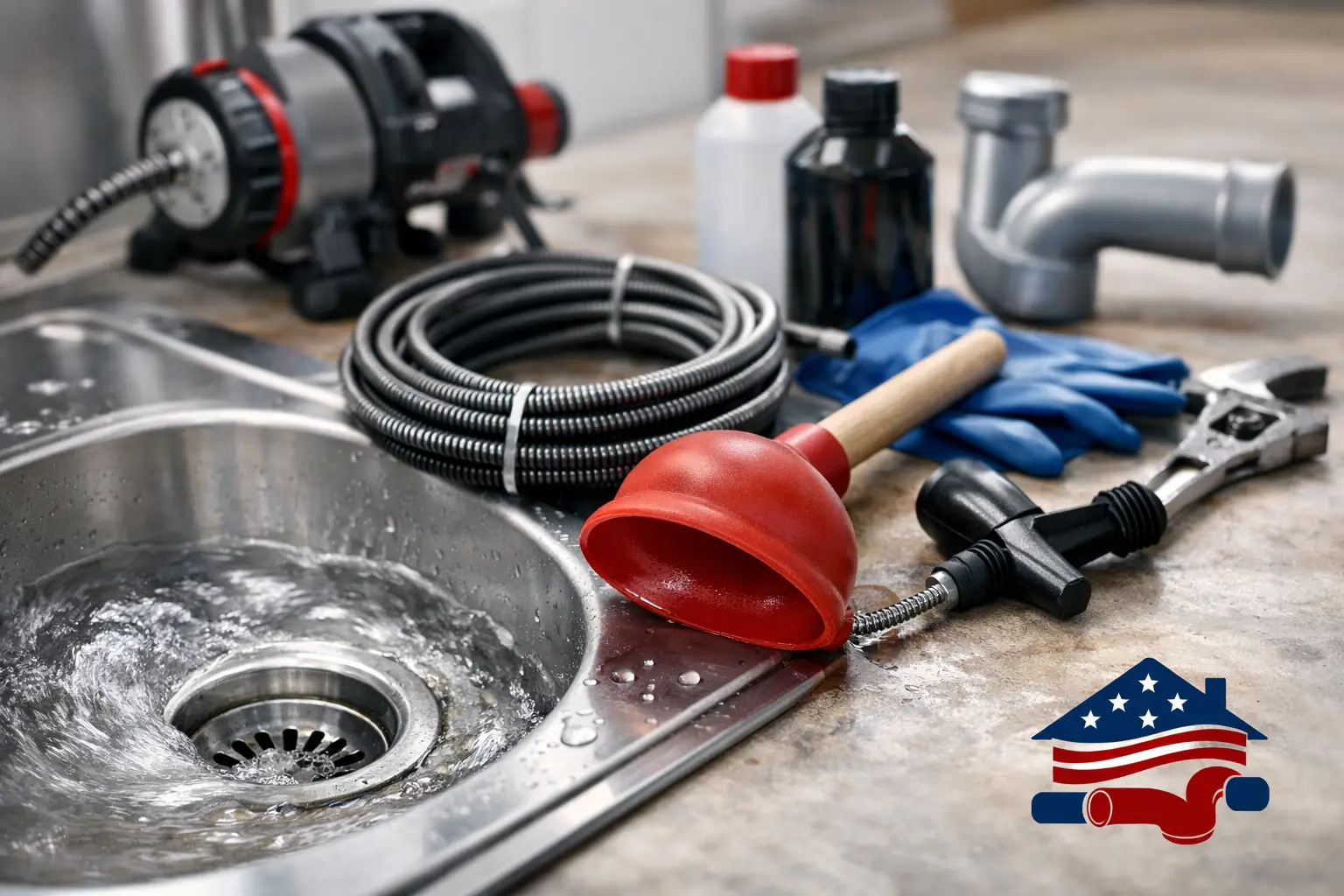
Another sign the clog is deeper is when the sink backs up on both sides, the disposal side fills the other basin, or water bubbles up when the dishwasher runs. That often points to a blockage farther down the branch line. At that stage, a hand snake may help, but forcing a cable through the line without knowing the pipe condition can scratch, jam, or compact the clog even more.
What not to put down your kitchen sink again
A clogged sink is frustrating, but it usually starts with daily habits that seem harmless. Grease is one of the biggest causes. Even if it goes down warm, it cools inside the pipe and sticks to the walls. Over time, it traps food particles and narrows the drain.
Coffee grounds are another common issue. They do not dissolve the way many people assume. Fibrous foods like celery, onion skins, and corn husks can wrap around disposal components or catch inside the line. Rice, pasta, and starchy foods expand with water and create a thick sludge. Eggshells, despite the old myth, can also contribute to buildup when mixed with grease.
Garbage disposals help with small food scraps, but they are not built to process everything. They reduce waste into smaller pieces. They do not eliminate the need to be careful about what enters your drain.
Signs you should call a plumber now
There is a point where trying one more DIY method costs more time than it saves. If your kitchen sink is still clogged after basic steps, or if the backup keeps returning, it is time to have the line properly inspected and cleared.
Call a plumber right away if you notice foul odors that do not go away, water backing up into another fixture, multiple drains slowing down at once, or leaks under the sink after attempting repairs. These signs can point to a larger drain issue, not just a local clog at the kitchen sink.
Urgency matters here. A backed-up kitchen sink can interrupt cooking, cleaning, and dishwasher use. More importantly, standing wastewater in the kitchen is not something you want sitting around. Fast service is often the difference between a straightforward drain cleaning and a much bigger repair.
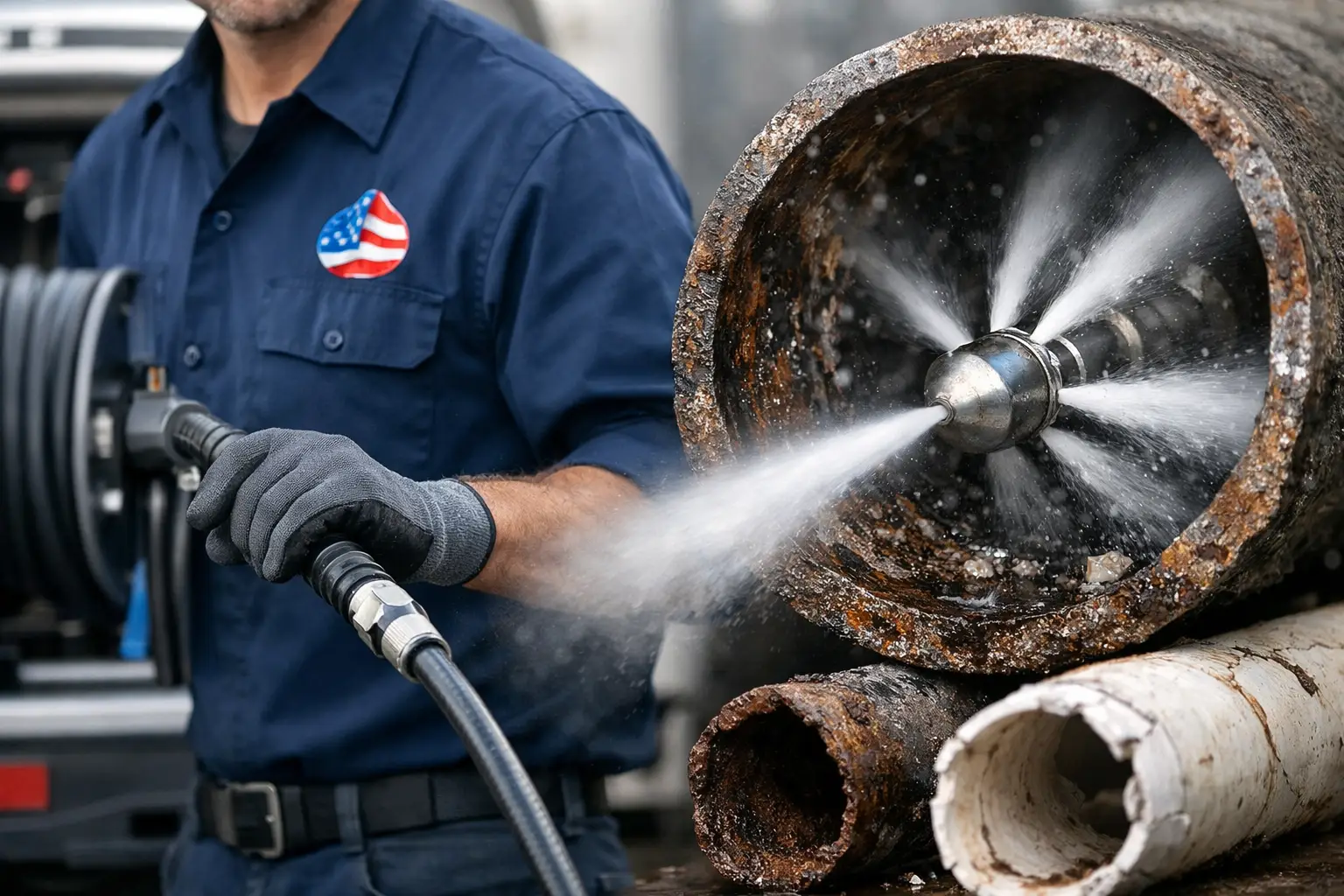
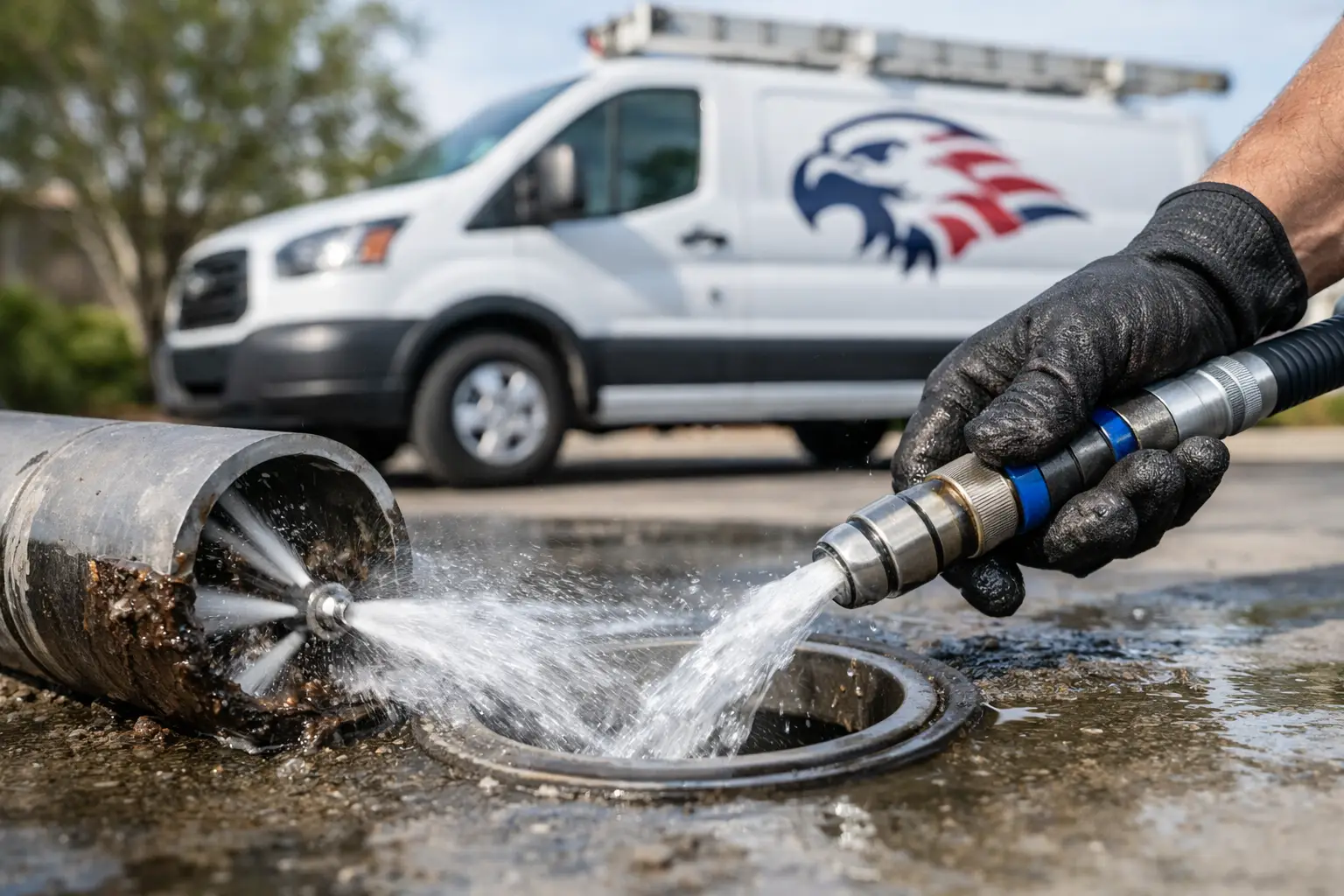
For deeper or stubborn blockages, professional equipment makes a real difference. A drain machine can break through compacted buildup, and hydro-jetting may be the best option when grease has coated the inside of the pipe. The right solution depends on the age of the plumbing, the material of the drain line, and whether this is a one-time clog or part of an ongoing pattern.
How plumbers stop a clogged kitchen sink for good
When a professional comes out for a kitchen sink clog, the goal is not just to punch a small hole through the blockage. It is to restore proper flow and identify why the sink clogged in the first place.
That might mean clearing the immediate obstruction in the trap or branch line. It might also mean checking whether grease buildup has narrowed the pipe over a longer stretch. If your sink clog is tied to a bigger drainage problem, a camera inspection may be recommended to see what is happening inside the line without guesswork.
This is where experience matters. A recurring kitchen sink backup can sometimes be a symptom of a partial sewer issue, poor pipe slope, or years of buildup that over-the-counter products never addressed. A quick fix may get water moving for a day or two, but it will not always solve the root cause.
Homeowners in Menifee and nearby communities often call once the clog starts affecting the whole kitchen routine. That is usually the right move. The sooner the line is cleared correctly, the less chance there is of overflow, odors, or water damage under the sink.
Simple ways to help prevent the next clog
Once your sink is draining again, a few small habits can lower the chances of dealing with the same problem next month. Scrape food into the trash before rinsing dishes. Pour cooking grease into a separate container instead of the sink. Use plenty of running water when operating the disposal, and let it run briefly after grinding to help move small particles through the line.
It also helps to flush the drain occasionally with hot water and dish soap, especially if your household cooks often. That will not solve a serious blockage, but it can reduce fresh grease buildup near the top of the line.
If your kitchen sink has clogged more than once in a short period, prevention alone may not be enough. Repeated backups usually mean there is still buildup deeper in the pipe. In that case, a professional cleaning gives you a more reliable reset than repeating the same DIY steps every few weeks.
A clogged kitchen sink always seems to happen at the worst time, but the right response is usually straightforward – start with safe basics, avoid chemical shortcuts, and get professional help when the clog is stubborn or keeps coming back. A drain that clears properly should stay clear, and if it does not, that is your sign to stop fighting the symptom and fix the line.