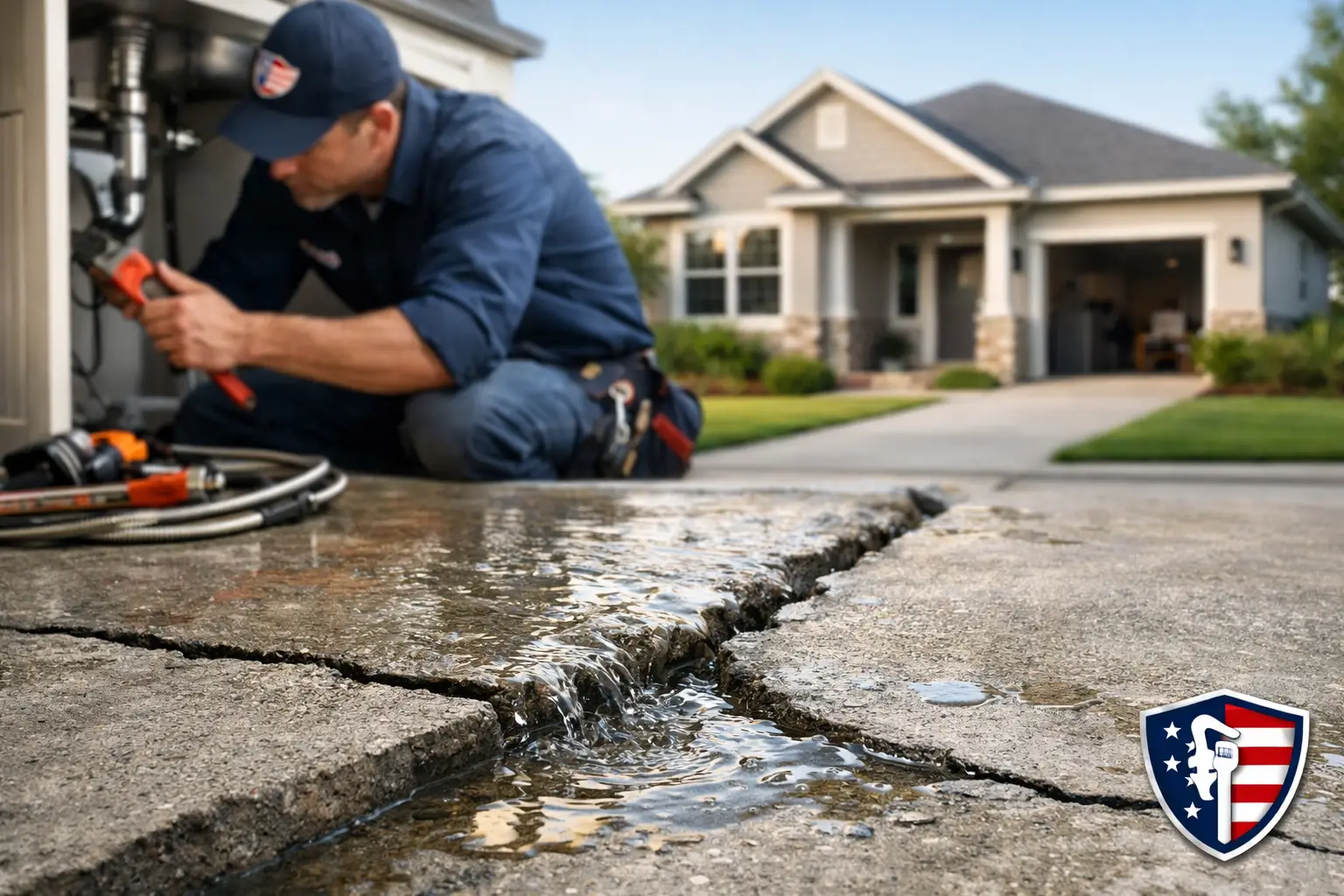
If you notice unusual water bills, damp spots on your floor, or a sudden drop in water pressure, you might have a slab leak. This is a hidden plumbing problem that can cause serious damage if not fixed quickly. At American Plumbing Service, we specialize in fast and accurate slab leak detection and repair across Southern California, helping homeowners protect their homes and peace of mind.
What Is a Slab Leak?
A slab leak is a type of water leak that occurs beneath the concrete foundation (or slab) of a home when a water pipe breaks or leaks. These leaks are often caused by soil shifts, pipe corrosion, or poor installation and can lead to severe damage, including foundation cracks, water damage, and mold growth.If you suspect a slab leak in your home, prompt action is critical to avoid costly repairs. This guide explores the causes, detection methods, repair options as well as prevention tips to help homeowners address slab leaks effectively.
Common Causes of Slab Leaks
- Pipe Corrosion: Chemical reactions between metal pipes and soil or water can weaken pipes over time. This is particularly prevalent in older homes with aging plumbing systems. Corrosion weakens the pipes, making them more susceptible to leaks.
- Abrasion: Pipes rubbing against the slab due to movement or temperature changes can wear down over time. Pipes may shift and rub against the concrete slab or other materials, leading to gradual wear and tear. This is often exacerbated by temperature fluctuations that cause pipes to expand and contract, eventually resulting in leaks.
- Poor Installation: Substandard materials or improper techniques during construction can lead to early failures. Improper installation during the construction of your home, such as incorrect pipe laying, inadequate insulation, or the use of substandard materials, can make pipes more prone to developing leaks over time.
- Soil Shifts: Expansive clay soils, common in North Texas, can put pressure on pipes, causing cracks. In regions like the Dallas-Fort Worth area, natural soil shifts are common due to expansive clay soils that expand when wet and contract when dry. These shifts can place significant pressure on the pipes beneath your home, causing them to crack or burst.
Signs You Might Have a Slab Leak
Numerous signs can indicate the slab leak. Some of them are:
- Spike in Your Water Bill: A sudden, unexplained increase in your water bill, without corresponding usage, is a strong indicator of a potential slab leak.
- Low Water Pressure: A drop in water pressure could be a sign that water is leaking out of your pipes before it reaches its destination.
- Sound of Running Water When No Taps Are On: If you hear the sound of running water even when all faucets are off, it may signal a hidden leak beneath your slab.
- Warm or Wet Spots on Your Floor: Warm areas on the floor, especially if you don’t have radiant heating, or wet spots without an obvious source, can indicate a hot water slab leak.
- Foundation Cracks: Visible cracks developing in your home’s foundation, baseboards, or walls may result from a slab leak causing soil movement and structural damage.
- Standing Water Around the Perimeter of Your House: Persistent puddles or standing water around the outside of your home could be a sign that a slab leak is pushing water up through the soil.
- Moldy Smells: Persistent moldy smells, often accompanied by dampness. Wetness from a slab leak can lead to mold growth, which produces a musty odor that can be harmful to your health.
- Discolored or Damp Floors: Carpets or hardwood floors that become discolored, damp, or even warped might be absorbing water from a slab leak.
- Uneven Growth in Lawn or Foundation Plants: Patches of grass or plants around your foundation that grow faster or appear greener than other areas might be getting extra water from a slab leak.
- Visible Shift in the Soil: Noticeable shifts or depressions in the soil around your home can indicate that water from a slab leak is eroding the ground beneath your foundation.
If you see any of these signs, call American Plumbing Service right away at 951-750-0086.
Advanced Slab Leak Detection in Temecula, Murrieta & Nearby Areas
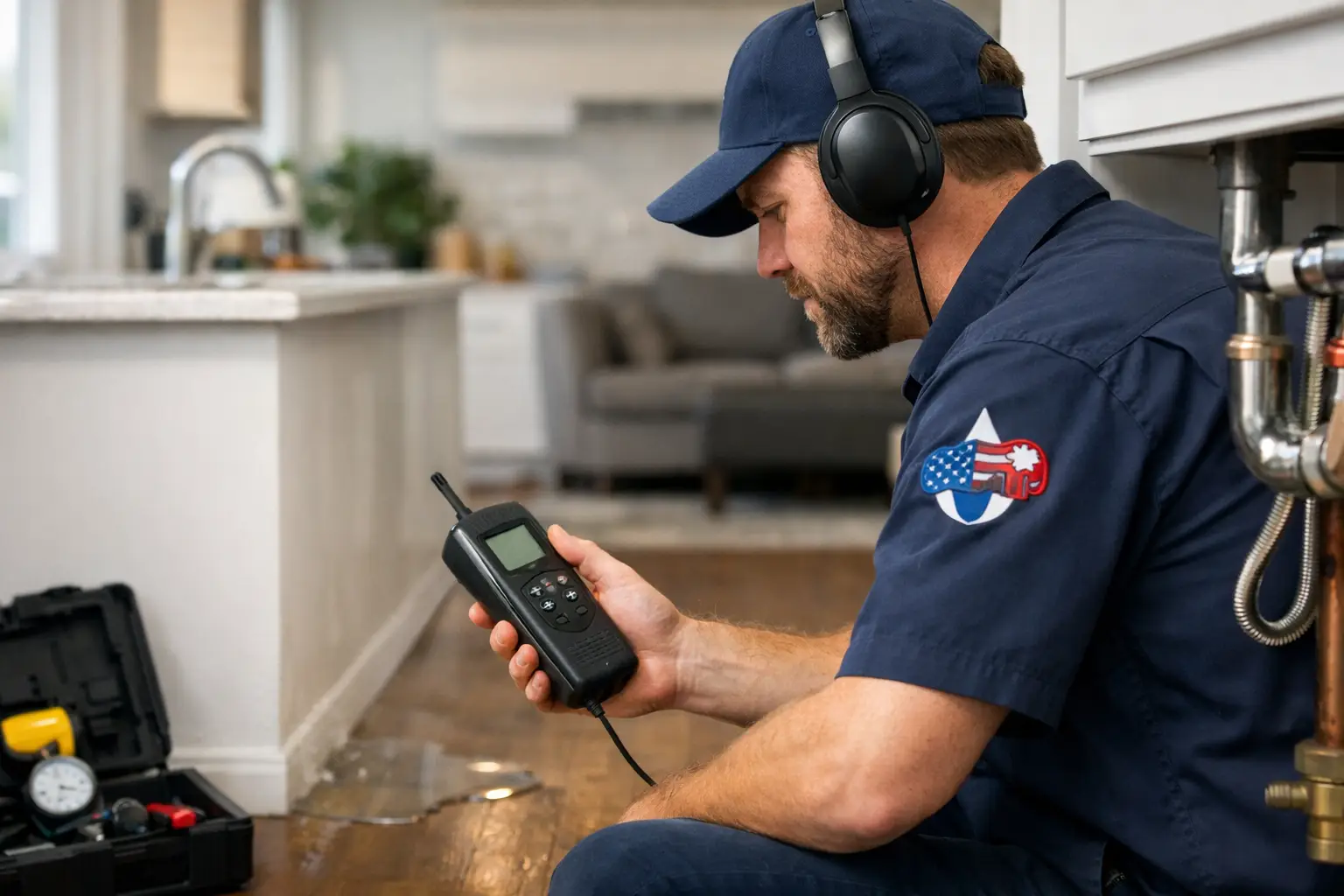
We use modern, non-invasive technology to find slab leaks without tearing up your floors. Our certified plumbers use:
- Electronic leak detection
- Thermal imaging cameras
- Acoustic listening devices
This lets us find the leak quickly and recommend the best repair method, saving you time, money, and stress.
Expert Slab Leak Repair Services
Every slab leak is unique. We customize our repair methods based on where the leak is and how bad it is. Our services include:
- Direct access slab repair
- Pipe rerouting
- Epoxy pipe lining and trenchless repairs
We explain your options clearly so you can make the best choice and get your plumbing fixed fast.
Why Homeowners Trust American Plumbing Service?
Because American Plumbing Service is insured, bonded, and licensed, homeowners can rely on us to complete every job with professionalism and dependability. Serving Riverside County and neighboring cities, we are local experts who are aware of the particular requirements of our community. We provide 24/7 emergency service to quickly resolve pressing plumbing problems. Our pricing is open and honest, with no additional costs. Our reputation speaks for itself, as evidenced by the large number of 5-star reviews we have received on Yelp and Google. We are pleased to provide the best plumbing services in Temecula, Murrieta, Riverside, Menifee, Wildomar, and the surrounding areas.
Schedule a Slab Leak Inspection Today
Take control of the health of your house now to avoid being caught off guard by a concealed slab leak! A straightforward yet effective method to avoid expensive damage and maintain the functionality of your plumbing is to schedule a slab leak inspection. Consider it as providing your house with the attention it needs before minor problems become major headaches. Are you prepared to safeguard your largest investment? Reach out to American Plumbing Service now and book your inspection—your future self will thank you!