A slab leak rarely announces itself with one obvious problem. More often, it starts with a water bill that suddenly climbs, a warm spot on the floor, or the sound of water moving when everything is turned off. If you are wondering how to tell if slab leak is the issue, the key is noticing small changes before they turn into flooring damage, mold, or foundation trouble.
For homeowners, this is one of those plumbing problems that gets more expensive the longer it sits. A pipe leak under the concrete slab can waste water for days or weeks without being visible. That does not mean you are powerless. There are clear warning signs you can watch for, and a few simple checks can help you decide whether it is time to call for leak detection.
How to tell if slab leak is affecting your home
A slab leak happens when a water line running beneath your home’s concrete foundation develops a crack, pinhole, or break. In some homes, this comes from pipe corrosion. In others, shifting soil, poor installation, or long-term wear can play a role. The cause matters for repair planning, but the first step is recognizing the symptoms.
One of the most common signs is unexplained water use. If your habits have not changed but your water bill jumps, something may be leaking out of sight. A dripping faucet can do this too, so it is not proof by itself, but it should get your attention.
You may also hear running water when no fixtures are on. This is especially noticeable late at night when the house is quiet. If the dishwasher, washing machine, sprinklers, and showers are all off, you should not hear a steady water sound behind walls or below the floor.
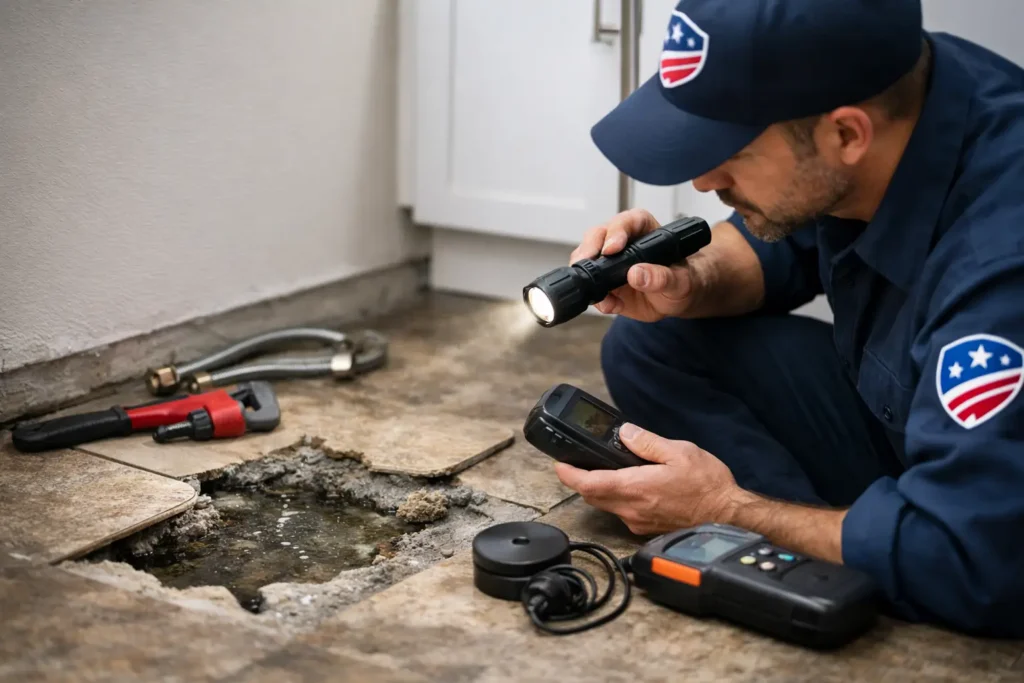
Another clue is a hot or damp area on the floor. If a hot water line under the slab is leaking, heat can rise through the flooring and create a noticeably warm patch. If the leak is from a cold line, you may notice dampness instead. Carpet can feel musty, hardwood can start to warp, and some tile floors may show loose or cracked sections.
Cracks in flooring or walls can also appear. Not every crack means a slab leak, because homes naturally settle over time. But if new cracks show up along with moisture signs or unexplained water use, that combination deserves a closer look.
The signs that matter most
The strongest indication is usually not one symptom alone, but several showing up together. A high water bill plus the sound of water running plus a warm floor is far more concerning than any single issue by itself.
Low water pressure can be another warning sign. If a pipe under the slab is losing water before it reaches your fixtures, showers and faucets may feel weaker than usual. This symptom can also come from other plumbing problems, so it is best looked at alongside the rest.
You might also notice mildew or a persistent damp smell. Water under the slab can work its way upward or outward, especially around flooring edges, baseboards, or nearby rooms. If a room smells musty even after cleaning and ventilation, hidden moisture may be the reason.
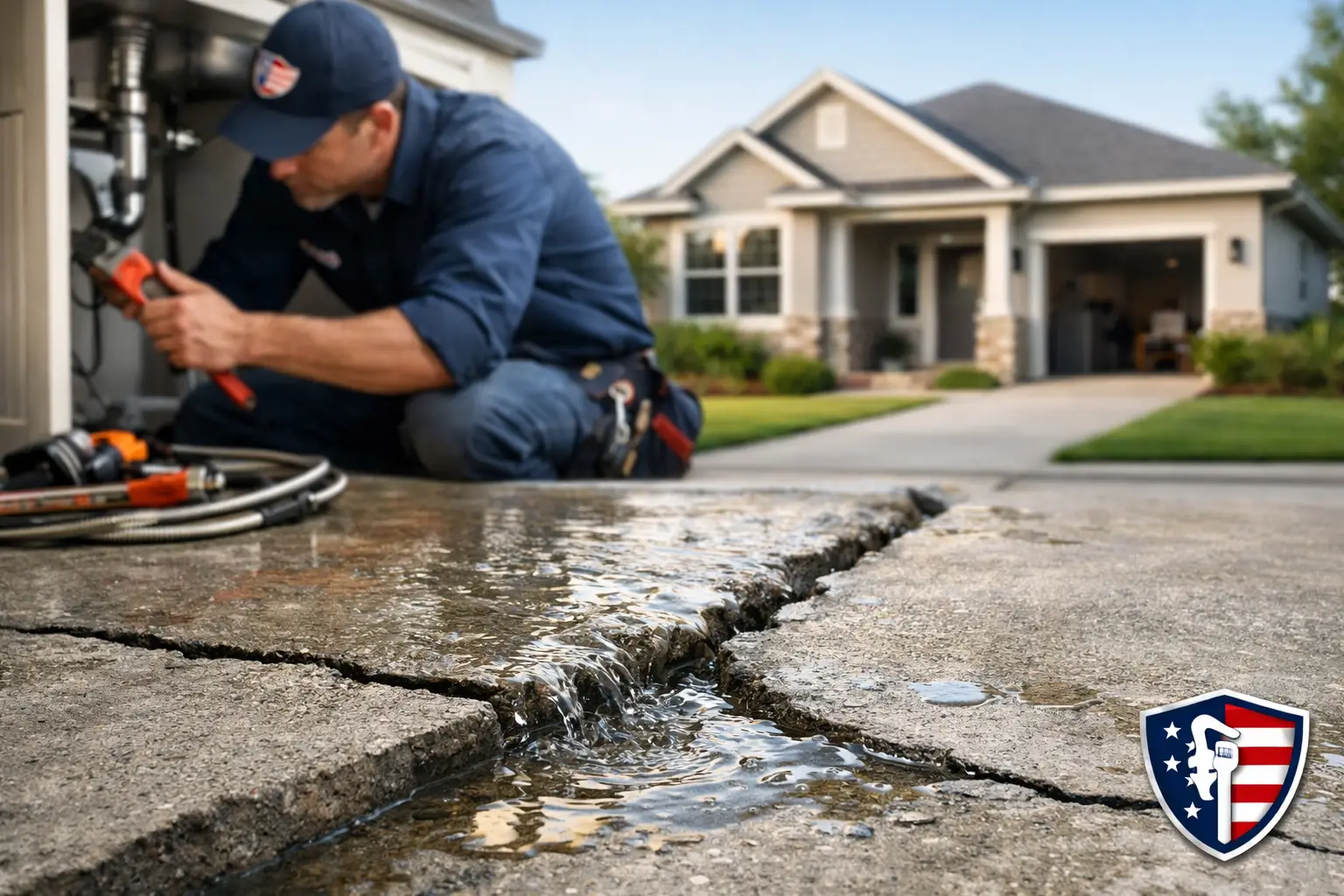
Outside the home, wet soil near the foundation can sometimes point to a slab leak. This depends on where the pipe is located and how the water moves. In some cases, there are no outdoor signs at all. That is why indoor clues are usually more reliable for homeowners.
A quick check you can do yourself
A simple meter test can help you spot a hidden leak. Turn off every water fixture and appliance in the home, including the ice maker, washing machine, and irrigation if possible. Then check your water meter. If the meter continues moving after everything is shut off, water is likely flowing somewhere it should not.
This does not confirm the leak is under the slab, but it tells you there is a problem worth addressing quickly. If the meter is still and your bill is still high, the issue could be intermittent or tied to a different plumbing area.
What a slab leak does not always look like
Some homeowners expect standing water on the floor. That can happen, but many slab leaks stay hidden for a while. Concrete can absorb and redirect water, and different flooring materials conceal moisture in different ways. By the time you see pooling water, the damage may already be spreading.
A slab leak also does not always mean severe foundation damage right away. That risk grows over time, especially with larger or long-running leaks, but early leaks are often caught before the worst structural issues develop. That is why speed matters.
When the problem could be something else
Not every sign points directly to a slab leak. A high water bill could come from a toilet leak, irrigation issue, or outdoor hose bib problem. A musty smell could be from an HVAC drain issue. Floor warmth can even be affected by sun exposure in certain rooms.
That is the trade-off with self-checks. They are helpful for spotting risk, but they do not replace professional leak detection. If you guess wrong and wait too long, a smaller repair can turn into flooring removal, mold cleanup, or more invasive pipe work.
On the other hand, not every suspected slab leak requires tearing up concrete. Modern leak detection equipment can often locate the source with far less disruption than homeowners expect. That is a big reason to bring in a residential plumbing specialist once the signs start adding up.
When to call a plumber right away
If you have warm spots on the floor, active moisture indoors, the sound of water running with everything off, or a water meter that keeps moving, it is time to call. The same is true if your water bill spikes for no clear reason and you cannot trace it to another fixture.
Urgency matters even more if the leak may involve a hot water line. Those leaks can waste water faster and often show up through warm flooring or rapid bill increases. Homes with older pipes or a history of recurring leaks should also be checked sooner rather than later.
For homeowners in Menifee and nearby communities, a local plumbing company can usually move faster on diagnosis and explain whether you are dealing with a slab leak, a wall leak, or another hidden plumbing issue. That saves time and helps you avoid paying for the wrong repair.
What professional leak detection usually involves
A plumber will usually start by reviewing the symptoms you have noticed, checking pressure conditions, and testing the system for hidden water loss. From there, specialized equipment may be used to narrow down the source beneath the slab.
The goal is not just to confirm that a leak exists. It is to find the location accurately enough to recommend the right repair. Depending on the pipe condition, that might mean a spot repair, rerouting a line, or another approach that makes more sense for the age of the system.
This is where experience matters. The cheapest option is not always the most cost-effective if the pipe material is failing in multiple places. A good plumber will explain the trade-offs clearly so you can choose a repair that fits your home and budget.
What to do while you wait for service
If you strongly suspect a slab leak, reduce water use as much as possible. Avoid running extra loads of laundry, taking long showers, or using fixtures unnecessarily. If the leak seems severe, shutting off the home’s main water supply may help limit damage until a plumber arrives.
Move rugs, boxes, or furniture away from any damp area so moisture does not spread further into surfaces or belongings. If you notice active flooring damage, take photos. That can help document when the issue started and what changed.
Most importantly, do not ignore it because the signs seem minor. Slab leaks usually get worse, not better. Catching the issue early gives you more repair options and less disruption inside the home.
A slab leak can start quietly, but the signs are there if you know what to watch for. If your home is telling you something is off, trust that instinct and get it checked before a hidden leak becomes a much bigger repair.