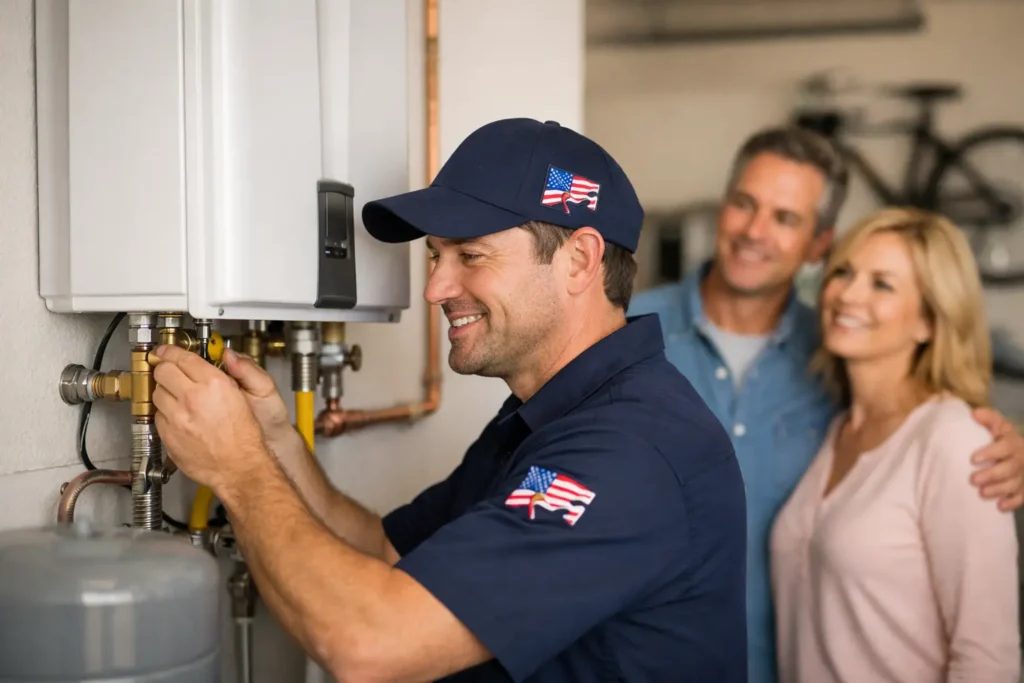
A tankless water heater installer Menifee homeowners choose should do more than remove an old tank and mount a new unit on the wall. The right installation starts with your household’s hot water demand, verifies gas and venting requirements, and makes sure the system can deliver reliable hot water when multiple fixtures are running. That preparation is what separates a long-term upgrade from a costly callback.
Tankless systems can be an excellent fit for local homes. They save space, heat water on demand, and can provide a steady supply of hot water when they are properly sized and maintained. But they are not a one-size-fits-all replacement. Before scheduling an installation, it helps to know what the work should include and which decisions will affect performance.
Why Tankless Installation Requires More Than a Simple Swap
A traditional water heater stores a set amount of heated water in a tank. A tankless unit heats water only when you open a faucet, start a shower, or run an appliance. That difference changes the plumbing, gas, electrical, venting, and drainage considerations around the installation.
The main question is not simply how many gallons your old tank held. It is how much hot water your household needs at one time. A home where one person showers at a time may have very different needs than a home where two showers, a dishwasher, and a washing machine regularly run together.
Water temperature also matters. Incoming water temperature, the desired outlet temperature, and the flow rate of your fixtures all affect the unit’s real-world capacity. A unit that looks adequate on paper can feel undersized during busy mornings if those details are ignored.
What a Tankless Water Heater Installer in Menifee Should Check
A professional assessment should begin at the water heater location and extend to the systems that support it. This is not unnecessary upselling. It is how an installer avoids putting a high-performance appliance on infrastructure that cannot support it.
Household demand and unit sizing
Sizing is based on gallons per minute, not tank capacity. Showers, tub fillers, kitchen faucets, washing machines, and dishwashers all have different flow rates. An installer should ask how many people live in the home, how many bathrooms are used at peak times, and whether you expect simultaneous use.
Larger is not automatically better. Oversizing can increase upfront cost without improving comfort for a lower-demand household. The goal is a system matched to your routines, not the biggest model available.
Gas line capacity
Many gas tankless water heaters require substantially more BTUs than a standard storage-tank water heater. The existing gas line may be sufficient, but it needs to be checked rather than assumed. Line diameter, length, other gas appliances, and the home’s total gas load can all affect whether an upgrade is needed.
If the gas supply is too small, the unit may struggle to reach the expected temperature or may not operate correctly under demand. Addressing that issue during installation is far easier than diagnosing poor performance after the job is finished.
Venting, combustion air, and condensate drainage
Tankless units use specific venting materials and configurations based on the manufacturer’s requirements. Vent length, turns in the vent path, wall or roof termination, and clearance from doors and windows all matter. Proper venting protects the home and helps the system operate safely.
High-efficiency condensing units also produce condensate. That moisture must drain correctly and may require a neutralizer before it enters the drain system. A qualified installer will plan this part of the work instead of treating it as an afterthought.
Electrical and water line connections
Even gas-fired tankless units need electrical power for controls, ignition, and internal components. The installer should confirm that a proper power source is available. Water lines, shutoff valves, pressure relief components, and service valves should also be installed cleanly so future maintenance does not become a major project.
Choosing Between Gas and Electric Tankless Systems
Gas tankless water heaters are often the practical choice for whole-home hot water in larger households because they generally provide higher flow rates. They do require appropriate gas capacity and venting, which can add to installation cost if upgrades are necessary.
Electric tankless units can work well in certain applications, especially for a single bathroom, accessory space, or low-demand point of use. For an entire home, however, electric models can require significant electrical capacity. In some homes, that means panel upgrades or additional circuits that change the total project cost.
The best option depends on your home’s existing utilities, the number of fixtures you need to serve, and how much hot water your family uses at the same time. A straightforward onsite evaluation provides a clearer answer than selecting a unit based only on online ratings or a sale price.
The Installation Details That Protect Your Investment
A tankless system is designed to last, but performance depends on installation quality and ongoing care. Homeowners should expect the work to include secure mounting, manufacturer-approved venting, properly sized connections, leak testing, and a full startup check.
Permits may also be required depending on the scope of work and local requirements. Permitting is especially common when gas lines, electrical circuits, venting, or structural changes are involved. It helps verify that the installation follows applicable safety standards and protects the value of the home.
Before the installer leaves, you should know how to operate the unit, where the shutoff valves are, and what maintenance it needs. The controls on many tankless units are simple, but a quick walkthrough gives homeowners confidence when it is time to adjust the temperature or recognize an error code.
Maintenance Matters in Hard-Water Areas
Tankless water heaters do not have a storage tank that can rust through, but they are not maintenance-free. Mineral scale can build up inside the heat exchanger, particularly in homes with hard water. Over time, scale can reduce efficiency, restrict water flow, and contribute to error codes or inconsistent temperatures.
Periodic flushing helps remove mineral buildup. The right frequency depends on local water conditions, household use, and whether the home has water treatment equipment. Many homes benefit from annual service, while others may need attention sooner.
A service visit can also check the venting, clean filters, inspect valves and connections, and confirm that the burner and controls are operating properly. Keeping up with this work is usually less expensive and less disruptive than waiting for a no-hot-water problem.
When Tankless May Not Be the Best Fit
Tankless water heating offers clear benefits, but it is not automatically the right answer for every home. If your household has modest hot water demand, an existing tank replacement may be the more economical choice. Installation costs can be higher for tankless systems when gas, venting, electrical, or drainage upgrades are needed.
Some homeowners also prefer the simplicity of replacing like for like when they need hot water restored quickly. Others want the space savings, efficiency, and longer service life that can make tankless worthwhile over time. The right decision comes down to your budget, home layout, utility capacity, and daily routine.
A dependable plumbing professional should explain both paths clearly. You should not feel pressured into a tankless system if the numbers and your household needs do not support it.
Questions to Ask Before You Approve the Work
A clear estimate should identify the equipment being installed and whether gas line work, venting, electrical work, condensate drainage, permits, or water line modifications are included. Ask how the unit was sized for your household and whether the price includes startup, testing, and removal of the old water heater.
It is also reasonable to ask about warranty coverage, recommended maintenance, and what to do if the unit displays an error code. American Plumbing Service can provide a straightforward onsite estimate so you can understand the scope before work begins, including available financing options when a larger upgrade is the right fit.
If your current water heater is leaking, producing rusty water, running out of hot water, or nearing the end of its service life, do not wait for a complete failure to consider your options. A properly planned tankless installation can give your household dependable hot water and one less space-hogging appliance to worry about.