A cold shower is inconvenient. A water heater leak that damages flooring, walls, or belongings is a much bigger problem. Homeowners often ask, “when should a water heater be replaced?” The answer depends on its age, condition, repair history, and whether it is still safely delivering enough hot water for your household.
Waiting until the tank fails can turn a manageable replacement into an emergency plumbing call. Knowing the warning signs gives you time to compare options, plan for installation, and avoid being without hot water when your family needs it most.
When Should a Water Heater Be Replaced?
For a conventional tank-style water heater, replacement often becomes the smarter choice at around 8 to 12 years old. Some units last longer with good maintenance and favorable water conditions, while others wear out sooner because of hard water, heavy household use, or skipped maintenance.
Age alone does not mean a water heater must be replaced immediately. A seven-year-old unit with a small, repairable part issue may have plenty of useful life left. But an older tank with recurring problems, rust, leaks, or poor performance is usually not a good candidate for repeated repairs.
If you do not know the age of your water heater, check the manufacturer label or serial number. A plumbing professional can also identify the unit’s approximate age and inspect its overall condition during an onsite evaluation.
The tank is leaking
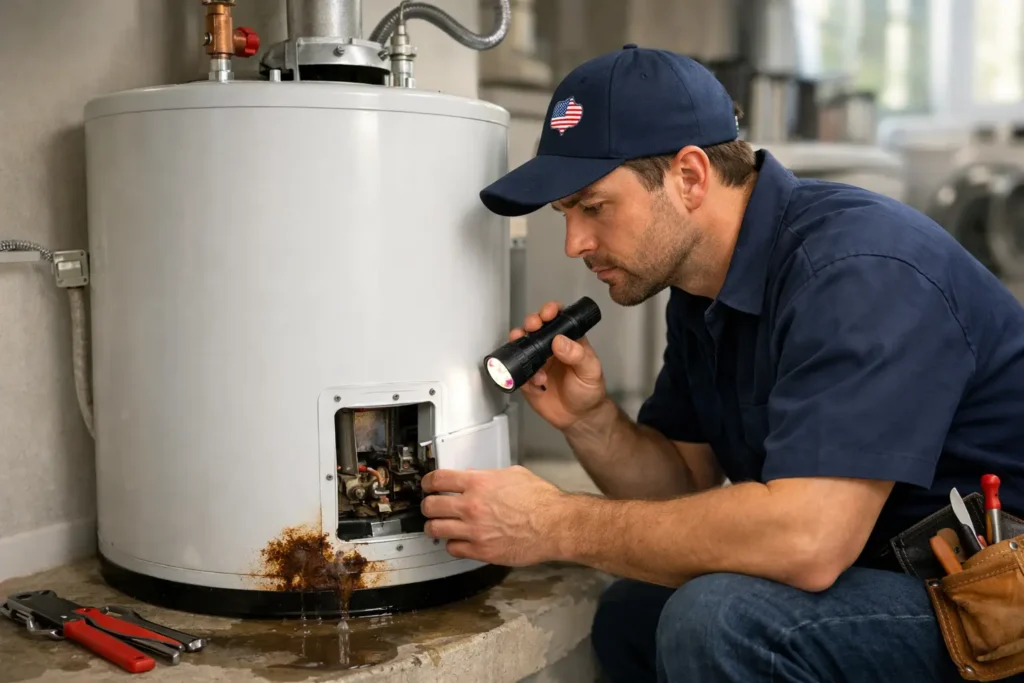
Water around the base of a water heater is one of the clearest signs that replacement may be necessary. First, make sure the water is not coming from a loose pipe connection, the temperature and pressure relief valve, or a drain valve. Those external issues can sometimes be repaired.
However, water leaking from the tank itself cannot be reliably repaired. Steel tank liners eventually corrode, and once the tank body has failed, replacement is the safe and practical solution. Do not ignore a slow leak. It can quickly become a larger leak that causes property damage.
Rust-colored water or visible corrosion
Rusty hot water, especially when the cold water runs clear, can point to corrosion inside the water heater. Some discoloration can come from aging pipes, so the source should be diagnosed before making a decision. Still, rust around the tank’s connections, seams, or exterior is a serious warning sign.
An anode rod helps protect the inside of a tank from corrosion. Replacing that rod early can extend a water heater’s life. Once corrosion has spread through the tank, though, a new anode rod will not reverse the damage.
Hot water runs out too quickly
If your household used to have enough hot water for showers, laundry, and dishes but now runs out quickly, sediment may be taking up space inside the tank. Sediment also makes the system work harder to heat the water, which can raise energy use and shorten equipment life.
In some cases, flushing the tank or replacing a heating element can improve performance. If the unit is near the end of its expected lifespan, has a history of trouble, or still cannot meet your household’s needs after service, replacement is often the better investment.
Strange noises are getting louder
Popping, rumbling, cracking, or banging sounds usually mean sediment has hardened at the bottom of the tank. This is common in areas with mineral-heavy water. The noises may start as a nuisance, but they can signal reduced efficiency, overheating, and extra stress on the tank.
A professional inspection can determine whether maintenance may help or whether the tank has reached the point where replacement is more dependable. A noisy, aging heater should not be ignored simply because it still produces hot water.
Repairs are becoming frequent
One straightforward repair may be worthwhile. Replacing a thermostat, heating element, igniter, or valve can restore a relatively young unit at a reasonable cost. The decision changes when repairs keep adding up.
Consider replacement if the unit is older and you have already paid for multiple service visits, especially if the next repair is expensive. Putting more money into a tank that may leak or fail soon can cost more than choosing a reliable replacement before an emergency occurs.
Repair or Replace: How to Make the Right Call
The best decision is not always “replace the oldest unit” or “repair the cheapest problem.” It comes down to the condition of the system and the cost of being without hot water.
A repair is usually reasonable when the water heater is still within the first half of its expected life, the tank has no corrosion or leaks, and the issue involves a replaceable component. It may also make sense when the repair is minor and the unit has performed reliably until now.
Replacement is generally the stronger choice when the tank leaks, corrosion is visible, the heater is more than a decade old, or it has needed several repairs. It is also worth considering if your family has outgrown the current capacity. A larger tank or a properly sized tankless water heater can solve daily shortages rather than forcing everyone to stagger showers and chores.
For homeowners in Menifee, Murrieta, Temecula, and nearby communities, local water conditions can affect tank life. Mineral buildup is not always obvious until performance drops. A professional assessment can separate a fixable maintenance issue from a tank that is nearing failure.
Do Not Ignore These Safety Issues
Some water heater problems need immediate attention, not a wait-and-see approach. Turn off the water supply to the unit if there is active leaking. If you smell gas near a gas water heater, leave the area, avoid switches or open flames, and contact the gas utility or emergency services as appropriate before scheduling plumbing service.
Other urgent signs include a pressure relief valve that is constantly releasing water, scorch marks near a gas burner, or electrical issues around an electric unit. Water heaters operate with high temperatures, pressure, gas, or electricity. A qualified plumber should inspect safety-related concerns rather than relying on a temporary workaround.
Choosing Your Replacement Water Heater
Replacing a failed water heater gives you a chance to choose equipment that fits how your household actually uses hot water. The right size matters. A unit that is too small will leave people waiting for hot water, while an oversized unit can increase upfront and operating costs.
A conventional tank water heater is a familiar, dependable choice for many homes. It stores a set supply of heated water and can be a practical option when replacing an existing tank system. Tankless water heaters heat water on demand, save space, and can provide a continuous supply when properly sized. They also have different installation requirements and may cost more upfront.
Fuel type matters as well. Gas and electric systems have different operating costs, venting needs, electrical demands, and installation considerations. Your home’s existing setup, household size, budget, and future plans should all factor into the decision.
A clear estimate should explain the recommended unit, required installation work, and any code or safety updates needed for a proper replacement. That helps you compare options based on long-term value, not just the lowest initial number.
Plan Replacement Before the Tank Fails
If your water heater is approaching 10 years old, start paying closer attention even if it is still working. Check periodically for moisture, corrosion, changing water temperature, and unusual noise. Keep the area around the unit clear so leaks and service needs are easier to spot.
A scheduled inspection is especially worthwhile before a busy season, a major family gathering, or a home sale. It gives you time to make a decision without the pressure of a flooded utility room or a cold morning shower.
Your water heater does not need to fail completely before you take action. If it is aging, noisy, leaking, rusty, or no longer keeping up with your home, getting a straightforward professional evaluation now can protect your comfort, your budget, and your property.