You usually do not think about your water heater until the shower turns cold halfway through, the garage smells off, or you notice water pooling where it should not be. Knowing the top signs water heater failing can help you catch a problem early, avoid water damage, and decide whether a repair still makes sense or it is time to replace the unit.
For most homeowners, the real issue is not just hot water. It is timing. A failing water heater can interrupt school mornings, laundry, dishes, and basic routines fast. Some warning signs build slowly, while others mean you should call for service right away.
Top signs water heater failing before it quits completely
One of the clearest signs is inconsistent hot water. If your water gets hot, then lukewarm, then cold without much warning, the unit may be struggling to heat properly. In a traditional tank water heater, this can point to a bad heating element, sediment buildup, or a burner issue. In a gas unit, it may also involve ignition or venting problems.
Another common clue is that you are running out of hot water much faster than usual. If your household habits have not changed but the tank cannot keep up, that is not something to ignore. Sometimes a repair solves it. Other times, the heater is simply aging and losing efficiency.
Strange sounds also matter. Popping, rumbling, or banging noises from the tank often mean sediment has collected at the bottom and hardened from repeated heating cycles. That buildup forces the system to work harder and can overheat the tank interior. A little noise does not always mean immediate failure, but loud or worsening sounds usually mean the unit needs attention soon.
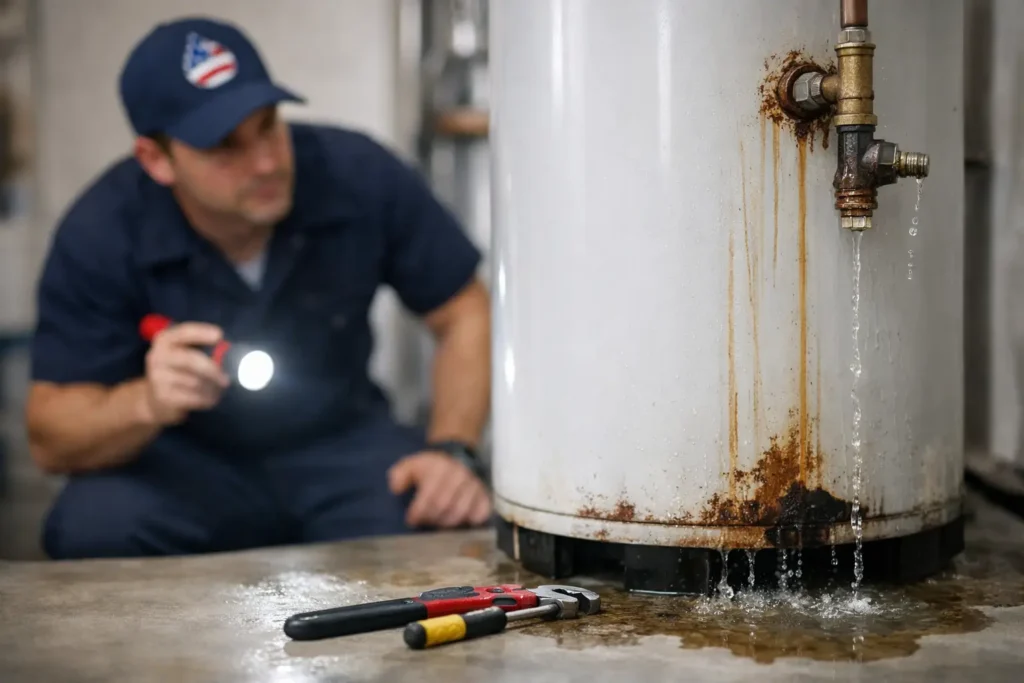
Rust-colored water is another red flag, especially when it only appears on the hot side. That can signal corrosion inside the tank or a failing anode rod. If the rust is coming from the heater itself, the problem may be moving toward a leak. Once the inside of the tank starts corroding through, replacement is often the more practical option.
What a leaking water heater usually means
A small puddle around the base of the tank is easy to dismiss at first, especially if it appears after heavy hot water use. But any water around the heater deserves a closer look. In some cases, the leak comes from a loose connection, pressure relief valve, or drain valve. Those issues may be repairable.
If the tank body itself is leaking, that is different. A tank leak usually means the inner lining has failed, and there is no real repair for that. At that point, replacement is the answer.
This is where fast action matters. Even a slow leak can damage flooring, drywall, baseboards, and nearby storage. If your water heater is in a garage or interior utility area, waiting can turn a plumbing problem into a cleanup and repair project for the rest of the home.
Condensation versus an actual leak
Not every sign of moisture means the tank has cracked. Sometimes what looks like a leak is just condensation, especially when cold water enters a warm tank in a humid area. The difference is that condensation tends to be light and temporary, while a true leak keeps coming back, leaves standing water, or gets worse after heating cycles.
If you are not sure, it is smart to have it checked before the situation escalates.
Signs your water heater is failing from age and wear
Age changes the conversation. A standard tank water heater often lasts around 8 to 12 years, depending on water quality, maintenance, and usage. Tankless units can last longer, but they are not immune to wear. If your system is in that age range and showing multiple symptoms, repair may no longer be the best value.
The most common signs of age-related decline include slower heating, reduced hot water supply, more frequent repairs, and visible corrosion around fittings or the tank base. You may also notice your utility bills climbing because the unit is working harder to do less.
There is a trade-off here. A newer unit with a single repair issue may be worth fixing. An older unit with noise, rust, and poor performance often ends up costing more over time if you keep patching it. Homeowners usually want the lowest immediate cost, which is understandable, but the cheapest short-term option is not always the most affordable one a few months later.
If the pilot light or burner keeps acting up
On gas water heaters, repeated pilot light outages or burner problems can point to a deeper issue with the thermocouple, gas control valve, or ventilation. Sometimes these are straightforward repairs. Sometimes they are symptoms of a unit that is wearing out overall.
Because gas appliances involve combustion and venting, this is not a good area for guesswork. If the heater is not firing consistently, smells unusual, or shuts down repeatedly, it should be inspected promptly.
Water quality problems that point back to the heater
Your water heater can also show signs of failure through the water itself. If your hot water smells metallic or like rotten eggs, the cause may be inside the tank. Odor can happen when bacteria react with the anode rod, and in some cases a replacement rod or tank flush helps. If the smell is persistent and paired with age or corrosion, replacement may make more sense.
Cloudy hot water, visible particles, or sediment coming through fixtures can also suggest buildup in the system. Sediment is especially common in areas with harder water. Over time, it reduces heating efficiency, shortens tank life, and can affect water quality at faucets and showers.
When the issue is caught early, maintenance may restore performance. When it has gone on too long, the damage inside the tank may already be done.
When repair makes sense and when replacement is the smarter call
Not every failing water heater needs to be replaced today. If the problem is limited to a thermostat, heating element, pressure relief valve, or minor connection issue, repair may be the right move. That is especially true if the unit is relatively new and the tank itself is in good condition.
Replacement becomes more likely when the tank is leaking, the system is older, repairs are stacking up, or the heater no longer meets your household demand. If your family has grown, or if you are constantly running out of hot water, it may be time to look at a better-sized tank or consider tankless installation.
For many homeowners, the decision comes down to risk. If the heater is showing several top signs your water heater is failing, waiting for a complete breakdown often means less control, more inconvenience, and fewer scheduling options. Planning replacement before an emergency usually gives you a better experience.
What to do if you notice these warning signs
If you hear unusual noises, see rusty water, lose hot water, or spot moisture around the tank, do not wait for total failure. Start by checking the age of the unit if you can. Many homeowners do not realize their heater is already well past its expected service life.
Next, pay attention to whether the issue is isolated or getting worse. One cold shower could be a temporary fluctuation. Repeated temperature problems, recurring leaks, or worsening sounds point to a real equipment issue.
If there is active leaking, shut off the water supply to the heater if you can do so safely. For gas units, do not attempt repairs beyond basic shutoff steps. A professional inspection can tell you whether the problem is a repair, a replacement, or an urgent safety issue.
Homeowners in Menifee and nearby communities often put this off because they are hoping to squeeze one more season out of the unit. Sometimes that works. Sometimes it ends with no hot water at the worst possible time. A clear diagnosis early on helps you avoid guesswork and make a practical decision for your home.
A water heater rarely fails without warning. The challenge is noticing the signals early enough to do something useful with them. If your system has started acting differently, trust that change and get it looked at before a small problem turns into a cold shower, a flooded garage, or both.