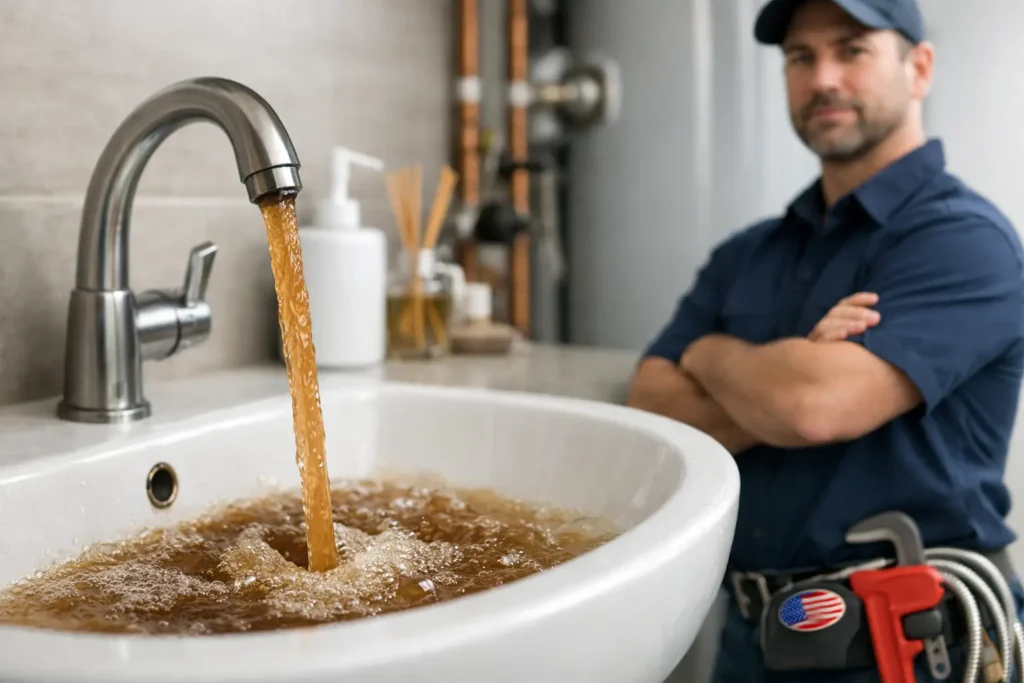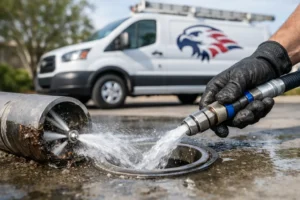
Brown water coming from the hot side of a faucet can turn a normal shower or dishwashing routine into a problem that needs attention now. If you are asking, why is hot water brown, the answer usually points to rust, sediment, or corrosion somewhere in your water heater or hot-water plumbing. The good news is that the source can often be identified quickly by checking where and when the discoloration appears.
Do not keep using brown hot water for drinking, cooking, bathing young children, or washing light-colored clothing until you know what is causing it. A brief discoloration may be minor, but persistent brown water can signal a failing water heater, aging pipes, or sediment that needs professional service.
Why Is Hot Water Brown but Cold Water Is Clear?
When cold water runs clear but hot water is brown, the water heater is the first place to look. Water sits inside the tank for long periods, where naturally occurring minerals and particles can settle at the bottom. As the tank heats and cycles, that sediment can get stirred up and travel through the hot-water lines.
Rust is another common reason. Most traditional tank water heaters have a steel tank protected by a sacrificial anode rod. That rod is designed to corrode before the tank does. Once it is depleted, the inside of the tank can begin to rust. Brown, reddish-brown, or orange water from multiple hot fixtures may be an early sign that the tank is deteriorating.
If the water turns brown only after the heater has been unused for several hours, then clears after a few minutes, sediment in the tank or corrosion in nearby hot-water piping is especially likely. If the problem appears at every hot faucet and shower, it is rarely just one fixture.
The Most Common Causes of Brown Hot Water
Sediment buildup in the water heater
Menifee-area homes can have mineral-heavy water, and minerals settle inside a tank over time. Sediment does not always make water look brown, but it can hold rust particles and become dislodged when the burner fires or when demand for hot water is high.
A sediment-filled water heater may also make popping or rumbling sounds, take longer to heat water, or deliver less usable hot water than it used to. A professional flush can help in some cases. However, flushing an older, heavily corroded tank is not always the right fix. It depends on the heater’s age, condition, and whether there is evidence of internal tank failure.
A rusting water heater tank
A rusting tank is more serious than ordinary sediment. Brown water, rust-colored water around the temperature and pressure relief valve, or moisture near the bottom of the heater can indicate corrosion inside the unit.
A tank cannot be repaired once its inner lining has failed. Replacing it before it leaks can prevent water damage to flooring, drywall, and nearby belongings. This is particularly urgent if the heater is in a garage, closet, attic, or interior utility area where a tank leak could spread quickly.
Corroded galvanized pipes
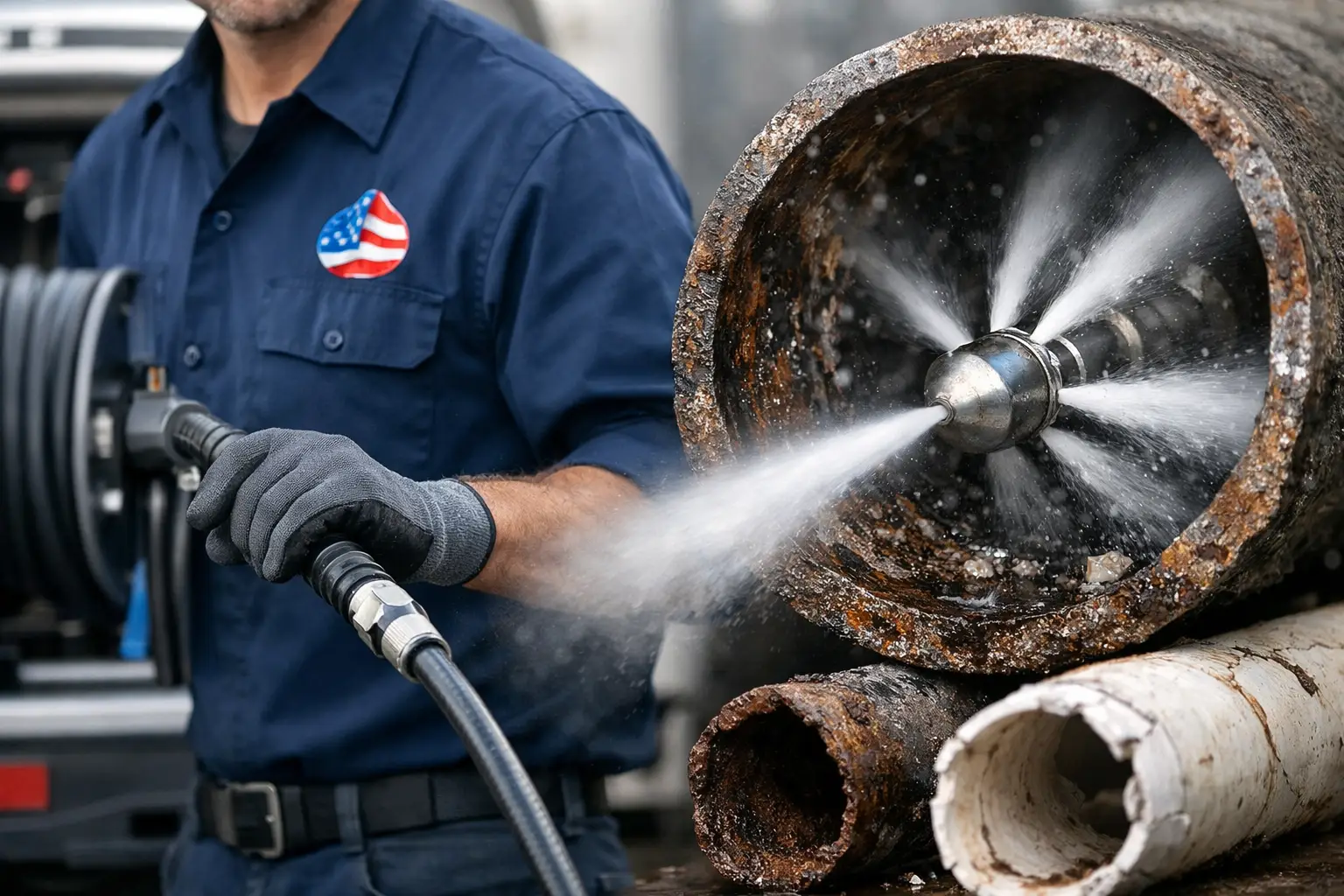
Older homes may still have galvanized steel water pipes. These pipes corrode from the inside out, narrowing as rust and mineral buildup collect within them. When water flow changes, particles can break loose and create brown or yellow water.
If both hot and cold water are discolored, corroded piping becomes more likely. You may also notice weak water pressure, recurring pinhole leaks, or discolored water at certain fixtures but not others. In that situation, a plumber may need to inspect the supply lines rather than focus solely on the water heater.
Work on the water main or a temporary supply disturbance
Sometimes the source is outside the home. Water main work, hydrant use, a nearby water-line repair, or a change in water pressure can stir sediment in the municipal supply. In many cases, both hot and cold water will be affected at first.
If cold water clears quickly but the hot side stays brown, the water heater may have trapped some of that sediment. Run cold water briefly at a bathtub faucet to see whether the discoloration clears. Avoid running hot water for an extended period if the water is very dark, gritty, or has a metallic odor.
A rusty fixture or flexible supply line
When brown water appears at just one faucet, the issue may be local to that fixture. A corroded faucet body, a failing shutoff valve, or an old flexible supply line can release particles into the water.
This is usually less extensive than a whole-home plumbing problem, but it still deserves repair. Local corrosion can worsen, cause a leak, or leave sediment in faucet cartridges and appliance screens.
What to Check Before Calling for Service
A few simple observations help narrow down the cause without taking apart your plumbing. First, compare hot and cold water at more than one fixture. Use a white cup or bowl so the color is easy to see.
Then check whether the water is brown all the time or only at the beginning of the flow. Note any water-heater symptoms, including strange noises, inconsistent temperatures, visible leaks, or a heater that is more than 8 to 12 years old. Tank life varies based on maintenance and water conditions, so age alone does not confirm failure, but it is a useful clue.
Also pay attention to the water’s smell and texture. Rusty water may smell metallic. Black or coffee-ground-like particles can indicate severe corrosion or deteriorated components. Cloudy white water is different – it is often caused by harmless air bubbles and usually clears from the bottom of a glass upward.
Do not remove the water heater’s drain valve, relief valve, or access panels if you are not familiar with the equipment. Hot water can cause burns, and older drain valves can start leaking when disturbed.
When Brown Hot Water Needs Urgent Attention
Schedule professional plumbing service promptly if brown water continues after several minutes, returns repeatedly, or affects multiple fixtures. Call sooner if you see a water heater leak, hear loud banging or popping, have no reliable hot water, or notice water near electrical connections.
Treat these signs as urgent:
- Brown water is accompanied by a leaking water heater or wet floor.
- The water has a strong sulfur, burnt, or chemical smell.
- Rust-colored water appears in both hot and cold lines and does not clear.
- Water pressure suddenly drops, especially with visible discoloration.
- The water heater is making loud noises, shutting off unexpectedly, or producing inconsistent temperatures.
If a tank is actively leaking, turn off the water supply valve above the heater if it is safe to reach. For a gas water heater, avoid adjusting gas controls unless you smell no gas and know how to do so safely. If you smell gas, leave the area and contact the gas utility or emergency services from outside the home.
Can You Flush the Water Heater Yourself?
A routine water heater flush can reduce sediment, but it is not a universal cure for brown water. On a newer, well-maintained heater, flushing may restore cleaner water and improve efficiency. On an older tank with internal corrosion, it may reveal a drain valve problem or expose a tank that is already near the end of its service life.
That trade-off is why an inspection is often the smarter first step when discoloration is persistent. A plumber can check the heater, anode rod, drain valve, hot-water lines, and fixtures to determine whether cleaning, repair, or replacement makes the most financial sense.
For homeowners in Menifee, Murrieta, Temecula, and nearby communities, American Plumbing Service can identify whether brown hot water is coming from the tank, the pipes, or the incoming supply and provide a straightforward onsite estimate. Addressing the source early is the best way to protect your water quality, avoid a surprise leak, and get your home back to normal.