A sewer line problem usually does not start with a dramatic collapse. More often, it starts with a toilet that bubbles, a shower drain that gurgles, or a smell you cannot quite place near the yard or inside the house. If you are wondering how to know if sewer line is broken, the key is to watch for patterns, not just one isolated plumbing issue.
For homeowners, that distinction matters. A single slow sink may point to a local clog. But when multiple fixtures start acting up at once, or wastewater seems to back up in the lowest drains, the problem can be deeper in the main sewer line. Catching it early can help you avoid water damage, sewage cleanup, and a more expensive repair.
How to know if sewer line is broken: the most common signs
The clearest sign of a broken sewer line is when several plumbing fixtures show symptoms at the same time. Your toilets may flush slowly, your tubs may drain sluggishly, and you may hear air bubbling through drains after using water somewhere else in the home. That happens because wastewater is not moving through the main line the way it should.
Sewage odors are another major warning sign. If you notice a persistent sewer smell in the bathroom, laundry room, kitchen, crawl space, or yard, it can mean waste is escaping from a cracked or damaged line. A healthy sewer system should stay sealed. When that smell starts showing up regularly, it deserves quick attention.
Backups in lower fixtures are especially telling. For example, if you flush an upstairs toilet and water rises in the downstairs shower, that often points to a blockage or break in the main line. The same goes for wastewater coming up through a floor drain or tub drain. That is not a nuisance clog. It is a sign the system is struggling to carry waste away from the house.
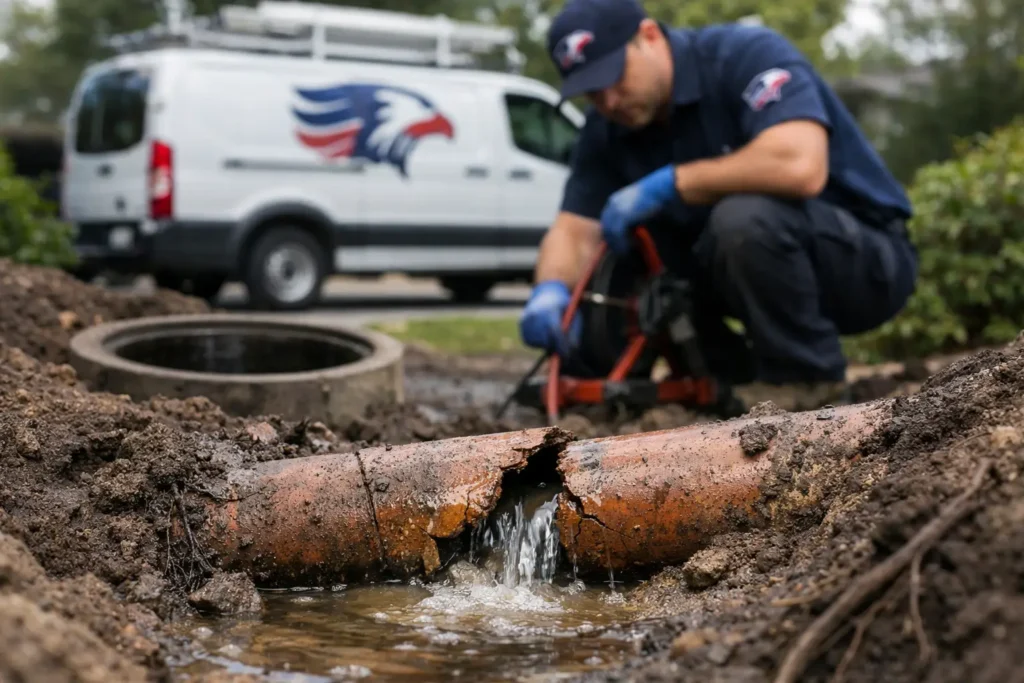
Your yard can also reveal what is happening underground. Soggy patches, unusually green grass over one section of the property, or a sunken area near the sewer route may mean wastewater is leaking into the soil. In dry Southern California conditions, a random lush strip of lawn can be more than odd landscaping. It can be a sewer leak feeding the soil below.
When it is probably more than a simple drain clog
Homeowners often hope the issue is just a clogged toilet or kitchen line, and sometimes it is. But a broken sewer line tends to create broader symptoms. If one bathroom sink is slow while everything else works normally, the problem may be limited to that branch drain. If the sink, toilet, tub, and nearby floor drain all start reacting, the main sewer line becomes much more likely.
Timing matters too. A local clog usually causes trouble only at the affected fixture. A sewer line issue often shows up when you run larger amounts of water, such as during laundry, back-to-back showers, or dishwashing. That extra flow exposes the restriction or break in the line.
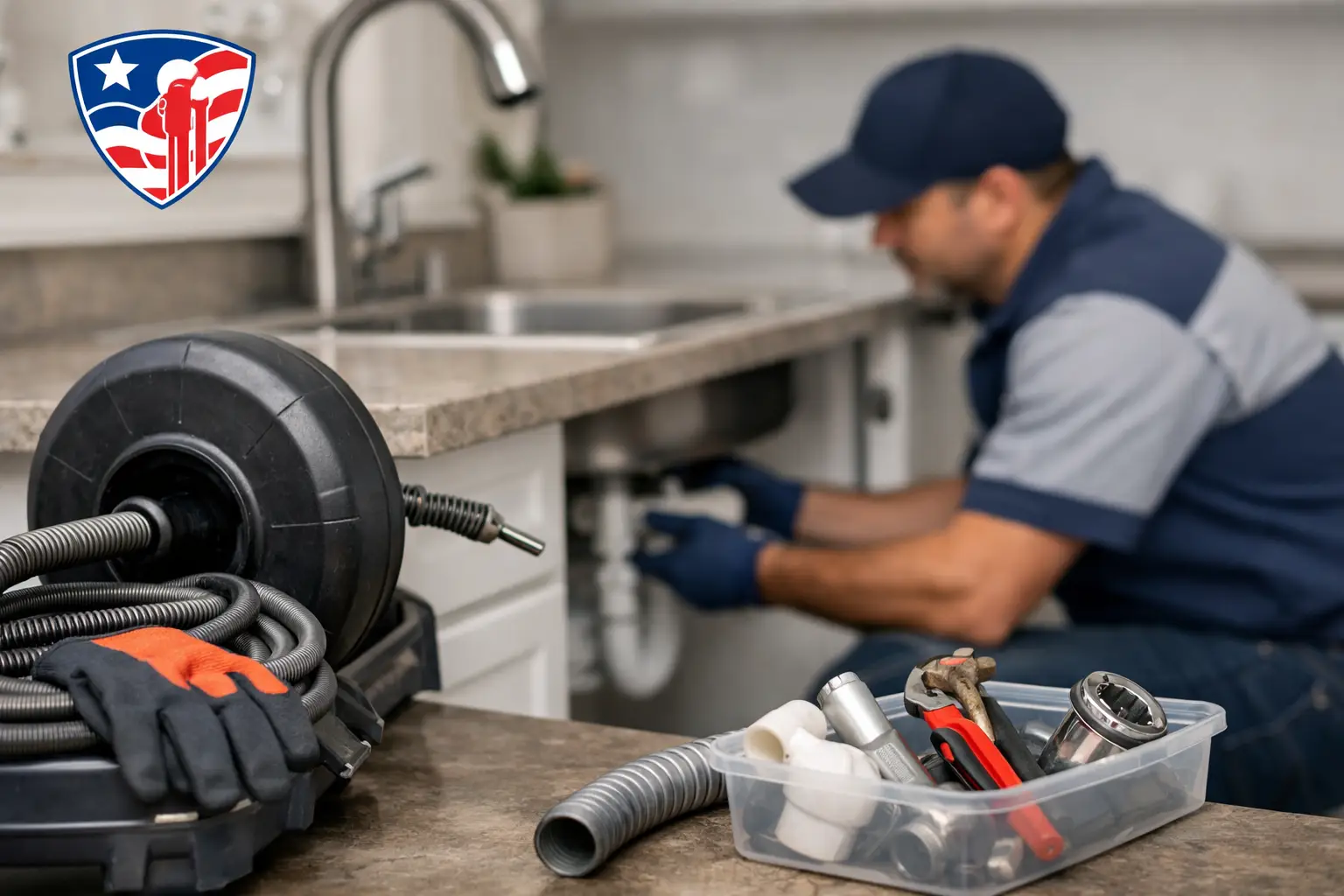
Recurring problems are another clue. If you keep plunging toilets, snaking drains, or clearing backups and the symptoms return within days or weeks, there may be a damaged sewer pipe that no basic drain cleaning can fully solve. Temporary relief does not mean the line is healthy.
What causes a sewer line to break
Sewer lines can fail for a few different reasons, and the cause affects the repair approach. In older homes, pipe materials may simply wear out. Clay, cast iron, and older Orangeburg lines are more vulnerable to cracking, corrosion, and collapse over time.
Tree roots are a common culprit. Roots naturally seek moisture, and even a small crack or loose joint can attract them. Once inside, they expand and trap paper and waste, eventually leading to heavy blockage or pipe damage. A root problem may start as a slow drain issue and turn into a broken line if left untreated.
Ground movement can also damage underground piping. Soil shifts, settling, nearby construction, and pressure from vehicles can all stress a buried sewer line. In some cases, the pipe separates at a joint. In others, it cracks or sags, creating a low spot where waste collects.
Grease buildup and debris can make things worse as well. While buildup alone does not always mean the line is broken, it can create pressure in an already weakened pipe. If a line has a crack, belly, or root intrusion, repeated blockages may accelerate failure.
How plumbers confirm whether the sewer line is broken
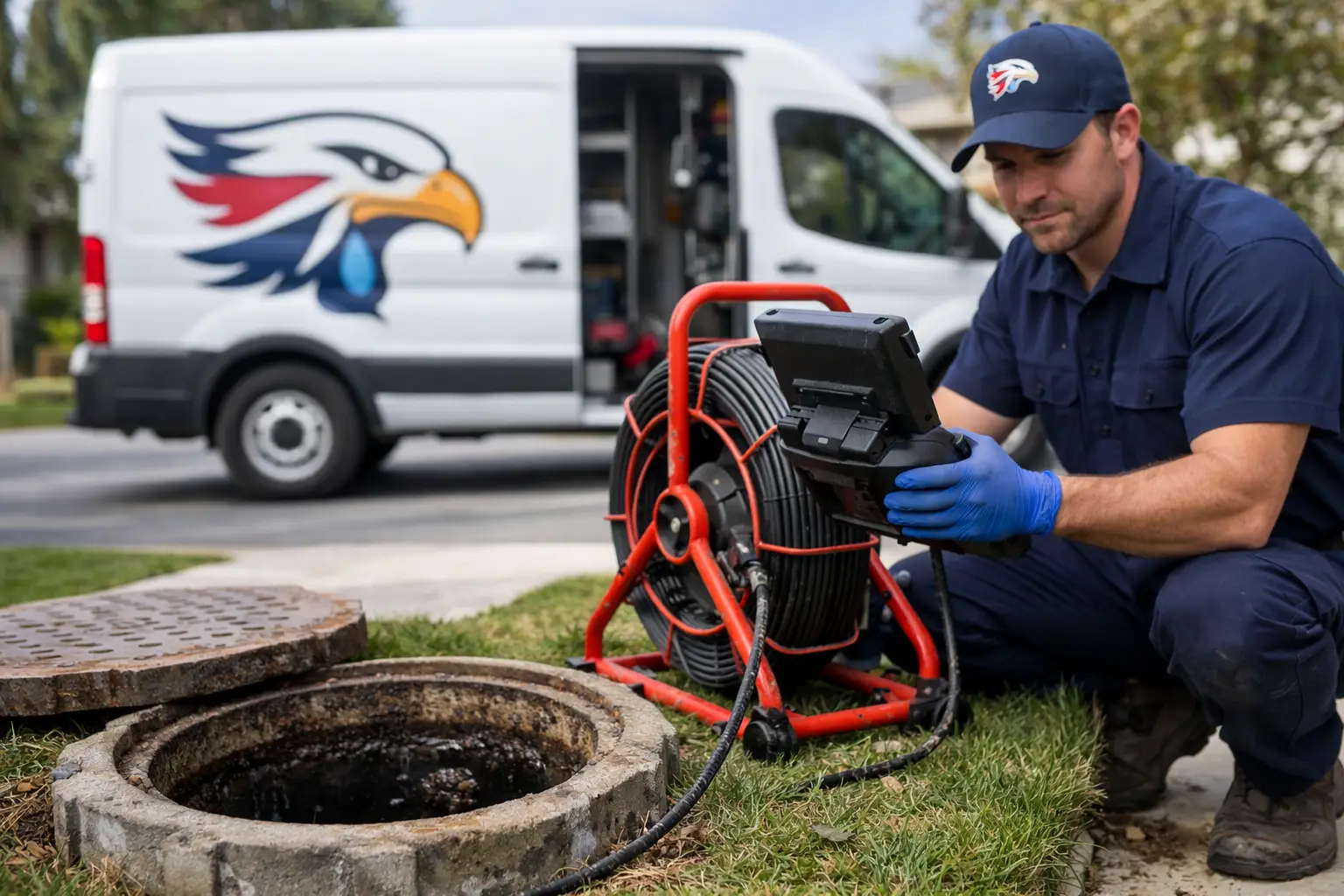
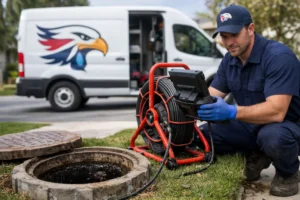
The fastest way to move from suspicion to a real answer is a sewer camera inspection. This allows a plumber to see inside the line and identify the actual problem instead of guessing from symptoms alone. If the pipe is cracked, offset, root-filled, or collapsed, the camera usually shows it clearly.
This step matters because sewer issues are not all repaired the same way. A heavy clog may respond well to hydro-jetting. A root intrusion may need clearing plus a longer-term repair plan. A collapsed section may require spot repair or trenchless replacement. Without inspection, it is easy to treat the symptom and miss the real failure.
In some cases, plumbers may also locate the exact damaged section from above ground. That helps reduce unnecessary digging and gives homeowners a clearer repair estimate. For a busy household, knowing the scope up front makes the process much less stressful.
Signs outside the house that should not be ignored
Some of the strongest sewer line warnings appear outdoors. If you smell sewage in the yard, see standing water with no clear sprinkler leak, or notice indentations in the ground, there may be an underground break. These symptoms often grow slowly, so homeowners sometimes get used to them before realizing they are connected.
Pests can increase too. Sewer leaks may attract insects and rodents because of the moisture and waste exposure. If that issue appears along with odors or drainage problems, it is worth treating the sewer system as a possible source.
Foundation-adjacent moisture is another concer n. A leaking sewer line near the home can saturate soil where it should stay relatively stable. That does not mean every wet area near the foundation is a sewer issue, but it is one more reason not to delay a professional inspection.
What to do if you think your sewer line is broken
If you suspect a sewer line problem, the first move is to limit water use. Avoid running the washing machine, dishwasher, or multiple showers until the issue is checked. The more water you send into a compromised line, the greater the chance of a backup inside the home.
Do not rely on repeated chemical drain cleaners. They rarely fix a broken sewer line, and they can make pipe conditions worse depending on the material and age of the system. They also create safety concerns for anyone opening the line afterward.
Instead, schedule a professional inspection as soon as possible. For homeowners in Menifee, Murrieta, Temecula, Wildomar, and surrounding areas, quick service matters because sewage problems tend to escalate fast. A straightforward camera inspection can tell you whether the issue is a blockage, root intrusion, pipe separation, or collapse.
How urgent is it?
It depends on the symptoms. Slow drains with no backup may give you a little time to plan, but sewage coming up into tubs, toilets, or floor drains should be treated as urgent. So should strong indoor sewer odors or visible wastewater in the yard.
Even if the house is still functioning, waiting can increase cleanup costs and property damage. A minor crack can turn into a larger break. A line with roots can progress from partial blockage to a full backup. Fast action usually gives you more repair options, not fewer.
Repair options depend on the damage
Not every broken sewer line means your whole yard has to be torn up. If the damage is limited, a targeted spot repair may be enough. If the pipe is deteriorated over a longer section, trenchless sewer replacement may offer a cleaner and less disruptive solution than traditional excavation.
The right fix depends on the pipe material, the location of the break, the condition of the rest of the line, and whether roots or shifting soil are involved. That is why an accurate diagnosis matters more than assumptions. A dependable residential plumbing company should explain the problem clearly, show what was found, and lay out practical next steps.
If something feels off with your drains, toilets, or yard, trust that instinct. Sewer line problems rarely get better on their own, and early action can protect your home, your time, and your budget.