A puddle near the water heater usually shows up at the worst time – before work, late at night, or right when you need hot water most. If you’re asking, why is my water heater leaking, the answer can range from a minor connection issue to a failing tank that needs fast replacement.
The key is not to ignore it. Even a small leak can damage flooring, drywall, baseboards, and anything stored nearby. In some cases, the leak is also a warning that the unit is under too much pressure or has internal corrosion.
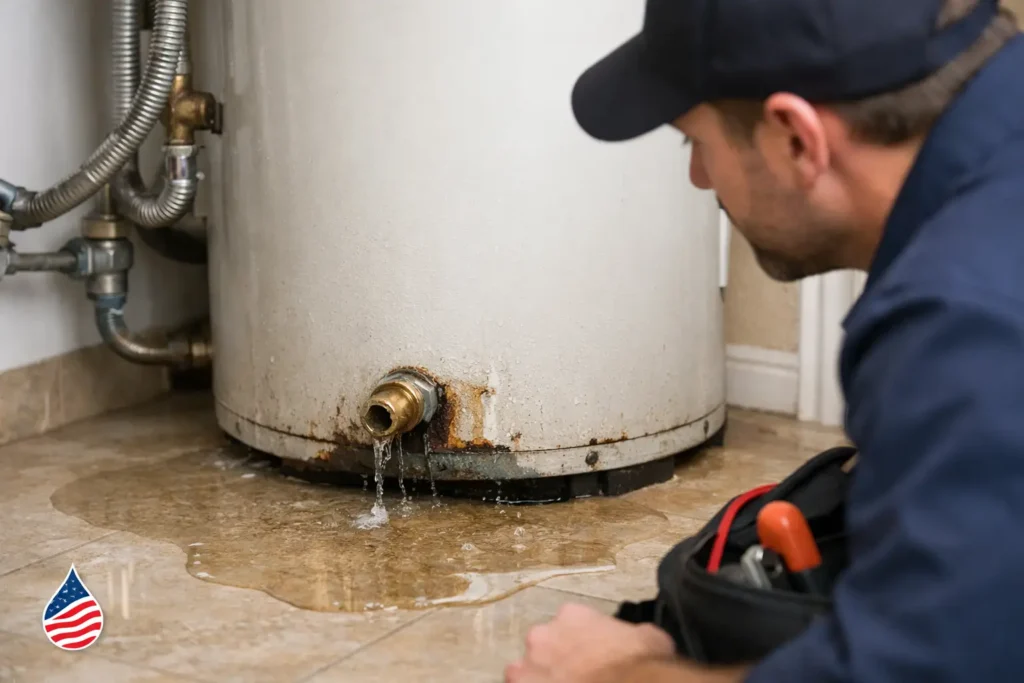
Why is my water heater leaking from the bottom?
When water is pooling under the tank, homeowners often assume the tank itself has cracked. Sometimes that is true, but not always. Water can travel down from a higher point and collect at the bottom, making the source look worse than it is.
Start by looking at where the water appears to begin. If the leak seems to be coming from the top, the issue may be a loose pipe connection, a failing shut-off valve, or corrosion around the inlet and outlet fittings. If everything above the tank looks dry, the problem may be lower on the unit.
A drain valve near the bottom can drip if it is loose, worn out, or has debris preventing it from sealing properly. In other cases, condensation can create moisture around the base, especially when the heater is working hard or the surrounding area is humid. That kind of moisture is different from a steady leak, but it can still confuse the diagnosis.
The most serious possibility is an internal tank leak. Traditional tank water heaters rust from the inside over time. Once the steel tank has corroded through, the leak usually cannot be repaired. At that point, replacement is typically the most practical and cost-effective solution.
Common reasons a water heater leaks
Most residential water heater leaks come from a short list of problems. The challenge is telling the difference between a repairable part failure and a tank that has reached the end of its service life.
Loose or damaged plumbing connections
Hot and cold water lines connect at the top of the heater. These fittings can loosen over time from normal expansion and contraction. If you see moisture around the pipes or water running down the jacket of the tank, a connection issue may be the cause.
This is one of the more straightforward repairs when caught early. Still, if corrosion has built up around the fittings, replacing parts may be safer than simply tightening them.
Faulty temperature and pressure relief valve
The temperature and pressure relief valve, often called the T&P valve, is a safety device designed to release water if pressure or temperature inside the tank gets too high. If this valve is leaking, the cause may be a bad valve, excessive system pressure, overheating, or sediment buildup affecting the tank’s operation.
This is not a part to ignore. A dripping or discharging T&P valve means the heater may be dealing with unsafe operating conditions. The valve itself might need replacement, but the deeper issue has to be checked too.
Leaking drain valve
The drain valve is used when flushing the tank for maintenance. Over time, it can start dripping slowly or fail to close completely after being used. Sometimes a cap can slow the leak temporarily, but if the valve is worn, replacement is the right fix.
A drain valve leak is usually repairable. The main concern is making sure that is truly the source, not water from another component collecting in the same area.
Sediment buildup inside the tank
Hard water leaves mineral deposits behind. Those minerals settle at the bottom of the tank and harden over time. As sediment builds up, it can cause overheating, popping noises, reduced efficiency, and extra stress on the tank lining.
In some cases, sediment contributes to small leaks by causing the tank to run hotter than it should or by accelerating internal wear. Flushing the tank can help when the unit is still in decent condition, but a heavily neglected water heater may already be too far gone.
Internal tank corrosion
This is the problem homeowners hope it is not. Tank water heaters have a metal anode rod that helps slow corrosion inside the tank. Once that protection is used up, the tank itself begins to rust.
When corrosion creates an internal leak, there is no reliable patch that makes long-term sense. The unit generally needs replacement. If your water heater is older and leaking from the tank body itself, that is usually the answer.
What to do first when your water heater is leaking
A leaking water heater is not something to watch for a few days while hoping it stops on its own. The first step is to protect your home and reduce the risk of a larger failure.
If the leak is active, turn off power to the unit. For an electric heater, switch it off at the breaker. For a gas water heater, turn the gas control to the appropriate setting and follow safe shutdown procedures. Then shut off the cold water supply valve feeding the heater.
If water is spreading, clean it up as much as possible to limit damage to the surrounding area. Take a quick look to see whether the leak is coming from a pipe, valve, or the tank itself. That information can help speed up the repair process when a plumber arrives.
If you notice rust-colored water, loud rumbling, visible corrosion, or leaking from the actual tank seam, plan for the possibility of replacement rather than repair. Those signs often point to a unit that is nearing failure.
Can a leaking water heater be repaired?
Sometimes yes, and sometimes no. That depends on where the leak is coming from and how old the heater is.
If the problem is a supply line, shut-off valve, drain valve, or T&P valve, repair is often possible. These are external components, and replacing them can restore normal function if the tank is still in good shape.
If the inner tank is leaking, repair is usually not realistic. Once the tank has corroded through, replacement is the standard fix. Trying to patch a tank leak may buy very little time and can leave you dealing with a much bigger water damage problem later.
Age matters too. If the water heater is already near the end of its expected lifespan, investing in repeated repairs may not be the best use of your money. A newer unit with a single part failure is one thing. An older unit with corrosion, sediment, and active leaking is another.
When to call a plumber right away
Some leaks are small. That does not always mean they are low risk. You should call a plumber promptly if the leak is getting worse, the tank is making unusual noises, the relief valve is releasing water, or you cannot clearly identify the source.
The same applies if you have no hot water, inconsistent water temperature, or signs of water damage around walls and flooring near the heater. In homes across Menifee and nearby communities, fast response matters because a failing water heater can go from manageable to messy very quickly.
A professional inspection can tell you whether the issue is a simple repair, a pressure problem, or a full replacement situation. If replacement is needed, having the right size and type of unit installed properly helps prevent repeat problems and restores hot water without unnecessary delays.
How to reduce the chance of future leaks
Water heaters rarely fail without warning. Maintenance helps you catch the warning signs earlier.
Having the unit inspected periodically, flushing out sediment when appropriate, and replacing worn valves or connectors can extend service life. If your home has hard water, the tank may need more attention than average. Older heaters should also be watched more closely for rust, moisture, and declining performance.
For homeowners with recurring hot water issues, it may be worth discussing whether a newer tank model or a tankless system makes more sense for the household. The right choice depends on water usage, budget, installation layout, and how long you plan to stay in the home.
When a water heater starts leaking, the biggest mistake is waiting too long to act. A quick diagnosis can mean the difference between a simple repair and a much more expensive cleanup, so if something looks off, it is worth getting it checked before that small puddle turns into a larger problem.