A hidden leak rarely starts with a dramatic burst pipe. More often, it shows up as a water bill that suddenly climbs, a soft spot in the floor, or a musty smell you cannot quite place. If you are trying to figure out how to find hidden water leaks before they turn into drywall damage, mold, or foundation problems, the key is to look for small changes early and act fast when something feels off.
Why hidden leaks are easy to miss
Most hidden plumbing leaks happen behind walls, under slabs, in ceilings, or underground where you cannot see the pipe. That is why homeowners often notice the damage before they find the source. A stain on the ceiling might come from a pipe several feet away. Warm spots on the floor can point to a slab leak, but not always. Even the sound of running water can be misleading if it echoes through walls.
The tricky part is that some homes show obvious warning signs, while others do not. A slow leak can go on for weeks without puddling on the floor. Instead, it may warp baseboards, raise humidity indoors, or reduce water pressure in one part of the house.
The first signs you may have a hidden leak
If you suspect a problem, start with what your home is already telling you. Unexplained increases in your water bill are one of the clearest signs. If your household water use has not changed but the bill has, there is a reason.
Odors also matter. A musty smell in a bathroom, laundry room, hallway, or near cabinets often means moisture is trapped where air does not circulate well. Discoloration on walls or ceilings, bubbling paint, warped flooring, loose tile, and damp carpet all deserve attention.
You may also hear a leak before you see it. If you hear water moving when no faucet, appliance, or fixture is running, there could be a concealed pipe leak. In some homes, homeowners also notice low water pressure, especially if the leak is significant or affects a main supply line.
How to find hidden water leaks using your water meter
One of the best ways to narrow down a leak is with a simple water meter test. Turn off every fixture and water-using appliance in the house. That means faucets, showers, dishwashers, washing machines, irrigation, and ice makers. Then check your water meter.
If the meter is still moving, water is flowing somewhere in the system. That strongly suggests a leak. For a more reliable check, write down the meter reading and avoid using any water for 30 minutes to an hour. If the reading changes, you likely have a hidden leak.
This test will not tell you exactly where the leak is, but it confirms whether the plumbing system is losing water. That helps you decide whether you are dealing with a plumbing issue or something more isolated like condensation or a roof problem.
Check the most common problem areas first
Some hidden leaks are not fully hidden. They start in accessible places and spread into walls or floors before anyone notices.
Look under sinks for moisture around supply lines, shutoff valves, and drain connections. Open the cabinet and use a flashlight. Even a small drip can damage the cabinet bottom over time.
Check behind toilets for damp drywall, loose flooring, or staining near the base. Toilet leaks are common, and some are silent. A leaking wax ring or supply line may not leave much standing water, but it can still ruin flooring.
Around water heaters, inspect for rust, dampness, or mineral buildup near fittings. If a water heater is leaking slowly, the water may travel farther than expected before it becomes visible. Washing machine hoses, refrigerator water lines, and dishwasher connections are also worth checking, especially in older homes.
Watch for slab leak warning signs
In Southern California homes, slab leaks are a serious concern because supply lines may run beneath the concrete foundation. When one of those lines leaks, the signs can seem unrelated at first.
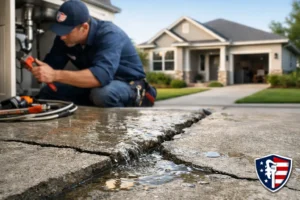
Warm areas on the floor, unexplained sounds of running water, cracks in flooring, damp carpet, or a spike in your water bill can all point to a slab leak. In some cases, homeowners notice mildew smells or moisture along the edges of walls.
Not every warm floor means a slab leak, and not every slab leak creates obvious moisture right away. That is where professional leak detection matters. When a leak is under concrete, guessing can lead to unnecessary damage and wasted repair costs.
Use your senses room by room
If the meter suggests a leak but you do not know where it is, go room by room. Look for swelling in baseboards, stains near crown molding, and paint that looks blistered or uneven. Press lightly on suspicious drywall. If it feels soft, moisture may be present behind it.
Listen closely in quiet areas of the house. A faint hissing sound inside a wall can mean a pressurized pipe leak. In bathrooms, check around tubs and showers where failed caulking or plumbing connections can let water escape into surrounding materials.
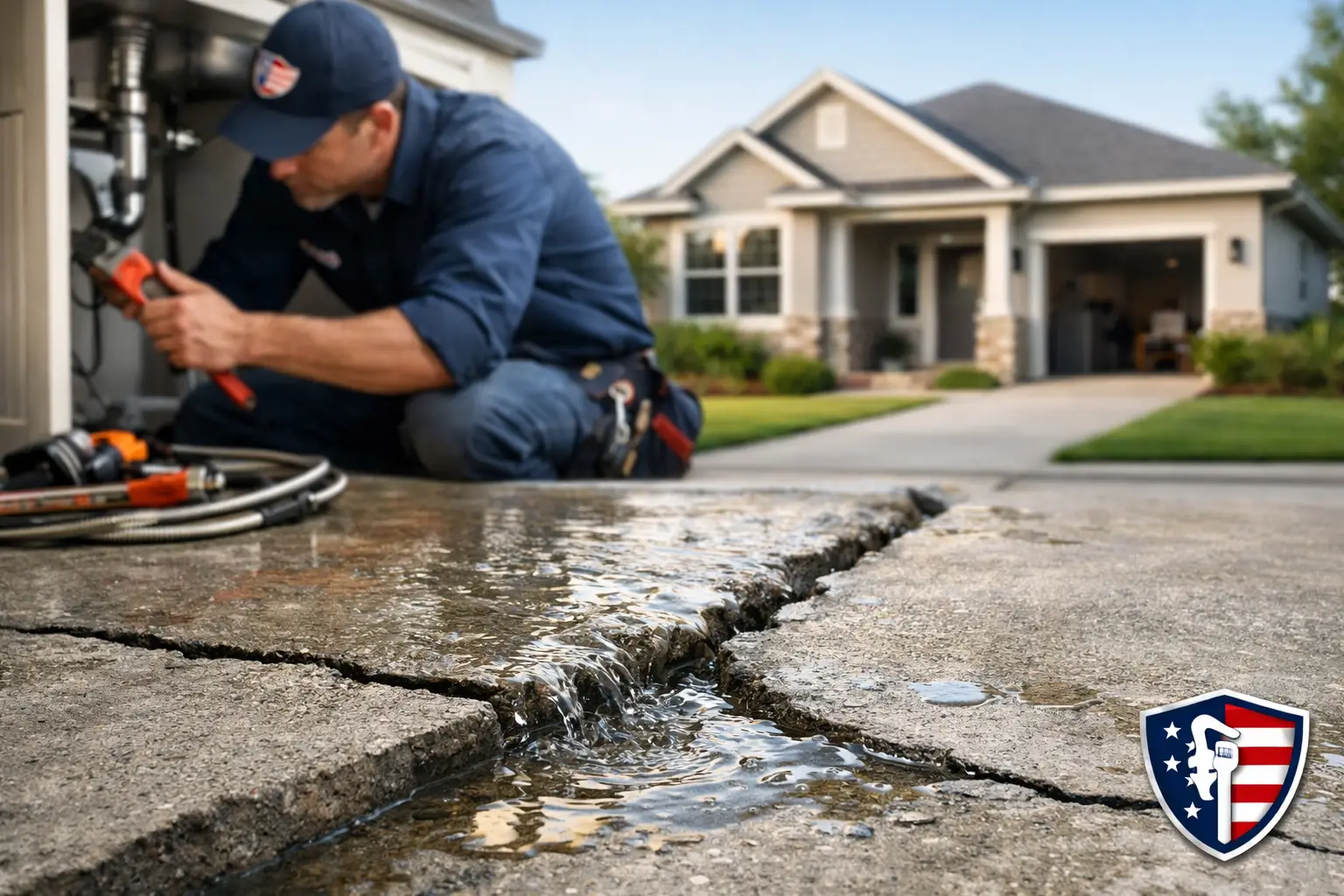
Do not ignore exterior clues either. Soggy spots in the yard, patches of unusually green grass, or eroding soil can indicate an underground water line leak. If the leak is on the main line between the meter and the house, you may not see any indoor symptoms at all.
Food coloring can help with toilet leaks
Not every hidden leak is inside a wall. Toilets often waste water quietly, and homeowners may not realize it. Put a few drops of food coloring in the tank and wait about 15 minutes without flushing. If color appears in the bowl, the flapper is leaking.
This kind of leak usually does not damage your home the way a pipe leak can, but it can add a surprising amount to your water bill over time. It is also one of the easiest leaks to confirm.
When DIY checking stops being useful
Basic checks can tell you that a leak exists, but they do not always tell you where it is or how serious it is. That matters because opening the wrong wall, ignoring a slab leak, or waiting too long can make a manageable repair much more expensive.
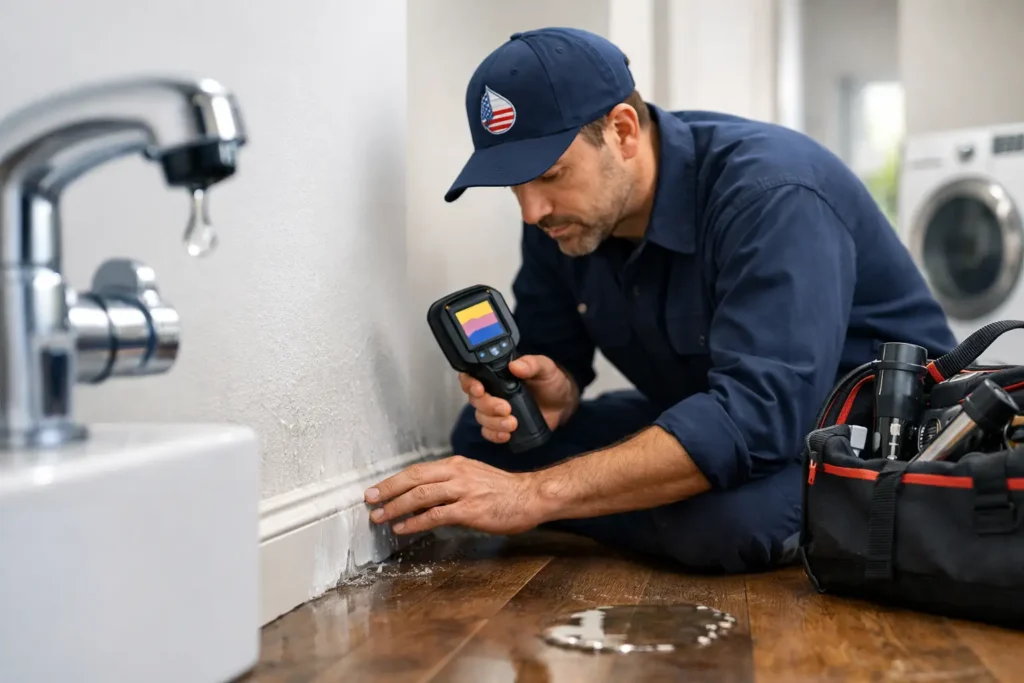
If you have a moving water meter, visible water damage, moldy odors, or signs of a slab or underground leak, it is time for professional leak detection. A residential plumber can use specialized equipment to locate the source with far less disruption than trial-and-error cutting.
This is especially important when the leak is behind tile, under flooring, in the ceiling, or below the slab. In those cases, speed matters. The longer water escapes, the more likely you are to end up with structural damage, flooring replacement, or mold remediation on top of the plumbing repair.
What a plumber can do that a visual check cannot
Professional leak detection is about precision. Instead of guessing, a plumber can pinpoint likely leak locations using pressure testing, acoustic listening equipment, and other non-invasive methods. That reduces damage to your home and helps repair work move faster.
For homeowners in Menifee and nearby communities, that can make a big difference when the issue is urgent. A fast response is not just about convenience. It can mean the difference between a targeted repair and a much larger restoration project.
If the problem turns out to be a slab leak, a broken pipe, or a failing connection inside a wall, you also want a company that can move from detection to repair without making you coordinate multiple contractors. That is often the fastest path back to normal.
A few mistakes homeowners make
One common mistake is assuming a higher water bill is just seasonal use. Another is repainting a stain without finding the source. Some homeowners also wait because they do not see active dripping, but hidden leaks do not need to be dramatic to cause damage.
The other mistake is overcorrecting. Tearing into drywall or flooring too early can create more mess and expense than necessary. There is a balance here. Start with smart checks, confirm whether water is still moving through the system, and bring in a plumber when the evidence points to a concealed leak.
American Plumbing Service helps homeowners handle leak detection and repair without wasting time on guesswork. When water is showing up where it should not, clarity and speed matter.
If something feels off in your home, trust that instinct. Hidden leaks rarely improve on their own, and catching one early is almost always the cheapest repair you will ever make.