A house that keeps getting pinhole leaks is usually telling you something. If you need to repipe house Moreno Valley properties, the real question is not whether another spot repair will hold – it is how long you want to keep paying for temporary fixes.
When a repipe makes more sense than another repair
Most homeowners do not start by asking for a full repipe. They call because the water pressure dropped, a pipe started leaking behind a wall, or they noticed discolored water at a bathroom sink. That is normal. A repipe usually becomes the right solution after the same plumbing system keeps causing problems in different areas of the home.
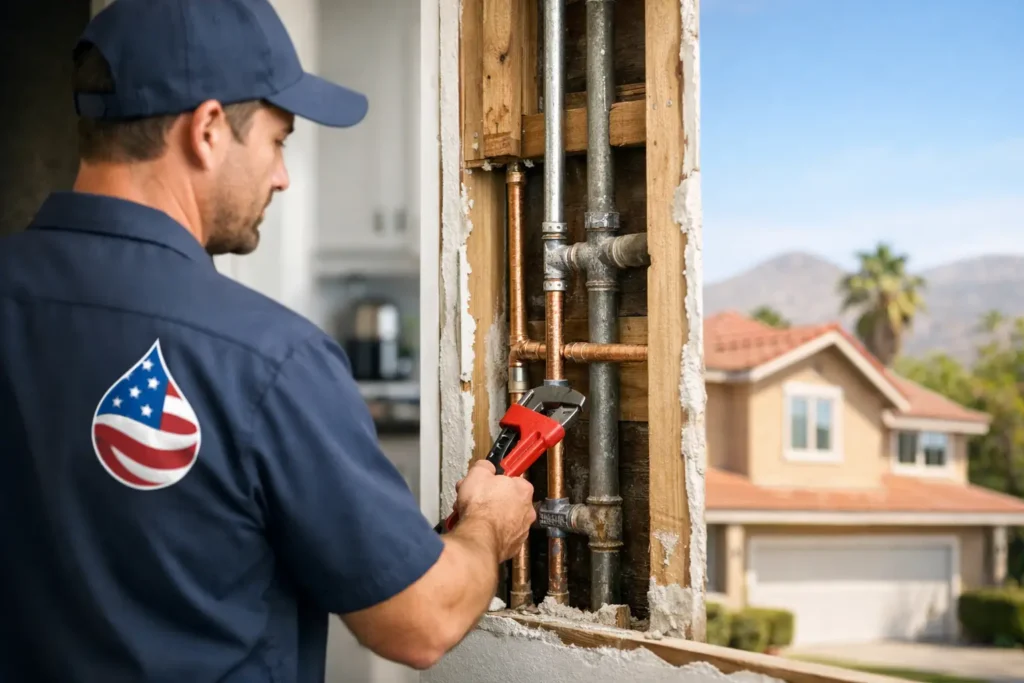
If your home has recurring leaks, aging galvanized pipes, corroded copper, or unexplained water damage, piecemeal repairs can get expensive fast. One repair might solve one weak point, but it does not fix the rest of the system if the piping is already failing throughout the house. In that situation, replacing the plumbing lines can be the more practical and more cost-effective move.
This is especially true when the leaks are not isolated. A single damaged pipe under a sink is one thing. Multiple leaks over time in walls, ceilings, or under the slab point to a bigger system-wide issue.
Common signs your Moreno Valley home may need repiping
A full repipe is a major job, so it should be based on clear symptoms, not guesswork. Some signs are obvious, while others build slowly over time.
Low water pressure throughout the house often means buildup, corrosion, or internal pipe narrowing. Rust-colored or brown water can signal aging metal pipes. Frequent slab leaks or hidden leaks behind walls are another red flag, especially when repairs seem to come one after another.
You may also notice inconsistent water temperature, noisy pipes, or water that smells metallic. In older homes, the material of the existing plumbing matters too. Galvanized piping, in particular, tends to become a long-term problem as it ages. Older copper systems can still be workable in some homes, but if they are developing repeated pinhole leaks, it may be time to stop patching and start planning.
Repipe house Moreno Valley: what material is best?
For most residential repipes, the conversation usually comes down to copper or PEX. Both can be good options, but the right choice depends on the home, the budget, and the condition of the existing system.
Copper has a long track record and many homeowners like it for its durability. It is often a strong choice when you want a traditional material and are prepared for a higher upfront cost. The trade-off is price, and in some cases installation can be more invasive depending on the layout of the home.
PEX is flexible, widely used, and often more budget-friendly for whole-home repiping. It can allow for a faster installation in many homes, which may reduce labor and wall access work. For homeowners balancing urgency, cost, and performance, PEX is often the practical option.
There is no one-size-fits-all answer here. A reliable plumber should look at the age of the house, the current pipe material, the water quality, the access points, and your budget before recommending one over the other.
What the repiping process usually looks like
One reason homeowners delay a repipe is that they picture weeks of construction and a house turned upside down. The process is significant, but it is usually more manageable than people expect when it is planned correctly.
The first step is an onsite evaluation. A plumber should inspect the current system, identify problem areas, confirm whether the piping issues are isolated or widespread, and explain the replacement options clearly. Straight answers matter here. If a few localized repairs will reasonably buy time, you should hear that. If the system is failing, you should hear that too.
Once the scope is set, the new water lines are installed and routed through the home. Access is often needed behind walls and sometimes in ceilings, but experienced residential plumbers work to minimize unnecessary disruption. In many cases, water service is only interrupted during specific phases rather than for days at a time.
After installation, the system is pressure-tested and fixtures are reconnected. Then the access openings are prepared for patching and restoration. Homeowners should ask upfront what is included, what is not, and what the timeline looks like for each part of the job.
How long does it take to repipe a house?
It depends on the size of the home, the number of bathrooms, the pipe routing, and how easy it is to access the plumbing. A smaller single-story house may move faster than a larger two-story home with tighter wall and ceiling access.
In many cases, the plumbing portion of a full repipe can be completed in a matter of days rather than weeks. That said, drywall repair and finish work may take additional time depending on the extent of access needed. The key is setting realistic expectations before work starts.
If you are comparing estimates, speed alone should not make the decision. A fast job that is poorly mapped, poorly tested, or poorly communicated can create more stress than a properly managed project that takes a little longer.
Cost depends on more than square footage
Homeowners usually want a ballpark number right away, which makes sense. But repiping costs vary for reasons that are not obvious from the outside.
The size of the home matters, but layout matters too. A compact home with accessible plumbing may be simpler than a home with multiple additions, tight crawl spaces, or complicated routing. The material you choose affects cost. So does the number of fixtures, the condition of the existing system, and whether related repairs are needed at the same time.
This is why a free onsite estimate is valuable. It gives you a real scope, not a rough number that changes once walls are opened. It also lets you compare proposals based on what is actually included, such as testing, fixture reconnections, and patch-ready access repairs.
Financing can also make a full repipe more realistic when the system is failing now but the budget was not built for a major plumbing project this month. For many families, that flexibility matters just as much as the estimate itself.
Why waiting can cost more
There are times when it makes sense to monitor an older plumbing system. There are also times when waiting creates a bigger bill.
If your home already has recurring leaks, each new failure risks damage to drywall, flooring, cabinets, insulation, and personal property. A hidden leak can also drive up the water bill before it is found. When a slab leak is involved, the stakes are even higher because moisture under the home can lead to structural concerns and expensive restoration work.
Another issue is convenience. Spot repairs often happen on the plumbing system’s schedule, not yours. That means emergency calls, sudden water shutoffs, and dealing with damage after the fact. A planned repipe gives you more control over the timing and usually reduces the risk of repeated disruption.
Choosing the right plumber for a whole-home repipe
Not every plumbing company handles repipes with the same level of experience. This is a job where residential expertise matters because the work has to be technically sound and homeowner-friendly at the same time.
Look for a company that regularly works in occupied homes and can explain the process in plain language. You want a plumber who can identify whether you truly need a full repipe, give a straightforward estimate, talk through material options, and move quickly if the home is already experiencing active leaks.
Communication is a big part of the job. Homeowners need to know where access points will be, when water will be off, how long each phase will take, and what to expect after the installation. A dependable local company should be able to answer those questions without making the process feel confusing or harder than it needs to be.
For homeowners dealing with repeated leaks, low pressure, or aging pipes, American Plumbing Service approaches repiping the same way it handles any serious residential plumbing issue – fast response, clear recommendations, and practical solutions that protect the home.
Is now the right time?
If your plumbing has had one isolated issue, a repair may still be the right call. If your house keeps showing the same warning signs in different places, a full repipe deserves serious consideration. The goal is not to sell a bigger job than you need. The goal is to stop a failing system from creating more damage, more expense, and more disruption.
A good repipe should leave you with stable water pressure, reliable lines, and fewer surprises behind the walls. If your home is already telling you the pipes are at the end of the road, getting answers now is a lot easier than dealing with the next leak at the worst possible time.